E-scooters in London and on trains: TfL and National Rail rules
On the Transport for London network, e-scooters are banned even when folded, with a fine of up to £1,000. On trains, each train company decides. The reason: the fire risk from batteries. The rules as they stand on 17 November 2026.

Benjamin Gayaud
5 min read
Safety
Tube, bus, tram in London: banned, even folded
The essentials
Transport for London (TfL) bans e-scooters and e-unicycles on all its services, in its stations and on its premises, even when folded. The fine can be up to £1,000[1]. On trains, the National Rail Conditions of Travel leave it to each train company to decide, and several have chosen a ban[2][3]. TfL and Southeastern give the same reason: the fire risk from lithium-ion batteries[1][3]. These are the rules in force on 17 November 2026.
£1,000
maximum fine for an e-scooter on the TfL network
12.5 mph
top speed of rental e-scooters in London, about 20 km/h
11
London boroughs where e-scooter hire is allowed
999
the number to call if a battery smokes or catches fire
- TfL services, stations and premises: no e-scooters at all, even folded[1].
- A non-motorised scooter is still allowed, carried, never ridden[1].
- Trains: condition 23.5 of the National Rail Conditions of Travel leaves the decision to each train company[2].
- A train company can refuse you access to its trains and stations if you arrive with an e-scooter[3].
- At home, charge while you are awake and present, never in a bedroom or the hallway[5].
Can you take an e-scooter on the Tube, bus or tram in London?
No. TfL does not allow you to carry an e-scooter or an e-unicycle on its services, in its stations or on its other premises, even when folded. It took this step after defective lithium-ion batteries in privately owned e-scooters and e-unicycles caused fires on its network. Anyone who does not comply risks a fine of up to £1,000[1].
| Vehicle | On the TfL network |
|---|---|
| Privately owned e-scooter, even folded | Banned on vehicles, in stations and on premises |
| E-unicycle | Banned on vehicles, in stations and on premises |
| Rental e-scooter from the trial | Always banned, because it cannot be folded |
| Non-motorised scooter | Allowed, carried, never ridden |
Are e-scooters allowed on National Rail trains?
The National Rail Conditions of Travel, shared by the train companies, list e-scooters in condition 23.5 among the items only permitted at the discretion of individual train companies. Condition 23.6, on the other hand, bans motorcycles, mopeds and motor scooters on all passenger trains[2].
Several train companies have used this discretion to ban e-scooters. Southeastern, for example, does not allow them on its trains or at its stations, and may refuse travel to anyone who arrives with one. It names Govia Thameslink Railway and South Western Railway among the companies that have made the same decision[3]. To enforce the ban, it relies on condition 23.5 and on the Railway Byelaws, in particular Byelaw 2[3].
Why the bans? The risk from lithium-ion batteries
All the rules above come from the same danger. TfL acted after defective batteries caused fires on its network[1]. Southeastern adds a technical point: on an e-scooter, the battery is usually located beneath the board, where the rider stands, which makes it more susceptible to damage. A fire on board a train would pose a serious risk to passengers and staff[3].
The Office for Product Safety and Standards (OPSS) describes these fires: they can start without warning, spread rapidly and are very hard to extinguish. The risk increases when the battery or the vehicle is[4]:
- non-compliant with safety rules
- counterfeit
- damaged
- poorly manufactured
- used with an incompatible charger
- modified or repaired with non-compatible parts, for example the charger, motor or battery

Hiring an e-scooter in London: what are the rules?
Hiring is the only way to ride an e-scooter legally on public roads in London, and only in certain boroughs. Privately owned e-scooters remain illegal on the road[1]. The London trial, run with the participating boroughs, is allowed by the Department for Transport until 31 May 2028[1].
- Participating boroughs: Camden, City of London, Ealing, Hammersmith & Fulham, Kensington and Chelsea, Lambeth, Richmond upon Thames, Southwark, Tower Hamlets (limited parking at Canary Wharf and some TfL stations), Wandsworth, Westminster[1].
- Aged 18 or over, with at least a provisional driving licence[1].
- Mandatory in-app education before your first hire[1].
- Speed capped at 12.5 mph[1].
- Front and rear lights on throughout every rental[1].
- TfL cycle tracks allowed within the participating boroughs, under a Traffic Order[1].
The licence requirements, including for an overseas licence, and the list of other trial towns and cities are in our article electric scooters in the UK: what the law says.
How do you charge an e-scooter battery without a fire risk?
Most fires related to e-bikes and e-scooters happen in homes, often while the battery is on charge[5]. The official UK guidance comes down to a few simple habits[4][5]:
- Charge in a place that does not block any exit. Never in a bedroom, in the hallway or by the front door[5].
- Charge when you are awake and present, never while you are asleep or away from home[4].
- Unplug once the battery is fully charged[4].
- Do not cover the charger or the battery[4].
- If the battery can be removed, put it on a hard, flat surface, in a well-ventilated area where heat can disperse[5].
- Use a charger that is suitable for your battery: the wrong charger poses a serious fire risk[4].
- Do not overload sockets or use damaged extension leads or plugs[5].
- Charge away from combustible materials and hazardous substances[5].
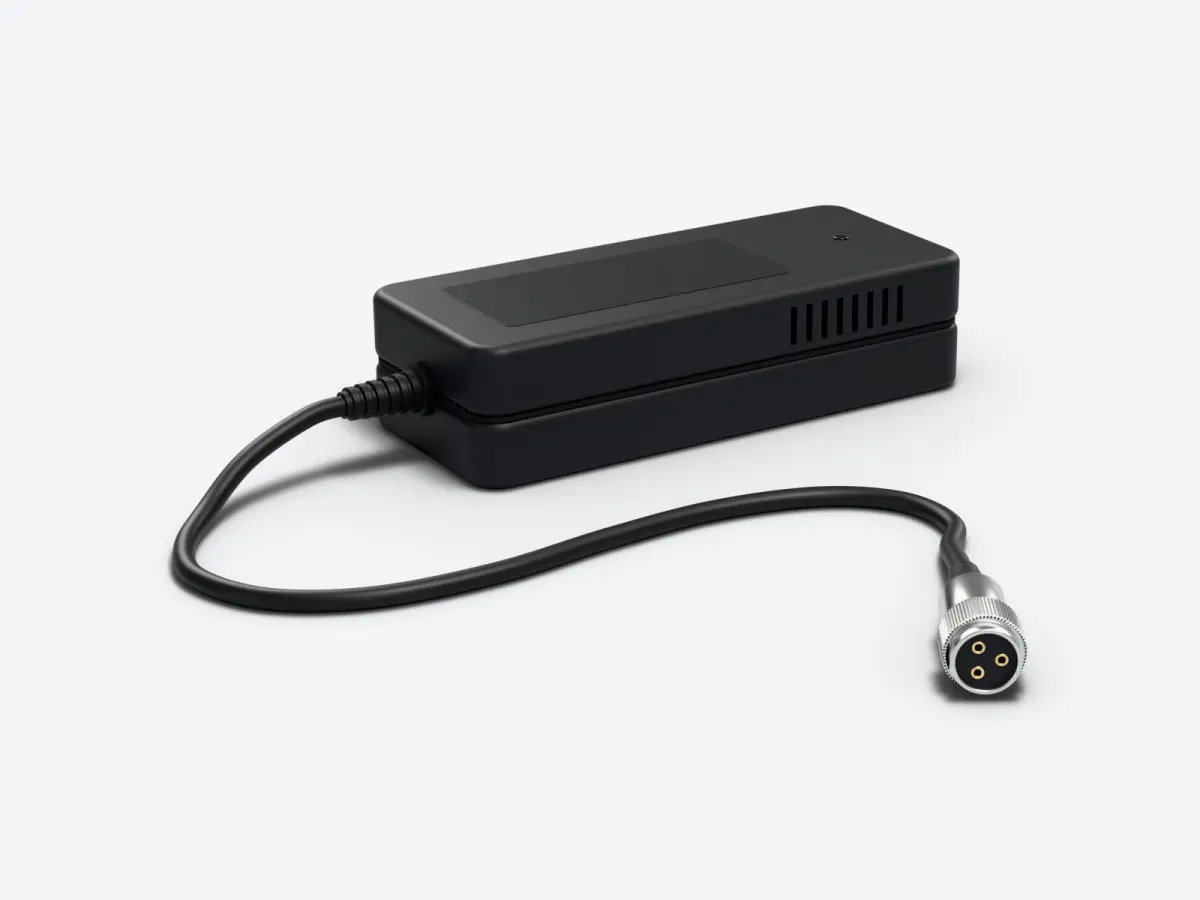
For battery care and lifespan, our guide to battery charging and care sets out the right everyday habits.
What should you do if an e-scooter battery overheats, swells or smokes?
A lithium-ion battery fire can develop within a few seconds, often without warning[5]. Stop using or charging the battery and unplug it as soon as you notice any of these signs[5][4]:
Overheating
The battery feels extremely hot to the touch.
Smell or smoke
It gives off an unusual smell or smoke.
Deformation
It looks swollen, has a lump or is leaking.
Poor performance
It performs less well than usual.
Noise
It makes hissing or cracking sounds.
When buying, the OPSS advises you to look for the UKCA or CE mark, which is required by UK product safety regulations. To replace a battery or a charger, use the parts recommended by the manufacturer and get a professional to carry out repairs. Never modify the battery[4].
Before you travel with your e-scooter: the checklist
- In London, do not take your e-scooter on the Tube, a bus, a tram or into a TfL station, even folded.
- For a train journey, read the page of every train company on your route: several refuse e-scooters.
- To ride around London, hire an e-scooter in one of the 11 participating boroughs.
- At home, charge while you are awake, on a hard surface, away from exits, and unplug once charging is finished.
- At the slightest sign (heat, swelling, hissing, smell, smoke), stop and unplug. If there is smoke, get out and call 999.
The electric scooter regulations page shows the rules for your shop's country.
Sources
- Transport for London, E-scooters page, Scooters on public transport and The London rental trial sections, checked on 17 November 2026, E-scooters
- National Rail, National Rail Conditions of Travel, condition 23, items 23.5 and 23.6, checked on 17 November 2026, National Rail Conditions of Travel - Part E: Making your train journey, 23. Luggage
- Southeastern, Travelling with bikes page, E-scooters section, checked on 17 November 2026, Travelling with bikes
- Office for Product Safety and Standards, Guidance published on 24 October 2024, updated on 11 November 2026, checked on 17 November 2026, Buy Safe, Be Safe: avoid e-bike and e-scooter fires
- Fire Kills (campagne du gouvernement britannique), E-bikes and e-scooters page, checked on 17 November 2026, E-bikes and e-scooters: safely using and charging
About the author

Benjamin Gayaud
Managing director of FōhzShop
He runs FōhzShop and develops EyeX, the app for Dualtron and Rovoron scooters. He personally tests the electric scooters the shop sells.
Read next
Safety10 min read
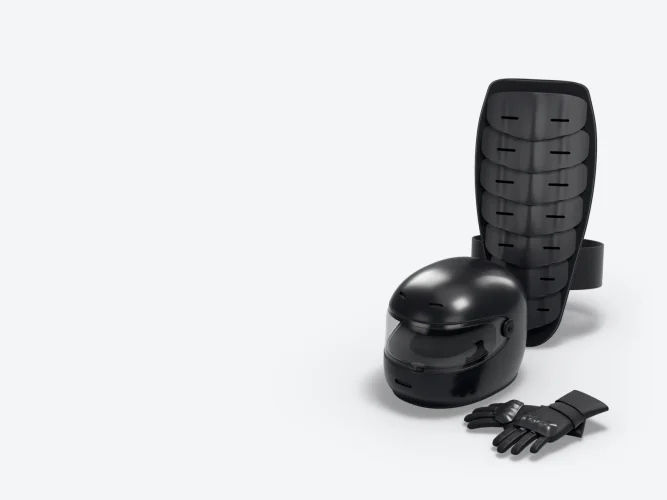
Helmet, gloves, protectors: what gear to wear on an electric scooter
Cycle, speed pedelec or motorcycle helmet, gloves, back protector, knee pads, hi-vis vest: what each standard guarantees, how to read the label and what to choose for the speed you ride at.
Safety11 min read
Electric scooter theft: which lock, which GPS tracker and what to do if it is stolen
D-locks, chains, folding and cable locks, Sold Secure, ART and VdS ratings, the right way to lock up, electronic locks, 4G GPS trackers and what to write down before a theft: the guide to protecting your electric scooter.
Maintenance9 min read
Electric scooter tyre pressure: the chart by wheel size and by model
The tyre pressure for every scooter in our catalogue, taken from the manufacturer's manual, in psi and bar, sorted by wheel size. Plus the effect of weight and cold, how to read the sidewall and a routine for checking.