Electric scooter battery: how to charge it, store it and make it last
How the battery is built, how to charge it safely, how to read its real charge level, how to store it, make it last and spot a damaged battery, backed by the manufacturers' manuals.

Benjamin Gayaud
11 min read
Maintenance
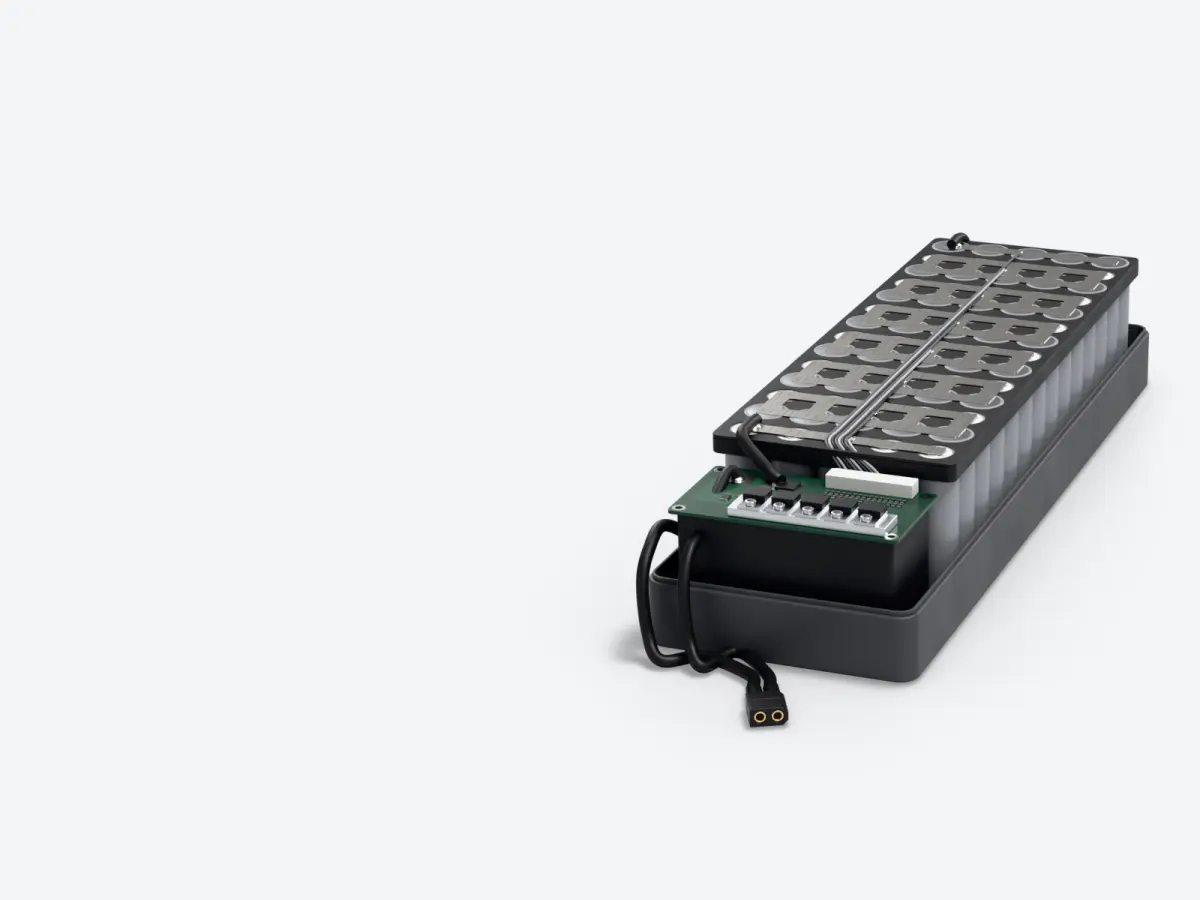
A battery in storage should be neither empty nor full.
The essentials
A lithium-ion scooter battery lasts a long time if you follow four rules: the right charger, the right temperature, never storing it flat, and stopping at once at the slightest sign of damage. The causes of thermal runaway, the kind of fire specific to lithium, are well known. INRS, France's occupational health and safety institute, lists impacts, vibration, damage, ageing, excessive charging power, extreme temperatures, humidity, deep discharge and internal short circuits[4].
0 to 40 °C
charging temperature range of the Dualtron X Limited and Rovoron S7
500 cycles
or 10,000 km: the replacement threshold given by Rovoron
70 to 80%
charge level for storing a Rovoron S7 for more than three months
55 °C
battery temperature at which the Dualtron X Limited's BMS goes into protection mode
- Charge with the original charger, or one with the same voltage and connector, in a ventilated spot with nothing flammable around.
- Stay nearby while it charges and unplug it when it has finished.
- After a hard ride, a spell in full sun or coming in from the cold, wait before plugging in.
- For a long break, store the battery neither empty nor full and recharge it every two months.
- Deformed casing, a smell, unusual heat, a fall or water in the battery: stop charging it and have it checked.
How is an electric scooter battery built?
A scooter battery is not a single block. It is an assembly of cells, the individual accumulators, connected in series or in parallel[1]. A lithium cell has a nominal voltage of 3.2 to 3.7 V[1]. Powerful scooters use cylindrical cells. The Dualtron Sonic Alien, for example, uses Samsung 21700 50S or LG INR21700H51T cells[9].
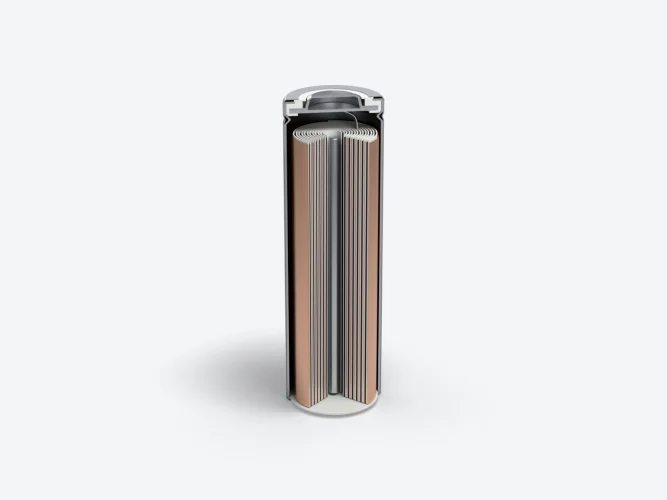
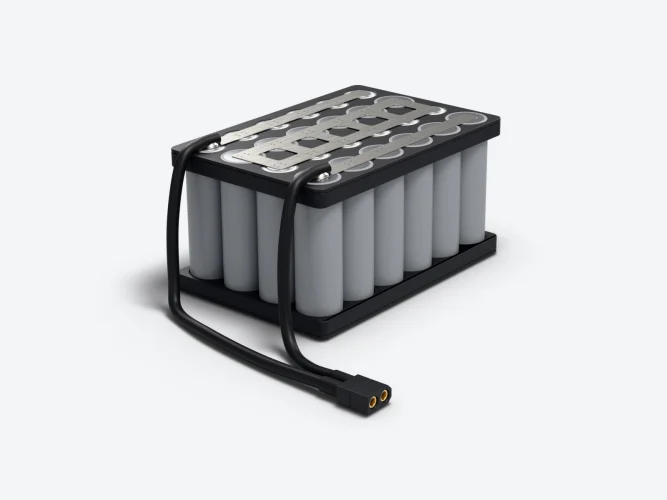
- Cells in series add up their voltage. A 72 V battery has 20 cells in series, an 84 V battery has 23: these are the ‘20S’ and ‘23S’ in our voltage table.
- Rows in parallel add up their capacity, in amp-hours (Ah), which corresponds to the amount of electrical energy the battery can store[1].
- Energy, in watt-hours (Wh), is voltage multiplied by capacity. It is the figure that tells you most about range. To go from watt-hours to kilometres, see our article on range.
| Model (manufacturer's manual) | Voltage | Capacity | Energy | Original charger |
|---|---|---|---|---|
| Dualtron Sonic Alien | 72 V[9] | 40 Ah[9] | about 2,880 Wh (72 × 40) | 83 V, 1.4 A, or 5 A with fast charging[9] |
| Rovoron S7 | 84 V[11] | 37.1 Ah[11] | about 3,116 Wh (84 × 37.1) | 95.4 V, 4 A[11] |
| Dualtron X Limited | 84 V[10] | 60 Ah[10] | about 5,040 Wh (84 × 60) | 95.45 V, 4 A[10] |
The chargers for these models stop when each cell reaches about 4.15 V. Do the sum: 20 × 4.15 = 83 V for the Sonic Alien, 23 × 4.15 = 95.45 V for the X Limited. A charger must therefore put out exactly the end-of-charge voltage of your battery, no more and no less.
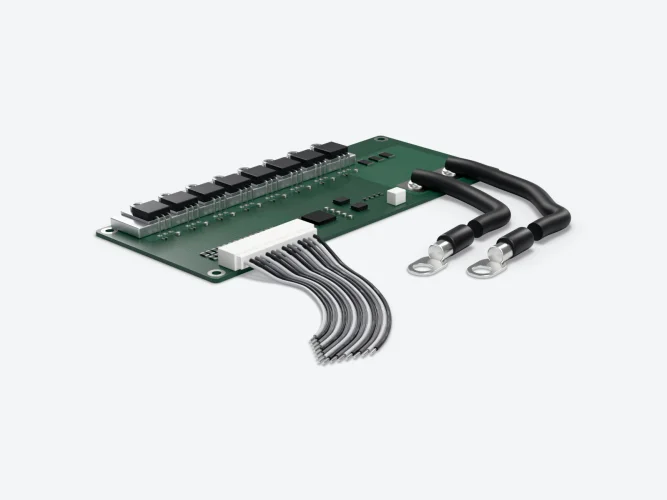
The BMS, the board that protects the cells
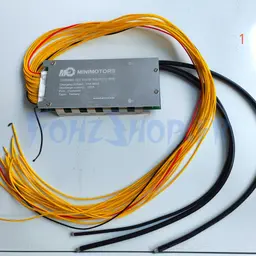
Every battery has a circuit board, the BMS (Battery Management System). It manages the charge level of each cell, stops the battery from working outside its intended temperature, voltage or current ranges, and prevents both overcharging and excessive discharge[1]. Dualtron lists its protections: overheating, short circuit, over-current, over-discharge and overcharge[10]. When the battery goes above 55 °C, the BMS goes into protection mode[10].
How should you charge your electric scooter?
Charging in poor conditions can make the battery swell or overheat, cause an electrolyte leak or a short circuit, and even lead to thermal runaway, with a risk of fire and toxic fumes[2].
The right charger
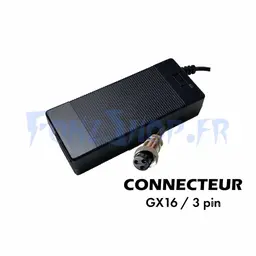
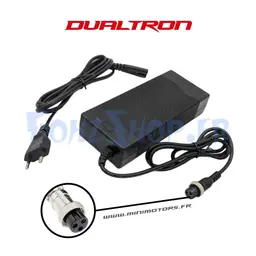
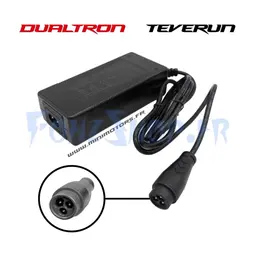
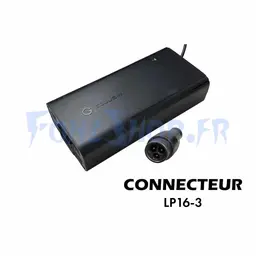
Use the original charger or, failing that, a charger matched to the battery in voltage and capacity[2]. INRS says unsuitable or counterfeit chargers must be ruled out and recommends a regulated charger that communicates with the BMS, to spread the charge properly between the cells[1]. Rovoron accepts no responsibility for any problem caused by mixing chargers[11]. To choose a replacement or fast charger, see our charger guide.
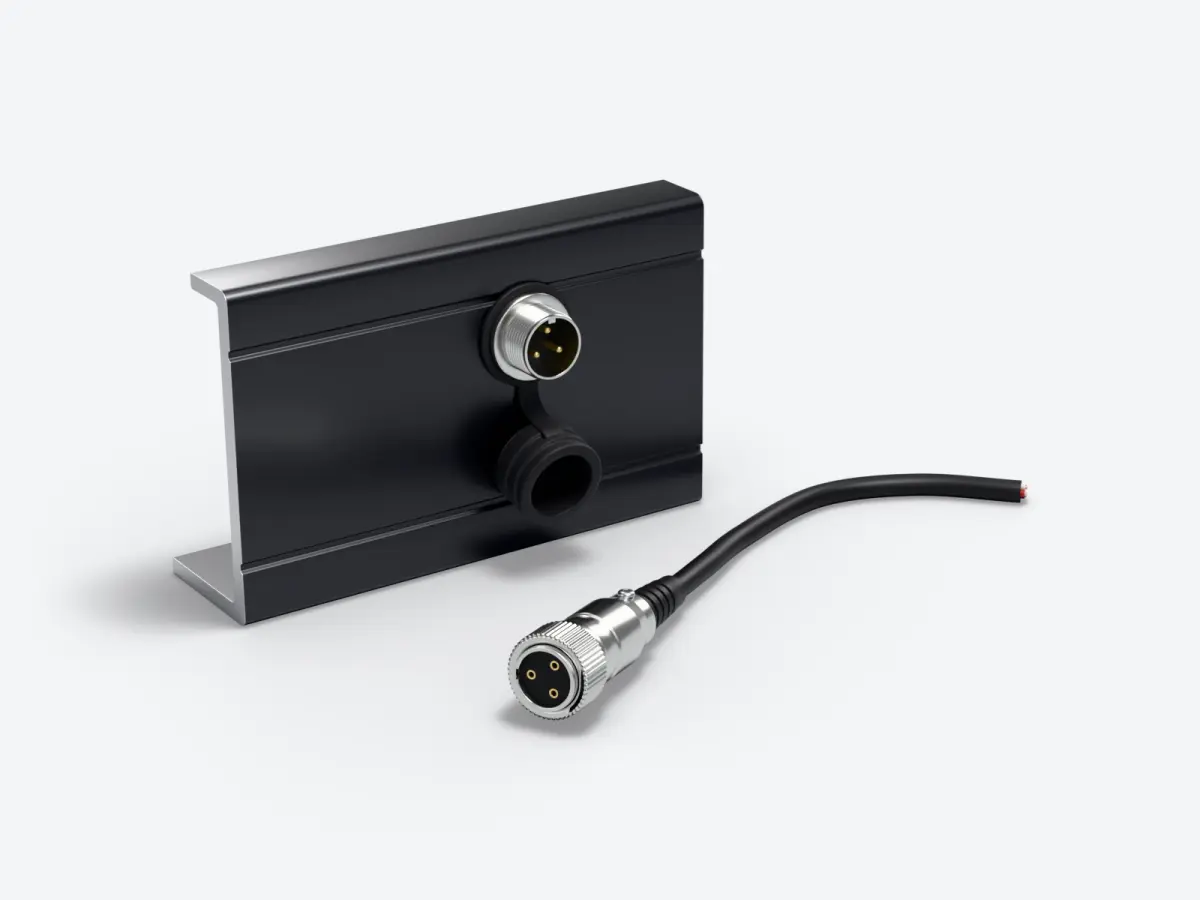
Charging step by step
- Choose a ventilated spot, away from heat and humidity, with nothing that can burn nearby[2]. Rovoron forbids using the charger in very humid, hot or confined places, near flammable materials or without ventilation, such as in a car[11].
- Open the cap, plug the charger into the scooter, then into the wall socket. Rovoron and Teverun describe this order and state that a small spark when connecting is normal, because of the voltage difference[11] [12].
- Check the light on the charger: red while charging, green when finished[11].
- Do not cover the battery while it charges[2] and do not use the scooter while it is plugged in[11].
- Unplug when charging is complete[2]. Rovoron points out that a charger left plugged in beyond the stated time creates a risk of overcharging[11].
- Close the charging port cap to ride and to store the scooter[11].
How long a charge takes
As a rough guide, divide the battery capacity by the charger current. The X Limited, 60 Ah with a 4 A charger, takes about 15 hours according to Dualtron[10], and 60 ÷ 4 = 15. A big battery with a small charger therefore charges overnight or longer. Plug in when you are around, even if that means partial charges. For e-bikes, the Swiss touring club TCS advises recharging after every use and avoiding a full discharge in all cases[8].
Not too hot, not too cold
Stick to the manufacturer's charging range[2]: 0 to 40 °C for the Dualtron X Limited[10] as for the Rovoron S7[11]. After a hard ride or a day in the sun, let the battery come back down to room temperature before plugging it in. When you come in from the cold, Rovoron says to wait 1 to 2 hours before charging, to avoid condensation inside[11].
How do you find your battery's real charge level?
The percentage on the display is an estimate. The real measurement is the battery voltage. Some displays show it. In the menu of the Teverun Fighter Mini and Blade Mini, the PackVol line gives the current battery voltage, PackTmp its temperature, and another line the number of charge cycles[12]. With this voltage, our voltage table gives you the real percentage.
| Charge | 52 V (14S) | 60 V (16S) | 72 V (20S) | 84 V (23S) |
|---|---|---|---|---|
| 100% | 58.8 V | 67.2 V | 84 V | 96.6 V |
| 80% | 55.4 V | 63.4 V | 79.2 V | 91.4 V |
| 50% | 50.4 V | 57.6 V | 72 V | 83.6 V |
| 20% | 45.4 V | 51.8 V | 64.8 V | 75.8 V |
| 0% | 42 V | 48 V | 60 V | 70.6 V |
Read the voltage when stationary, after a few minutes' rest. When you ride, it drops under load and skews the reading. A 72 V battery showing 72 V at rest is therefore half charged, not full.
How do you store the battery for winter or a long break?
A battery that is not being used still loses a little charge. The TCS points out that slight self-discharge is normal[8]. The danger is the forgotten battery that ends up flat. Deep discharge is one of the causes of thermal runaway[4], and the TCS lists charging an empty battery among the cases where a fire cannot be ruled out[7].
| Who recommends it | Charge level for storage | Recharging during storage |
|---|---|---|
| Rovoron, S7 manual, break of more than three months | 70 to 80%, not fully charged[11] | once every 60 days[11] |
| TCS, scooters not in use | 30 to 70%[7] | about every two months, advice given for e-bikes[8] |
| INRS, lithium batteries | half charged, in a cool place[2] | not specified |
- Store the battery somewhere dry, away from snow, rain and sun, ideally between 10 and 20 °C[11].
- Never in a car boot or a hot room[11].
- Stay within the storage range in the manual: -20 to 50 °C for the Dualtron X Limited[10].
- If the battery is removable, take it out of the scooter for a long break[2].
The cold also reduces range and power. Rovoron states that this drop is temporary[11]. To ride and store your scooter in cold weather, read our winter article.
How long does a scooter battery last?
A lithium-ion battery loses capacity with cycles and with time. Rovoron gives precise benchmarks for the S7. After 300 charge and discharge cycles, its discharge performance drops by more than 15%. The battery needs replacing after 500 cycles or 10,000 km[11]. For e-bikes, the TCS gives an average loss of 5% a year, up to 10%, and a capacity of around 80% after four years[8].
Heat
Sun and extreme temperatures speed up the ageing of plastics and can shorten battery life.
Storing fully charged
Rovoron advises against it for a break of more than three months.
Full discharge
To be avoided in all cases, according to the TCS. Charge often rather than waiting until it is completely flat.
Charging too fast
INRS says not to misuse a battery, for example by charging it too quickly.
Do not take the battery apart yourself. For Rovoron, disassembly, modification and repair of the battery are not covered by the warranty[11].
Damaged battery: which signs should worry you?
The TCS put six scooters through water, twelve hours of storage at -10 °C and heavy shaking: no battery showed any sign of fire, explosion or deformation. The club describes the technology as fundamentally safe, with two exceptions, inadequate storage and charging an empty battery[7].
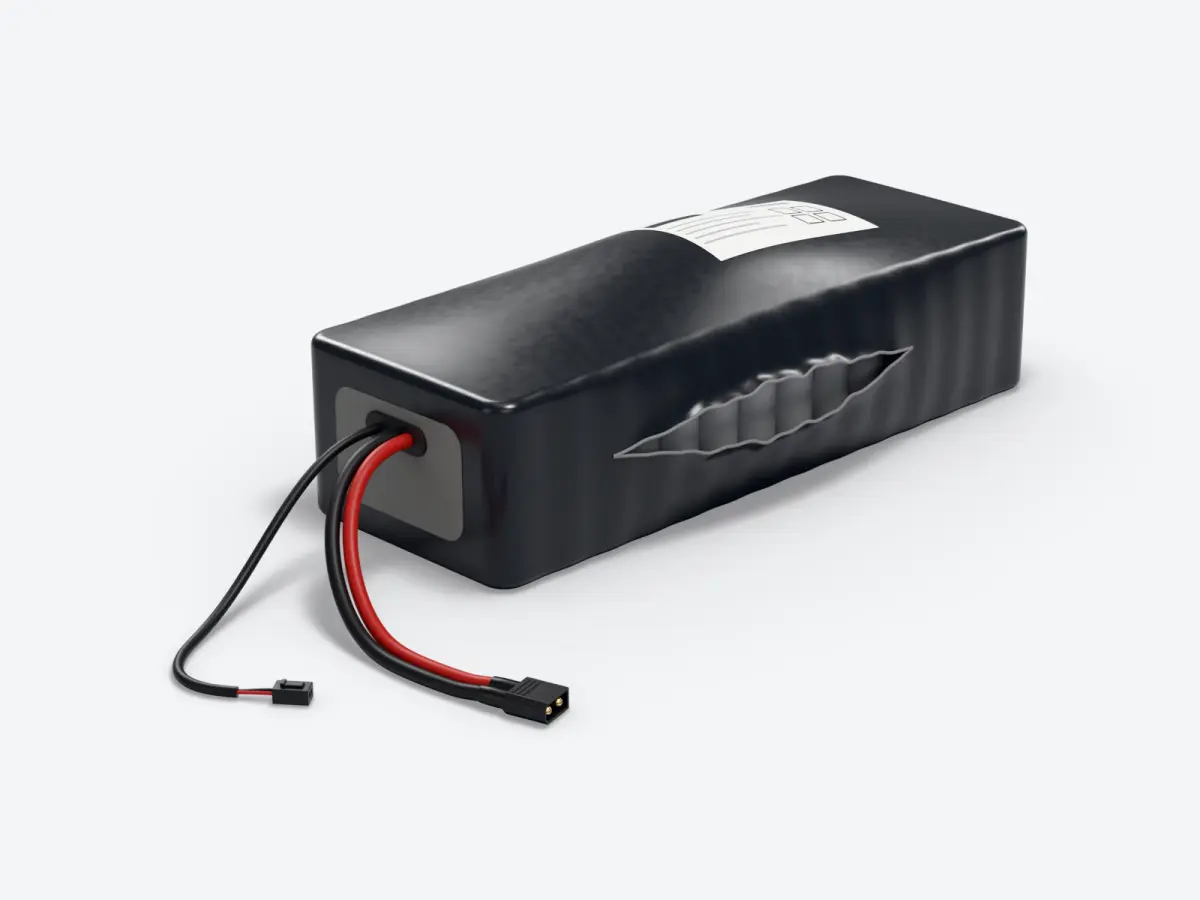
A damaged battery, on the other hand, becomes dangerous. INRS defines it like this: deformed, swollen, punctured, leaking, discharging too fast, overheating or giving off a suspicious smell[3]. The damage is not always visible, especially after a fall or a hard impact[1].
| What you notice | What to do |
|---|---|
| Swollen, deformed, punctured or leaking casing | Stop charging it and stop riding, isolate it and have it taken back[3] |
| Sour or unusual smell | Stop using it at once and contact the seller for a check[11] |
| Excessive heat while charging | Stop charging and do not start again[3] |
| Battery that runs down far too quickly | Have it diagnosed, INRS classes it among damaged batteries[3] |
| Fall or impact on the battery | Stop charging and using it, have the battery inspected[11] |
| Water inside the battery | Do not connect the charger while moisture is present, because of the risk of fire or electric shock[11] |
To ride in the rain without letting water into the battery, see our article on IP ratings.
While you wait for it to be collected
A damaged battery never goes in the bin. INRS advises putting it in a plastic bag, then in a non-combustible container, electrically insulated and filled with a dry material such as sand. Keep the container in a ventilated place, away from other batteries and anything that burns, ideally outdoors under cover[3].
Where can you take a worn-out scooter battery?
A worn-out battery gets recycled. In the European Union, Regulation (EU) 2023/1542 classes scooter batteries as ‘LMT’ batteries, for light means of transport: sealed batteries weighing 25 kg or less, designed to power wheeled electric vehicles[13]. Distributors take back used batteries of the categories they sell free of charge, without requiring you to buy a new one[13].
What changes in 2027 in the European Union
- From 18 February 2027, a product containing an LMT battery must allow an independent professional to remove and replace it easily, throughout the life of the product[13].
- The battery must remain available as a spare part for at least five years after the last unit of the model is placed on the market, at a reasonable price[13].
- Software must not be used to prevent replacement with a compatible battery[13].
- Every LMT battery placed on the market will have a digital passport, and all batteries will carry a QR code[13].
These rules are aimed at manufacturers and importers. They ask nothing of you for the scooter you already own.
What should you do now?
- Check the output voltage and the connector of your charger: they must match your battery.
- Choose a ventilated charging spot, with nothing flammable around.
- Get into the habit of charging when you are there and unplugging at the end.
- Before a long break, bring the battery to the level recommended in your manual and note the date of the next recharge.
- Look over your battery from time to time: casing, cables, charging port, smell, heat.
When to have the battery checked or replaced
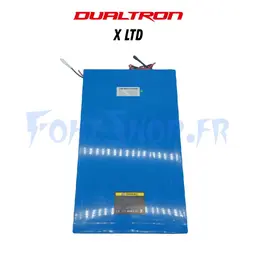
Have the battery checked after a fall or impact, if water has got in, if it gets unusually hot, if it has swollen or if range has dropped noticeably. If your scooter is still under warranty, start with the Warranties and after-sales page, which explains what to do. Out of warranty, a tired battery is replaced with one designed for your model, at the same voltage and with the same connector. You will find them in our batteries section, along with replacement BMS boards.


Sources
- INRS, Brochure ED 6407, February 2021, Definitions and terminology and Charging pages, checked 17 November 2026, Les batteries au lithium. Connaître et prévenir les risques
- INRS, Information sheet ED 6476, February 2022, checked 17 November 2026, Charger une batterie au lithium en toute sécurité
- INRS, Information sheet ED 6475, February 2022, checked 17 November 2026, Se protéger contre les batteries au lithium endommagées
- INRS, Practical safety sheet ED 160, August 2025, checked 17 November 2026, Batteries lithium-ion des équipements sur les lieux de travail. Prévention du risque incendie
- INRS, ‘Utilisation de batteries au lithium’ feature, checked 17 November 2026, Passez à l'action !
- INRS, News article, checked 17 November 2026, Batterie lithium-ion : comprendre les risques pour mieux les prévenir
- Touring Club Suisse, Press release of 6 November 2025, checked 17 November 2026, Les trottinettes électriques réussissent le test de résistance
- Touring Club Suisse, Bike and e-bike advice, checked 17 November 2026, Le vélo électrique en hiver
- Minimotors, Product manual, specifications page, checked 17 November 2026, Dualtron Sonic Alien, product manual
- Minimotors, Product manual, specifications pages, checked 17 November 2026, Dualtron X Limited, product manual
- Minimotors, Product manual, specifications, charging, lithium battery safety and maintenance, checked 17 November 2026, Rovoron S7, product manual
- Teverun, User manual in French, display settings and charging, checked 17 November 2026, Teverun Fighter Mini, Blade Mini, manuel d'utilisation
- EUR-Lex, Regulation (EU) 2023/1542, Articles 3, 11, 13, 62, 77 and 96, checked 17 November 2026, Règlement relatif aux batteries et aux déchets de batteries
- Commission européenne, Page updated on 5 November 2026, checked 17 November 2026, 112 - the EU's emergency phone number
About the author

Benjamin Gayaud
Managing director of FōhzShop
He runs FōhzShop and develops EyeX, the app for Dualtron and Rovoron scooters. He personally tests the electric scooters the shop sells.
Read next
Maintenance9 min read
Electric scooter tyre pressure: the chart by wheel size and by model
The tyre pressure for every scooter in our catalogue, taken from the manufacturer's manual, in psi and bar, sorted by wheel size. Plus the effect of weight and cold, how to read the sidewall and a routine for checking.
Maintenance10 min read
Electric scooter punctures: repair, prevention, tubeless or inner tube
How to tell which tyre you have, plug a tubeless tyre, change an inner tube without damaging the motor wheel, what preventive sealant is really worth, and when the tyre must be replaced rather than repaired.
Maintenance10 min read
Stem wobble or steering play on an electric scooter: causes and fixes
Handlebars that clunk under braking or a stem that moves: the play comes from one of five places. Here is the test to do with the scooter standing still, what can be tightened, what needs replacing, and the torque settings given in the manuals.