Helmet, gloves, protectors: what gear to wear on an electric scooter
Cycle, speed pedelec or motorcycle helmet, gloves, back protector, knee pads, hi-vis vest: what each standard guarantees, how to read the label and what to choose for the speed you ride at.

Benjamin Gayaud
10 min read
Safety
Cycle or motorcycle helmet? It all depends on your speed.
The essentials
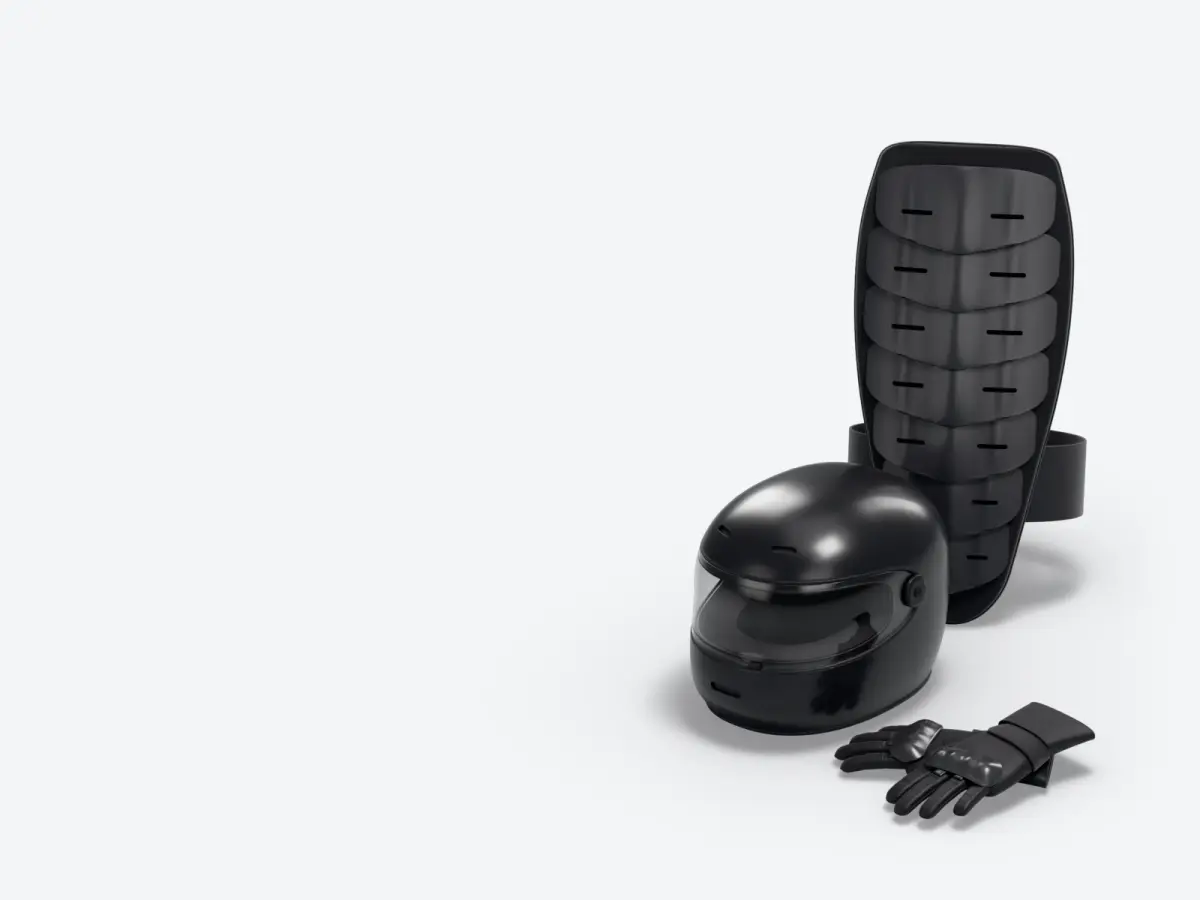
The right gear depends first and foremost on the speed you ride at. An EN 1078 certified cycle helmet is tested with a drop of about 1.5 m, an impact at nearly 20 km/h[2]. An ECE 22.06 approved motorcycle helmet is tested at up to 8.2 m/s, nearly 30 km/h, and also has to pass an oblique impact test that measures head rotation[1]. In between, the Dutch NTA 8776 standard covers fast e-bikes[4]. Add gloves, EN 1621 certified protectors as soon as your speed goes up, and something to make you visible at night.
19.5 km/h
impact speed tested on an EN 1078 cycle helmet (1.5 m drop)
18 kN
maximum average force an EN 1621-2 back protector may let through
29.5 km/h
hardest impact tested on an ECE 22.06 helmet (8.2 m/s)
80%
of light, at least, through a visor made for night riding
- The helmet comes before everything else. Choose its standard for your speed, not for its looks.
- A helmet that has taken a violent impact must be replaced, even if it looks intact[1].
- EN 13594 motorcycle gloves are tested for sliding along the road and for staying on the hand during a fall[9].
- For a back protector or knee pads, the EN 1621 standard measures the force the protector lets through: the less it lets through, the better it protects[10].
- At night, only a clear visor will do. A tinted visor is marked DAYTIME USE ONLY[1].
- What the law requires varies from country to country: see the regulations in your country.
Which helmet should you choose for an electric scooter?
Helmets fall into three families of standards: cycle, speed pedelec and motorcycle. They do not cover the same area of the head and are not tested against the same impacts.
| Type of helmet | Standard | What it covers | What it is for |
|---|---|---|---|
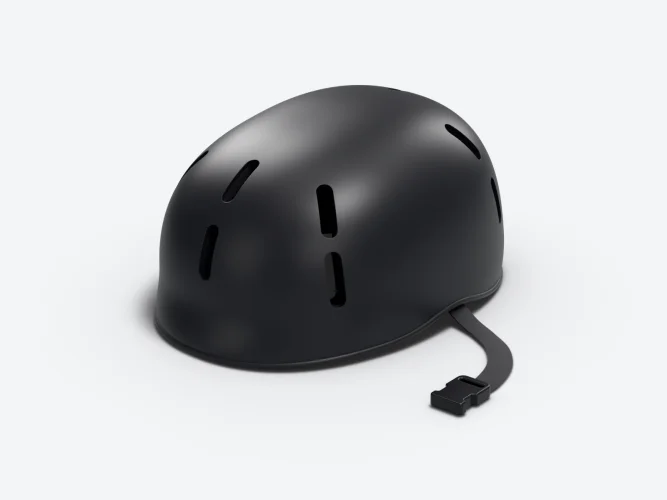
| Cycle helmet, bowl type | EN 1078, the standard for helmets for cyclists and users of skateboards and roller skates[8] | The top, the forehead and the back of the skull. Neither the face nor the chin. | Short trips at a moderate pace, on a light scooter. |
| Speed pedelec helmet | NTA 8776, the Dutch standard for helmets for fast e-bikes[3] | More coverage than a cycle helmet, at the temples and the back of the head[4]. | Faster trips, when you want to keep a light, well-ventilated helmet. |
| Open-face helmet | ECE 22.06, category J: helmet with no chin protection[1] | The whole skull, often with a visor. The chin is left exposed. | Powerful scooter, fast daily commutes. |
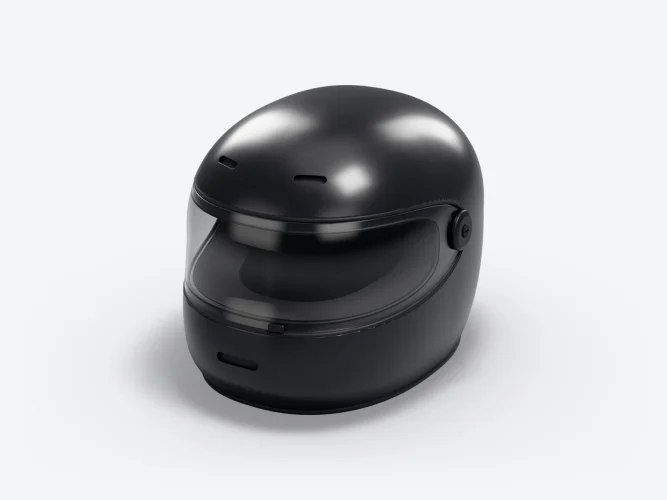
| Full-face helmet | ECE 22.06, category P: full chin protection[1] | The skull, the face and the chin. The chin bar has its own impact test[1]. | High speed, and any outing on a track or private land. |
| Modular helmet | ECE 22.06, P/J if the chin bar protects when closed, NP if it does not[1] | Like a full-face with the chin bar closed, but only if it is marked P/J. | Riders who want to open the helmet when they stop. |
What do the EN 1078, NTA 8776 and ECE 22.06 standards guarantee?
A standard sets out how the helmet is tested. For EN 1078 as for ECE 22.06, a headform wearing the helmet is dropped onto a fixed anvil and its deceleration is measured[2][1]. What changes is the impact speed, the limit that must not be exceeded and the extra tests.
| Standard | Impact test | Impact speed | Limit |
|---|---|---|---|
| EN 1078 (cycle) | Drop onto a flat anvil, then onto a kerbstone-shaped anvil[2] | About 19.5 km/h on the flat anvil (1.5 m drop) and 16.4 km/h on the kerbstone (1.06 m)[2] | 250 g maximum on the headform[2] |
| NTA 8776 (speed pedelec) | Built on EN 1078, with tougher requirements[4] | Higher than for EN 1078[4] | Protected area extended to the temples and the back of the skull[4] |
| ECE 22.06 (motorcycle) | Four impact points, on a flat anvil and on a kerbstone anvil, plus an impact on the chin bar of full-face helmets[1] | 27 km/h (7.5 m/s) in the standard test, 29.5 km/h (8.2 m/s) at high energy, 21.6 km/h (6 m/s) at low energy and on the chin bar[1] | 275 g in the standard test, 180 g at low energy[1] |
The oblique impact, the extra test in ECE 22.06
ECE 22.06 adds an oblique impact test: the helmet is dropped at 8 m/s, nearly 29 km/h, onto an anvil angled at 45 degrees and covered with abrasive paper[1]. The rotation of the head is then measured. The angular acceleration must not exceed 10,400 rad/s², and the brain injury criterion, BrIC, must stay below 0.78[1].
Test speed and scooter speed are not the same thing
These speeds are the speed of the head at the moment it hits the anvil, not the speed of the scooter. But the two are linked. In a simulation study carried out for the Dutch Ministry of Infrastructure, the TNO institute found that the faster the vehicle is travelling at the start, the faster the head hits the ground. Forward speed weighs heavily, not just the height of the fall[5].
How do you read the label and adjust your helmet properly?
On an ECE 22.06 helmet
On a cycle helmet
Look for the EN 1078 standard marked on or inside the helmet. It is the first thing the Swiss Council for Accident Prevention, the BPA, asks you to check[6].
Adjusting it, in four steps
- Put the helmet on straight, across the forehead. For a cycle helmet, the BPA gives a guide: two fingers between the helmet and the top of the nose[6].
- Adjust the straps so that they meet just below the ear[6].
- Fasten the chin strap: one or two fingers between the chin and the strap, no more[6].
- Shake your head. The helmet should neither move nor squeeze[6].
Which gloves for riding an electric scooter?
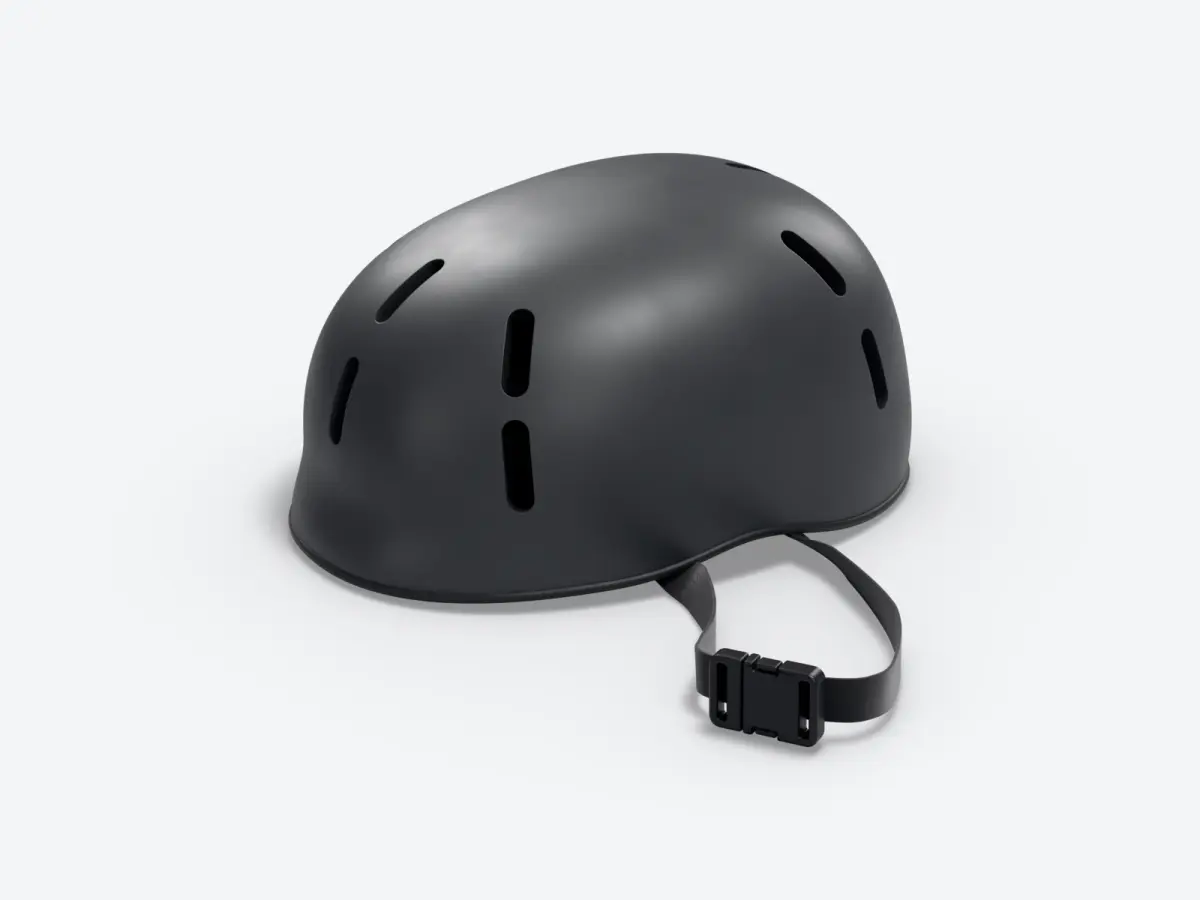
The French road safety agency, Sécurité routière, advises wearing a suitable, fastened helmet and gloves at all times on an electric scooter[7]. In the European list of protective equipment standards, the only glove standard designed for two-wheelers is EN 13594, the one for motorcycle gloves[8]. It goes well beyond a material test.
The slide
An impact abrasion test reproduces the fall and then the slide along the road. It was developed from real accidents.
Staying on
A test checks that the glove does not come off the hand during the accident.
The seams
Their strength is measured. A seam that gives way leaves the hand in contact with the tarmac.
The armour
Impact protection on certain areas is an optional test. The manufacturer takes it if it wants to claim it.
In the shop, we recommend a glove that closes at the wrist, with a reinforced palm, thin enough to feel the brake lever and the throttle trigger properly. Try it on by squeezing both levers at the same time. If you lose your feel for the brake, choose a thinner model.
Back protector, knee pads, elbow pads: which standards to look for?
There are two families of standards. The motorcycle ones measure the force a protector lets through during an impact. The roller sports one covers wrists, palms, knees and elbows.
| Standard | What it covers | What is measured |
|---|---|---|
| EN 1621-1 | The joints: shoulders, elbows, hips, knees[10][12] | Average transmitted force below 35 kN, no single blow above 50 kN. Two levels, 1 and 2[10]. |
| EN 1621-2 | The back: full back, central back or lower back[10] | Average transmitted force below 18 kN, no single blow above 24 kN. Two levels, 1 and 2[10]. |
| EN 1621-3 | The chest[10] | Level 2 for rigid protectors that also spread the force[10]. |
| EN 1621-4 | Inflatable protectors, or airbag vests[10] | Inflation is filmed at 200 frames per second or more. Level 2 protects more than level 1[10]. |
| EN 14120 | Wrists, palms, knees and elbows for roller sports[8] | Impact and abrasion, in three classes by body mass: A up to 25 kg, B from 25 to 50 kg, C above 50 kg[11]. |
Parts 1, 2 and 3 of EN 1621 also provide optional tests at +40 °C and -10 °C[10]. If you ride all year round, look for them on the label.
A jacket or trousers with armour already fitted
Motorcycle clothing follows EN 17092, in five classes[12]. In AAA and AA, protectors at the elbows, shoulders, knees and hips are mandatory. In A, the hip protectors are optional. Class B resists abrasion like class A, but without protectors. Class C only provides the protectors and is worn with another garment[12].
How do you stay visible by day and by night?
To be seen, you need fluorescent colours by day, and retroreflective materials and lights at night. On a scooter, the French road safety agency recommends retroreflective clothing or accessories at all times, and a light worn on the body that neither dazzles nor flashes[7].
- EN ISO 20471, professional high-visibility clothing. Three fluorescent colours are allowed, yellow, orange-red and red, and the reflective strips are measured new and after cleaning[13].
- EN 17353, enhanced visibility equipment for medium-risk situations[8]. The former EN 1150, the standard for non-professional visibility clothing, has been withdrawn from the list of harmonised standards since 5 September 2022[8].
- On the helmet, ECE 22.06 provides for retroreflective elements, sometimes supplied in the box with instructions for sticking them in the right place[1].
- The visor, if it lets through between 35 and 80% of the light, must be marked DAYTIME USE ONLY[1]. At night, switch to the clear visor.
- The cycle helmet: the BPA advises a bright or fluorescent colour, reflective elements and a built-in rear light[6].
On the scooter side, check the lights and reflectors before every night ride. A headlight that is getting dim or a broken reflector should be replaced: we have lighting parts and reflectors for many models. For riding in the rain, also read our article on IP ratings and riding in the rain.
What gear for the speed you ride at?
The faster you ride, the faster your head hits the ground[5], and the higher the standard you need it to be tested to. Here is what we recommend in the workshop, depending on how you ride.
| How you ride | Helmet | Hands and body | Visibility |
|---|---|---|---|
| Short trips at a moderate pace, light scooter | EN 1078 at the very least, properly adjusted | Gloves with a reinforced palm | Light colours, reflective elements, lights on |
| Faster daily commutes, powerful scooter | NTA 8776, or ECE 22.06 open-face with a clear visor | EN 13594 gloves, EN 1621-1 elbow and knee pads or a jacket with armour | EN ISO 20471 or EN 17353 clothing, a rear light worn on you |
| Track or private land, high speed | ECE 22.06 full-face, category P | EN 13594 gloves with impact protection, EN 1621-2 back protector, EN 17092 AA or AAA kit, EN 13634 motorcycle boots[8] | Depending on the place and the time of day |
On public roads, your scooter's speed is also governed by the law in your country. To understand what power really changes, read our article on watts, volts and motors.
Before you buy and ride: the checklist
- Choose your helmet for your speed: EN 1078 in town at a moderate pace, NTA 8776 or ECE 22.06 beyond that.
- Read the label: standard, category J, P, NP or P/J, size.
- Adjust it: straps meeting below the ears, chin strap fastened, no movement when you shake your head.
- Get gloves that close at the wrist, EN 13594 if you ride fast.
- Add EN 1621 elbow pads, knee pads and a back protector as soon as your speed goes up.
- For night riding: clear visor, reflective clothing, a light worn on you, the scooter's lights and reflectors checked.
- After a violent impact, replace the helmet, even with no visible damage.
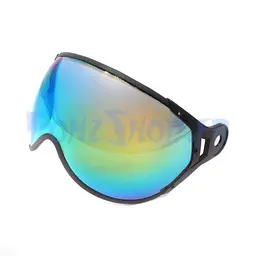
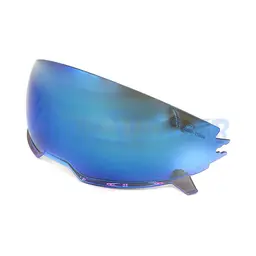
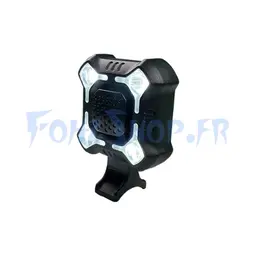
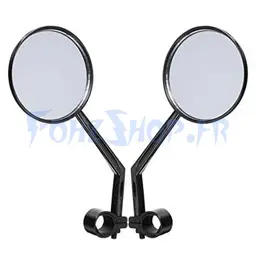
In our catalogue, you will find replacement visors for the Jet Revo and Street Revo helmets, a horn with an LED headlight, and mirrors.
Sources
- Commission économique des Nations unies pour l'Europe (CEE-ONU), Document ECE/TRANS/WP.29/2020/60, French version, checked on 17 November 2026, Proposition de série 06 d'amendements au Règlement ONU no 22 (Casques de protection)
- SATRA Technology, Standard summary, checked on 17 November 2026, EN 1078: 2012 - Cycle helmets
- NEN, institut néerlandais de normalisation, Standard summary, checked on 17 November 2026, NTA 8776:2016 en - Helmets for S-EPAC riders
- CONEBI, Confédération de l'industrie européenne du vélo, Press release, checked on 17 November 2026, New Dutch Standard for Speed-EPAC helmet published
- TNO, pour le ministère néerlandais des Infrastructures, Report TNO-2021-R10658 of 9 April 2021, checked on 17 November 2026, Evaluatiestudie speed-pedelec-helm en bromfietshelm voor snorfietser
- BPA, Bureau de prévention des accidents (Suisse), Presentation of 1 June 2022, checked on 17 November 2026, Les activités du BPA dans le domaine des casques de vélo pour enfants
- Délégation à la sécurité routière (France), Leaflet of October 2023, checked on 17 November 2026, Trottinette électrique, monoroue… Comment bien circuler ?
- Commission européenne, List of harmonised standards under Regulation (EU) 2016/425, edition of 13 November 2026, checked on 17 November 2026, Harmonised standards - Personal protective equipment
- SATRA Technology, Standard summary, checked on 17 November 2026, EN 13594: 2015 - Protective gloves for professional motorcycle riders
- SATRA Technology, Standard summary, checked on 17 November 2026, EN 1621 - Motorcyclists' clothing protecting against mechanical impact
- SATRA Technology, Standard summary, checked on 17 November 2026, EN 14120: 2003 + A1: 2007 - Wrist, Palm, Knee & Elbow Protectors for Users of Roller Sports Equipment
- SATRA Technology, Standard summary, checked on 17 November 2026, EN 17092: 2020 Parts 1-6 - Protective clothing for motorcycle riders
- SATRA Technology, Standard summary, checked on 17 November 2026, EN ISO 20471:2013+A1:2016 - High visibility clothing
About the author

Benjamin Gayaud
Managing director of FōhzShop
He runs FōhzShop and develops EyeX, the app for Dualtron and Rovoron scooters. He personally tests the electric scooters the shop sells.
Read next
Safety5 min read
E-scooters in London and on trains: TfL and National Rail rules
On the Transport for London network, e-scooters are banned even when folded, with a fine of up to £1,000. On trains, each train company decides. The reason: the fire risk from batteries. The rules as they stand on 17 November 2026.
Safety11 min read
Electric scooter theft: which lock, which GPS tracker and what to do if it is stolen
D-locks, chains, folding and cable locks, Sold Secure, ART and VdS ratings, the right way to lock up, electronic locks, 4G GPS trackers and what to write down before a theft: the guide to protecting your electric scooter.
Maintenance9 min read
Electric scooter tyre pressure: the chart by wheel size and by model
The tyre pressure for every scooter in our catalogue, taken from the manufacturer's manual, in psi and bar, sorted by wheel size. Plus the effect of weight and cold, how to read the sidewall and a routine for checking.