Electric scooter tyres: types, wear, pressure and replacement
Inner tube, tubeless or solid, the size moulded on the sidewall, signs of wear, changing a tyre step by step, pressure and storage: the workshop guide to keeping your tyres safe, with sources.

Benjamin Gayaud
12 min read
Maintenance
Cold pressure once a month: the habit that makes a tyre last
The essentials
You check a scooter tyre by eye and with a pressure gauge. Set the pressure to the figure given by your scooter's manufacturer, with the tyres cold, at least once a month. Change the tyre as soon as the casing threads show, the sidewall is cut or a bulge appears. On a powerful scooter, a pneumatic tyre, with an inner tube or tubeless, is still the best choice for comfort.
Every month
at the very least to check the pressure, according to Schwalbe
2 to 7 months
of effectiveness for a puncture sealant, according to Schwalbe
2 hours
without riding before measuring a cold tyre, according to Michelin
500 km
or six months between two tyre wear checks, according to the Rovoron R7 manual
- The right pressure is the one set by your scooter's manufacturer. The figure moulded on the sidewall is first and foremost a limit.
- Measure it with a pressure gauge, tyres cold, at least once a month.
- Visible threads, a cut sidewall, a bulge or large cracks: change the tyre before you ride again.
- To order, copy the exact size from the sidewall and note whether the tyre is tubeless or takes an inner tube.
Inner tube, tubeless or solid: which tyre should you choose?
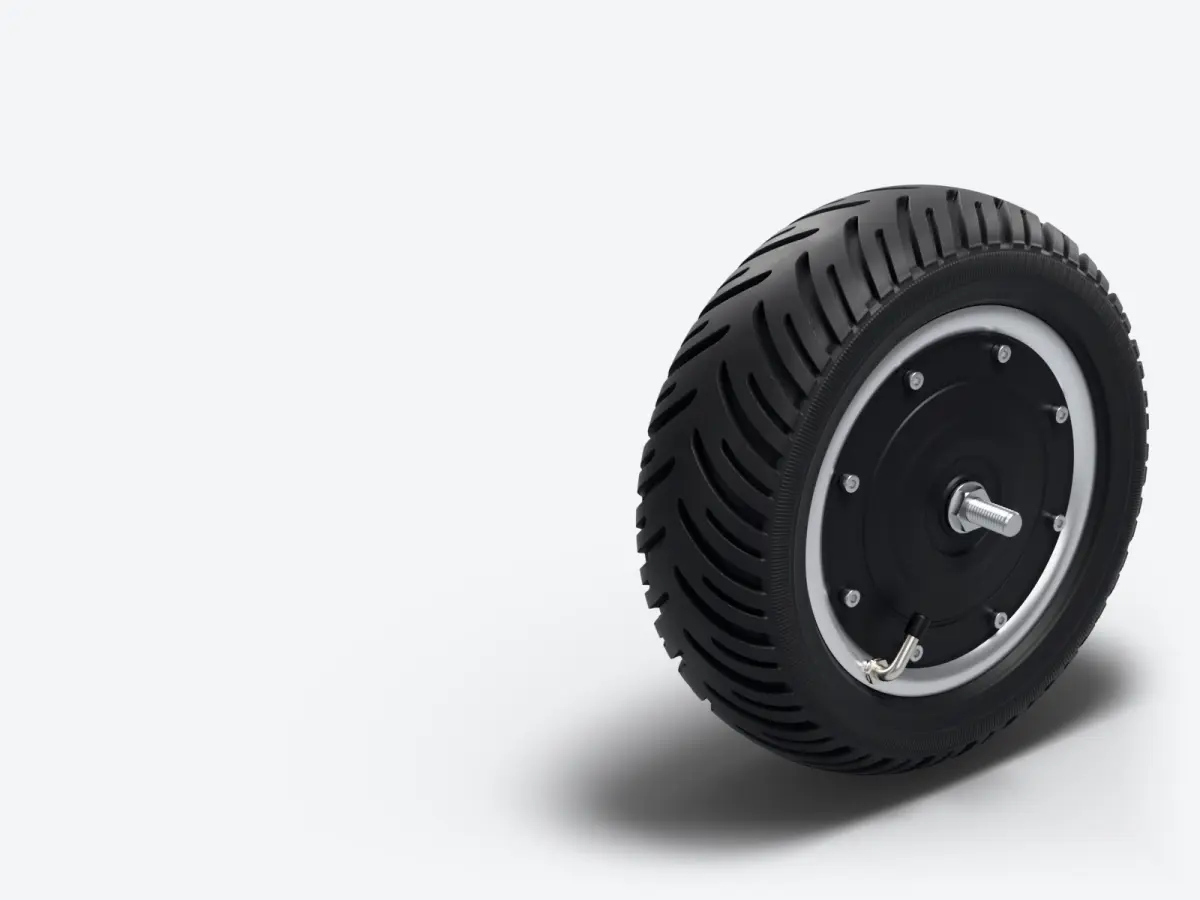
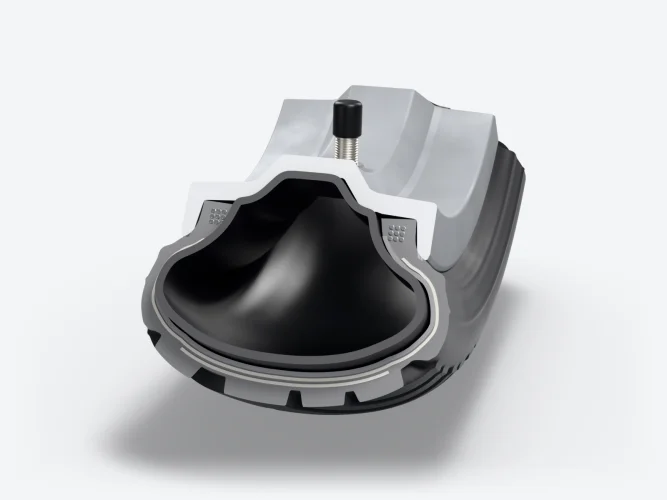
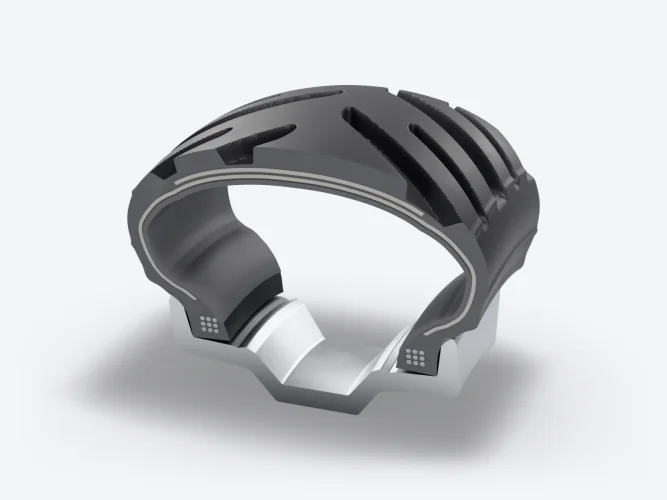
Electric scooters use three main families of tyres. The pneumatic tyre with an inner tube, the tubeless tyre, which holds air without a tube, and the solid tyre, with no air at all, often sold as puncture-proof. The word ‘Tubeless’ on the sidewall means no inner tube is needed, and ‘Tube type’ means one is required[3].
| Tyre type | Advantages | Limits |
|---|---|---|
| Pneumatic with an inner tube | The air absorbs shocks. The tube is easy to replace after a puncture. | Riding under-inflated speeds up wear and increases the risk of a puncture[6]. |
| Tubeless | No sudden tube blowout, a much lower risk of punctures, and it works very well with a puncture sealant[9]. | Fitting is more technical and needs a rim designed for it[9]. |
| Solid or puncture-proof | No punctures possible and no pressure to keep an eye on. | It gives the least comfort, according to a study on scooter vibration[11]. |
| Pneumatic with preventive sealant | The sealant plugs small holes while you ride[9]. | It does not repair cuts or blowouts, and it dries out after a few months[9]. |
The study published in 2026 in the journal Machines compared tyres inflated to 30 and 60 psi with solid tyres on a scooter, at 10, 20 and 30 km/h. Speed and road roughness matter most for comfort, but solid tyres consistently give the poorest result[11]. On powerful, heavy scooters, we therefore recommend pneumatic tyres, with an inner tube or tubeless.
Road, hybrid or off-road
The tread pattern changes with the use. On a clean road it matters little: grip comes mostly from the rubber, and a slick tyre even grips better than a treaded one, in the wet too, because more of it touches the ground[10]. On a dirty road or a dirt track, however, knobbles make a real difference[10]. A road tyre therefore suits the city, an off-road tyre suits tracks and gravel, and a hybrid tyre strikes a balance between the two.
How do you read the size of a scooter tyre?
Before changing a tyre, you need to know its exact size. It is moulded on the sidewall, in one of two forms.
- In inches, such as 10 × 2.5 or 10 × 3. The first figure is the approximate outer diameter, the second the width of the tyre[8]. One inch is 2.54 cm[3], so a 10 × 2.5 is about 25 cm tall and just over 6 cm wide. Schwalbe says so itself: these inch sizes are not precise[8].
- In millimetres, such as 90/65-6.5. The first number is the width in millimetres, the second the sidewall height as a percentage of that width, and the last the rim diameter in inches[3]. A 90/65-6.5 is 9 cm wide, with a sidewall of about 5.8 cm, on a 6.5-inch rim.
- What about ‘11 inches’? That is the outer diameter. Do the sum for a 90/65-6.5: a 6.5-inch rim, or 16.5 cm, plus two 5.8 cm sidewalls, gives about 28 cm, roughly 11 inches.
The sidewall also shows the date of manufacture: a four-digit code in which the first two digits give the week and the last two the year[3]. ‘4724’ means week 47 of 2024. This helps you spot a tyre that has been in storage for a long time. Finally, look for an arrow: on many tyres it shows the direction of rotation, and the wheel must turn the way the arrow points when you ride[10].
What pressure should you put in a scooter tyre?
The pressure to follow is the one set by your scooter's manufacturer, in its manual. The tyre sidewall often shows a maximum pressure, but that is not necessarily the figure to use on your scooter[3]. Pirelli and Michelin give the same advice for two-wheelers: follow the vehicle manufacturer's figure[5][1]. Figures by model and by tyre size are gathered in our tyre pressure chart.
Why check it often, and cold
Even a new tyre loses air over time[1]. The cold also makes the pressure drop[5]. Schwalbe recommends a check every month[6]. The thumb test is not enough: beyond a certain pressure, every tyre feels hard to the touch[6].
- Cold. For Michelin, a tyre is cold when it has not been ridden for at least two hours, or for no more than 3.2 km at low speed[1].
- With an accurate pressure gauge, not by guesswork or by feel[1].
- Never let air out of a hot tyre. Just after a ride, the reading is higher. Michelin rules out letting air out of a hot tyre: it would end up under-inflated[1].
- Screw the valve cap back on after each inflation, as Minimotors reminds you in the Rovoron R7 manual[13].
Under-inflated tyre
It wears faster at the edges, grips less well and punctures more easily. Riding like this for a long time also cracks the sidewall.
Correctly inflated tyre
It holds the road well, gives good grip, wears normally and lasts longer.
Over-inflated tyre
It touches the ground over a smaller area, grips less, gives a harsher ride and wears faster in the centre.
These effects are described by tyre manufacturers: Michelin for wear at the edges or in the centre and loss of grip[2], and for contact area and comfort on two-wheelers[1], Schwalbe for the risk of punctures[6] and sidewall cracks[7].
How can you tell if a scooter tyre is worn?
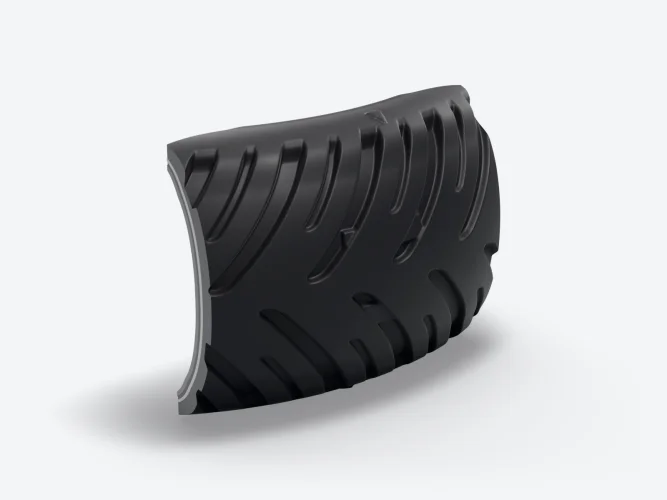
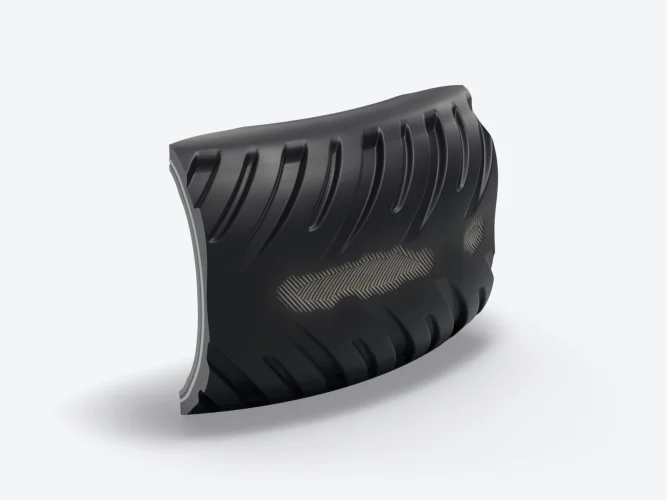
Look closely at your tyres, all the way round, every time you check the pressure. In the Rovoron R7 manual, Minimotors asks you to check every six months or every 500 km that the tyres are not cracked, deformed or significantly worn[13]. Here are the signs to know and what to do about them.
| What you see | What it means | What to do |
|---|---|---|
| Smooth tread, pattern almost worn away | The rubber is getting thinner, and the tyre resists punctures less well[7]. | Plan the replacement without waiting for a puncture. |
| Threads or casing visible on the tread | The tyre is worn down to its structure and must be replaced[7]. | Stop riding on it and change it straight away. |
| Bump or bulge on the sidewall | The internal structure is damaged. Pirelli recommends changing a tyre as soon as it is damaged[5]. | Change it before riding again. |
| Deep cut in the sidewall | The tyre may fail. As with a bulge, it must be changed[5]. | Change it straight away. |
| Large cracks at the top of the sidewall | A typical sign of a tyre ridden under-inflated for a long time[7]. | Change it and check the pressure more often. |
| Small fine cracks all over the sidewall | Normal ageing of the rubber[7]. | Keep an eye on them, and change the tyre if they open up or deepen. |
| More wear at the edges than in the centre | Under-inflation[2][7]. | Correct the pressure, then check the condition of the tyre. |
| More wear in the centre | Over-inflation[2]. | Go back to the manufacturer's pressure. |
| Flat spot, a flattened area on the tread | In our experience, often a wheel that locked under braking and skidded in place. | Change it if it causes vibration or if it is deep. |
Some tyres have a tread wear indicator, small notches in the tread. Where there are any, their position is often marked on the sidewall with arrows and the letters TWI[7]. Many scooter tyres do not have one: in that case, go by the look of the rubber and the signs in the table.
The drive wheel wears faster
Tyres that transmit the motor's power and torque wear faster than the others, Michelin explains for cars[4]. A scooter is no different: on a single-motor model, the drive wheel usually wears first. On a dual-motor scooter, both wheels do the work. Riding style matters a lot too: Pirelli lists aggressive riding among the causes of wear[5]. Brake progressively, without locking the wheel: that is what prevents flat spots.
When and how do you change a scooter tyre?
Change the tyre at the first serious sign in the table: visible threads, a cut or bulge on the sidewall, large cracks. Pirelli recommends changing a tyre every time it has been damaged[5]. Our advice: while the wheel is off, change the inner tube too if it has already covered a lot of kilometres. Here is the workshop method, which works for most scooters.
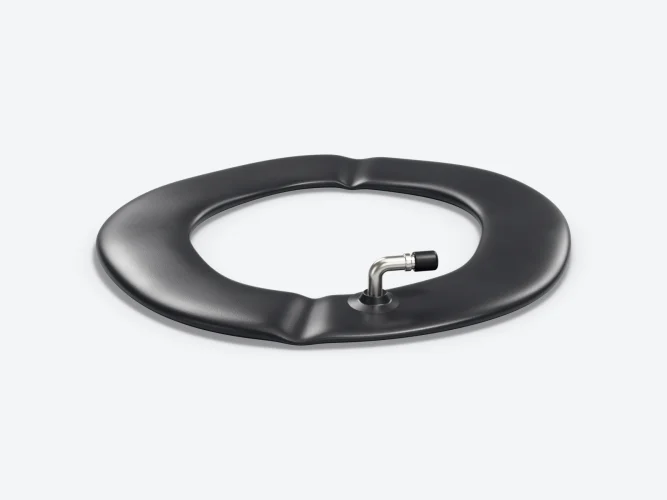
- Order the tyre in the exact size on the sidewall, tubeless or with an inner tube like the old one, along with the matching tube and valve.
- Deflate the tyre fully by unscrewing the valve core, then remove the wheel. On a drive wheel, disconnect the motor cable before taking out the axle.
- Break both beads of the tyre away from the rim, then lever one bead over the rim edge with tyre levers. Go gently: Schwalbe advises using a tyre lever only with care[9]. Keep the tools away from the brake disc.
- Run your hand around the inside of the tyre and inspect the rim. A stone, a shard of glass still stuck in or a damaged rim edge would puncture the new tyre.
- Fit the new tyre following the rotation arrow on the sidewall, if it has one[10]. With an inner tube, inflate it just slightly before slipping it into the tyre, so that it sits without creases and does not get pinched under the bead.
- For tubeless, coat both beads with mounting fluid, then inflate with a strong burst of air. The tyre snaps onto the rim with a pop. Then check that it is seated all the way round, using the moulded line near the bead[9].
- Set the manufacturer's pressure, refit the wheel, reconnect the motor and tighten the axle. Spin the wheel: the disc must pass through the caliper without rubbing.
- Ride gently for the first few kilometres and check the pressure again the next day.
Puncture or a tyre that keeps going down: what should you do?
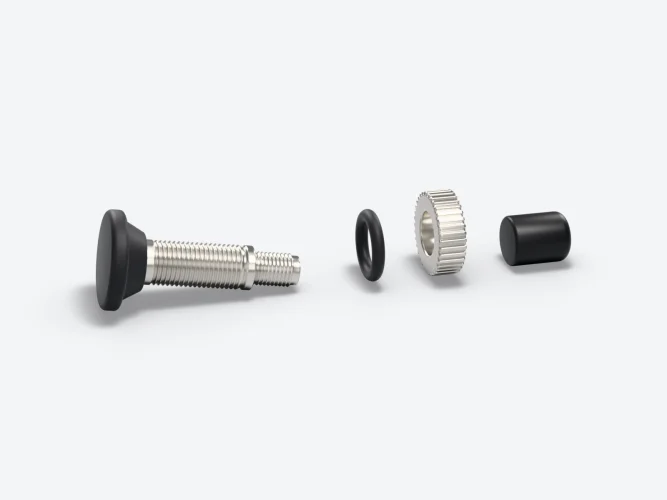
The first protection against punctures is pressure: an under-inflated tyre punctures more easily[6]. A preventive sealant then seals small holes while you ride, especially in tubeless tyres[9]. Schwalbe gives its sealant about 2,000 km or 2 to 7 months of effectiveness, depending on temperature, and states that it is not suitable for cuts or blowouts[9].
- Tyre losing air with no visible hole? A faulty or badly fitted valve, a leak at the rim or corrosion can also be the cause[5]. Check the valve first.
- Puncture with an inner tube. In our experience, the safest option is to replace the tube and find what caused the puncture, a stone, glass or a thorn, before refitting the tyre.
- Puncture on a tubeless tyre. Repair kits exist, but Pirelli recommends changing a tyre as soon as it has been damaged[5]. A roadside repair gets you home, it does not replace a new tyre.
- Cut, damaged sidewall or bulge. No repair is possible: the tyre must be changed.
Step-by-step repairs, plugs and sealants are covered in detail in our article on punctures.
Rain, cold and storage: what changes for tyres
In the rain, the first thing to lose grip is not the tyre, it is the road. In a Cerema study for France's road safety observatory, motorcyclists named slippery road markings and manhole covers or other metal plates among the hazards of the road[12]. Their tips for white lines: do not brake on them and ride across them straight[12]. On a scooter, this advice applies just as much.
- Avoid braking or turning on white lines, metal plates and rails.
- Watch out for wet fallen leaves too, especially in autumn.
- When it is cold, pressure drops[5]: check it more often in winter.
- Keep a new tyre somewhere cool, dry and above all out of the light. In those conditions, Schwalbe says its tyres can be stored for 5 years without any problem[7].
- Store the scooter away from oils and solvents, and out of the sun: Pirelli warns that UV rays, like these products, damage rubber[5].
Your tyre maintenance routine
- Note the pressure recommended by your scooter's manufacturer, front and rear.
- At least once a month, and before a long ride, measure the pressure cold with a gauge.
- Go round each tyre: tread, sidewalls, bulges, cracks, embedded objects.
- Look at the drive wheel first, as it is often the one that wears most.
- At the slightest visible thread, cut or bulge, stop riding on that tyre and change it.
- To order, copy the exact size from the sidewall and check whether the tyre is tubeless or takes an inner tube.
You will find our tyres in the tyres category of our spare parts and inner tubes in the inner tubes category. For any warranty question, see our warranties and after-sales page.


Sources
- Michelin, Motorcycle tyre reference card, Michelin North America (Canada), 2023, La conduite sécuritaire commence avec la pression d'air appropriée
- Michelin, Car advice, updated 16 March 2026, Quelle pression pour les pneus de votre voiture ?
- Michelin, Car advice, updated 14 October 2026, Explication des marquages des pneus : comment lire un pneu ?
- Michelin, Car advice, updated 16 March 2026, Permutation des pneus : prolongez leur durée de vie
- Pirelli, Motorcycle tyre FAQ, accessed 17 November 2026, FAQ sur les pneus moto : questions et réponses les plus fréquentes
- Schwalbe, Technology and FAQ, bicycle tyres, accessed 17 November 2026, Pression d'air des pneus de vélo
- Schwalbe, Technology and FAQ, bicycle tyres, accessed 17 November 2026, Usure des pneus de vélo
- Schwalbe, Technology and FAQ, bicycle tyres, accessed 17 November 2026, Désignation de la taille pour les pneus de vélo
- Schwalbe, Technology and FAQ, bicycle tyres, accessed 17 November 2026, Tubeless
- Schwalbe, Technology and FAQ, bicycle tyres, accessed 17 November 2026, Profil de pneu vélo
- Machines (MDPI), Volume 14, issue 1, article 120, January 2026, E. X. Vaca Michilena and J. D. Cano-Moreno, Multibody Dynamic Analysis of an E-Scooter Considering Asymmetric Tire Stiffness, Speed, and Surface Roughness
- Observatoire national interministériel de la sécurité routière, DYMOA+ project, deliverable L3, Cerema, 28 July 2022, Analyse qualitative des vidéos et étude de la perception de comportements de conduite de deux-roues motorisés
- Minimotors, English-language manual for the Rovoron R7 and R7 Pro, maintenance, accessed 17 November 2026, R7 Product Manual
About the author

Benjamin Gayaud
Managing director of FōhzShop
He runs FōhzShop and develops EyeX, the app for Dualtron and Rovoron scooters. He personally tests the electric scooters the shop sells.
Read next
Maintenance9 min read
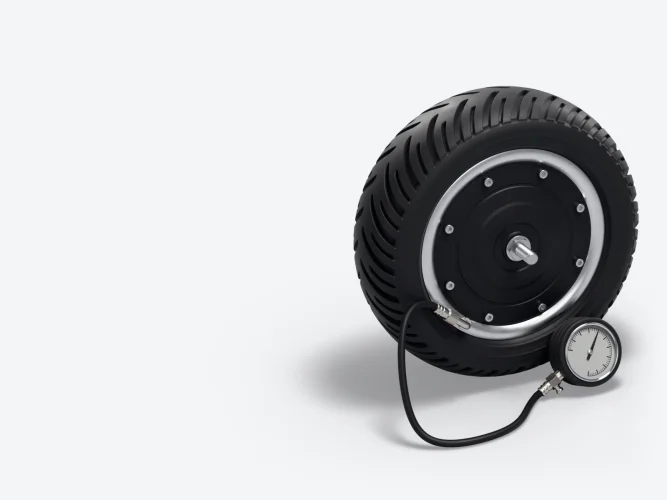
Electric scooter tyre pressure: the chart by wheel size and by model
The tyre pressure for every scooter in our catalogue, taken from the manufacturer's manual, in psi and bar, sorted by wheel size. Plus the effect of weight and cold, how to read the sidewall and a routine for checking.
Maintenance10 min read
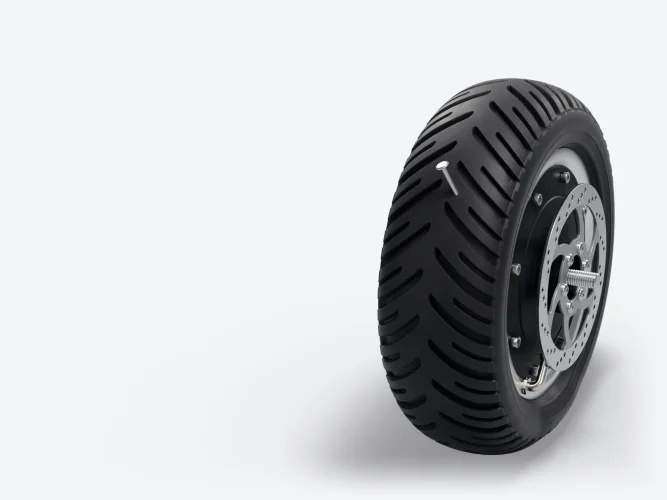
Electric scooter punctures: repair, prevention, tubeless or inner tube
How to tell which tyre you have, plug a tubeless tyre, change an inner tube without damaging the motor wheel, what preventive sealant is really worth, and when the tyre must be replaced rather than repaired.
Maintenance10 min read
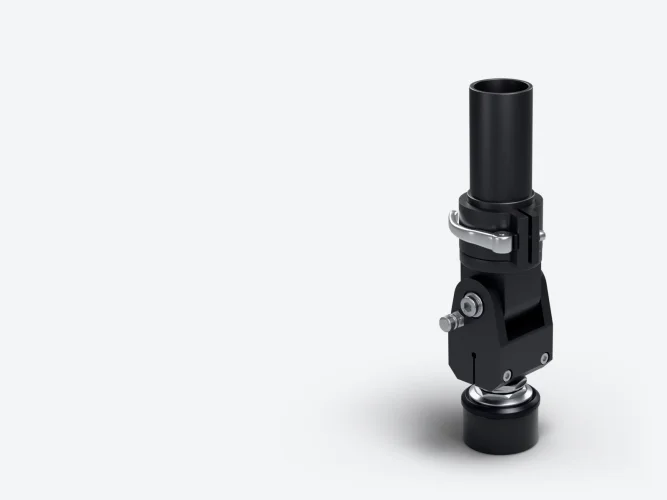
Stem wobble or steering play on an electric scooter: causes and fixes
Handlebars that clunk under braking or a stem that moves: the play comes from one of five places. Here is the test to do with the scooter standing still, what can be tightened, what needs replacing, and the torque settings given in the manuals.