Stem wobble or steering play on an electric scooter: causes and fixes
Handlebars that clunk under braking or a stem that moves: the play comes from one of five places. Here is the test to do with the scooter standing still, what can be tightened, what needs replacing, and the torque settings given in the manuals.

Benjamin Gayaud
10 min read
Maintenance
Wobbly stem? Find where the play comes from before you tighten.
The essentials
A wobbly stem does not have a single cause. The play comes from the folding hinge, the collar that locks it, the stem tube, the headset or the handlebar mount. Before you tighten anything, you need to find out which one, and a test with the scooter standing still and the front brake on is usually enough. Then you either adjust it or replace the worn part. The manufacturers' manuals give the torque settings and the inspection intervals.
15 ± 1 N·m
for the folding screws on Dualtron models with the EY2 display and on the Rovoron S7
3 years
or 20,000 km: service life of the stem on the Teverun Fighter Mini and Blade Mini
500 km
or 6 months: check the folding mechanism and steering, says Minimotors
- Test one area at a time, with the front brake on. A clunk on its own does not tell you where it comes from.
- On Dualtron models with a lever, start with the adjusting screw on the QR lever: it is what tensions the clamp collar.
- A headset should be adjusted as loose as possible, but with no play. Too tight wears the bearings just as much as too loose.
- A part that is cracked, ovalised or rusty is not tightened: it is replaced.
- If the handlebars move while you are riding, stop. Do not finish the journey.
Where does play in an electric scooter stem come from?
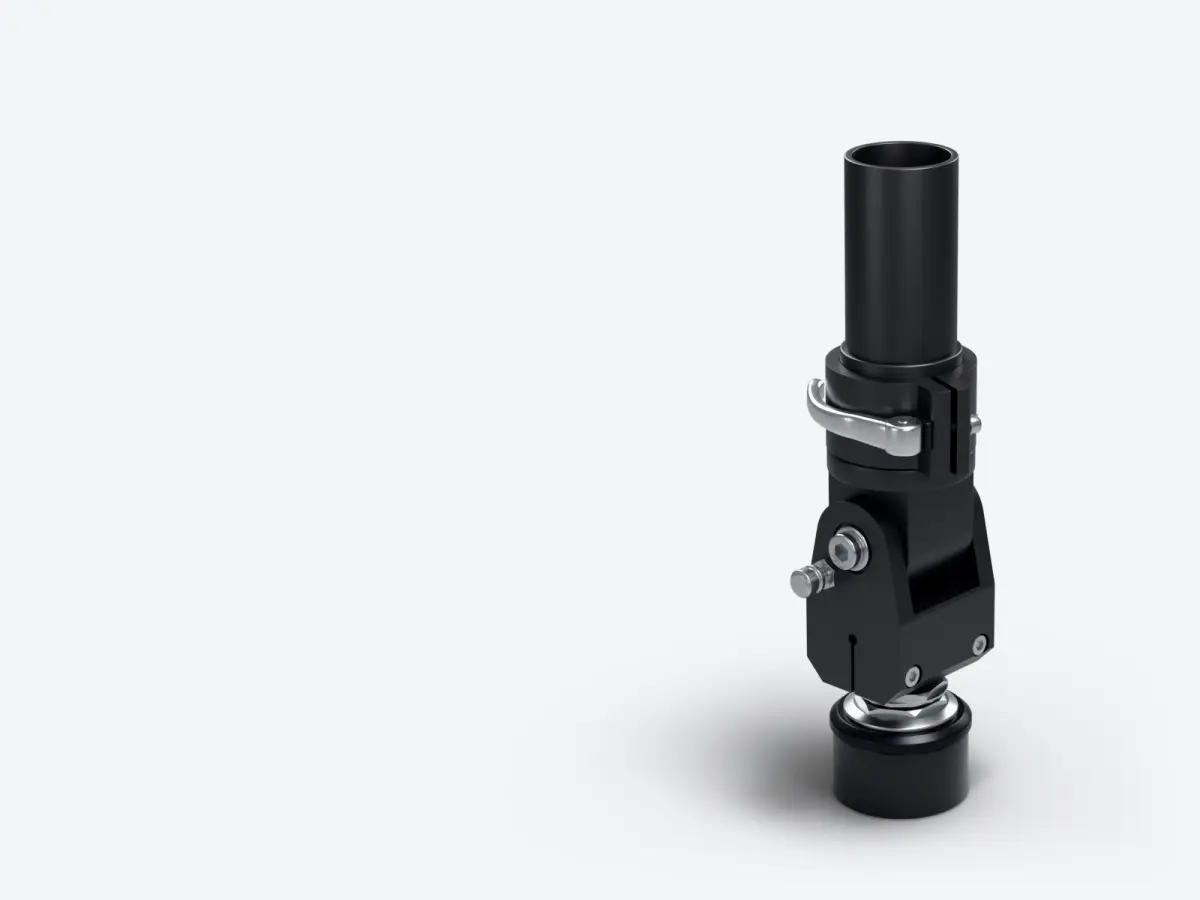
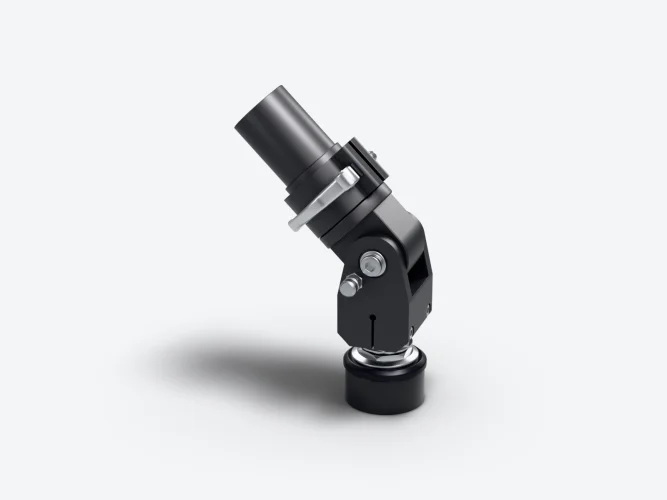
People often call the whole tube that rises from the deck to the handlebars the ‘stem’. In the workshop, we split it into five areas, because each one develops play in its own way and is repaired differently.
| Area | What it is | What develops play |
|---|---|---|
| Folding hinge | The joint at the bottom of the column that lets you fold the handlebars down onto the deck | The pivot pin in its housing, the latch or the locking hook |
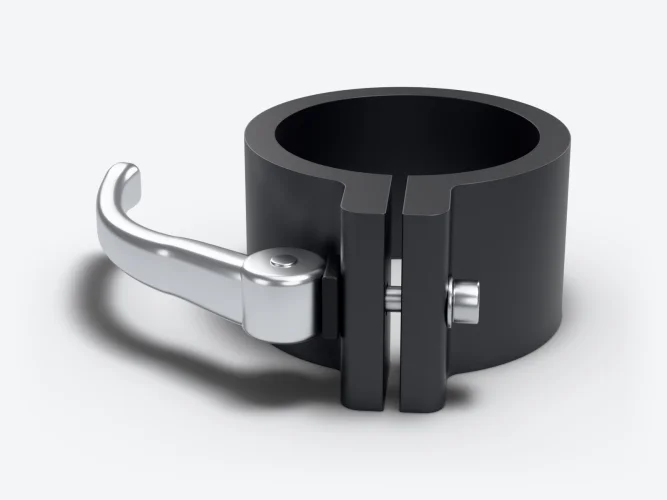
| Clamp collar | The part that locks the hinge when it is unfolded. On the Dualtron Victor, a sliding collar tightened by a QR lever[3] | A lever that loses tension, a collar that goes oval or cracks |
| Stem tube | The vertical tube itself, which carries the handlebars | Its mounting screws working loose, a crack after an impact |
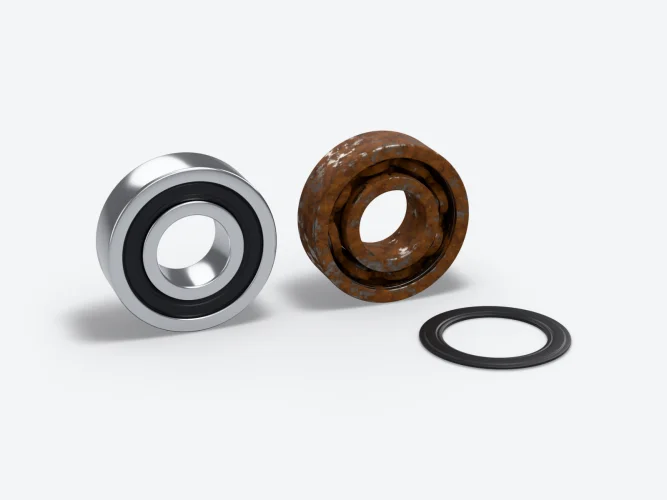
| Headset | The two bearings the column turns in, at the top and bottom of the frame's head tube | The adjusting nut working loose, pitted bearings |
| Handlebars | The bar, its stem or folding system, the grips | The stem screws, the handlebar folding mechanism |
A clunk can also come from lower down. On a scooter with swingarms, a worn pivot bushing makes a very similar noise. Our article on suspension explains how to recognise it.
How do you test the stem for play with the scooter standing still?
The test comes from cycling. Park Tool, a maker of bicycle tools, describes it for the headset: front brake on, free hand over the headset, rock back and forth and feel for play between the parts[6]. On a scooter, you do the same thing, moving your hand from one area to the next.
- Unfold and lock the scooter as if you were going to ride it, standing on both wheels on flat ground.
- Pull the front brake hard. Push and pull the handlebars backwards and forwards, without forcing.
- Put your free hand on the folding hinge, then on the clamp collar. A knock under your palm at that point means the folding mechanism.
- Then put your hand at the top of the head tube, where the column goes into the frame. A knock at that point means the headset is too loose[6].
- Lift the front wheel and turn the handlebars from one stop to the other. Minimotors says there should be no resistance or lag when turning[1]. A tight spot or regular notches point to pitted bearings or bearings that are too tight[6].
- Hold the front wheel between your knees and force the handlebars a little to turn them. If they turn without the wheel, the handlebar or column mount is slipping.
- Finally, shake each grip up and down. Play at that point comes from the handlebar folding mechanism or the stem screws.
| What you feel | Likely cause | What to do |
|---|---|---|
| A knock at the hinge when you push the handlebars | Clamp collar that has lost tension or is worn, tired folding latch | Adjust the lever tension, then replace the collar or the latch |
| A knock at the top of the head tube, brake on | Headset too loose | Adjust the headset nut, check the bearings |
| Notches or a tight spot when turning, wheel lifted | Pitted bearings, or headset too tight | Loosen it slightly, then replace the bearings if the notches remain |
| The handlebars turn without the wheel | Loose stem or column screws | Tighten to the torque in the manual |
| The grips move up and down | Handlebar folding mechanism or stem screws | Adjust the handlebar folding mechanism, tighten the screws |
Play in the folding mechanism or clamp collar: what to adjust?
On the Dualtron Victor, the manual describes the locking sequence like this: raise the column, slide the clamp collar back down over the hinge, then close the QR lever. It says to tighten the adjusting screw properly so that the lever holds the collar firmly in every direction, and to check for looseness while riding[3]. This screw is the first thing to adjust when the collar moves. A lever that closes with no effort is no longer clamping anything.
On the Thunder 3, Minimotors adds one point: when you raise the column, the folding latch must go properly into its button. Otherwise, the column can fall back down and be damaged[4].
For the folding mechanism screws, the Minimotors manuals for Dualtron models with the EY2 display and for the Rovoron S7 give 15 ± 1 N·m. They add a useful instruction: if the stem shakes while riding, tighten these screws with the scooter folded[1] [2]. Use a torque wrench, not guesswork. At Teverun, the manual for the Fighter Mini and Blade Mini says to check before every ride that the folding and handlebar screws are tight, that the lever has no play, and that there is no significant play between the parts[5].
When the lever, collar or hinge is worn
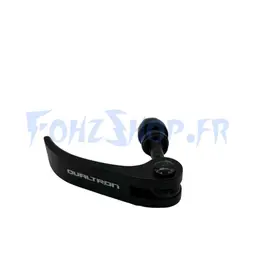
- The 8 mm clamp collar lever for Dualtron scooters can be replaced on its own when it no longer clamps, even after adjustment. Its product page lists the compatible models, from the Achilleus to the Eagle.
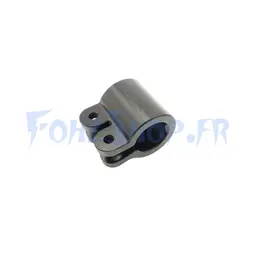
- The genuine clamp collar is sold without a lever for the Dualtron Storm, Victor, City and Achilleus. Keep the lever if it is in good condition.
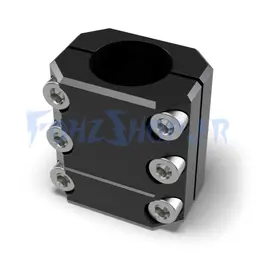
- The reinforced 6-bolt collar, in a Funtrott or FōhzShop version, replaces the lever collar with six-bolt clamping. The Funtrott product page says it removes play in the column and creaking, and lists it for Dualtron models with a double-collar folding mechanism, in red or silver. Neither one fits the Rovoron S7, whose folding mechanism cannot be modified.
- The Funtrott reinforced quick-lock collar keeps quick folding, with three-point locking. Its product page lists it for Dualtron models released from 2021 onwards.
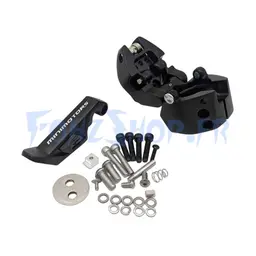
- The complete folding system is replaced when the hinge itself has developed play or cracked. The V2 version is available for the Dualtron Thunder 3, Storm Limited and Victor Limited.
Headset play: adjust the nut or replace the bearings?
When the column turns in the frame, it does so on two bearings, at the top and bottom of the head tube. A nut at the top holds them under load. It is the same principle as on a bicycle, with the same mistakes.
Park Tool describes both of them. Too loose, the bearing has play: the balls knock against their races with every small impact on the front wheel, which wears the races and can even deform the balls, and the steering becomes less precise. Too tight, it wears quickly, feels stiff and becomes notchy. The right adjustment is as loose as possible, with no play[6].
Step-by-step adjustment
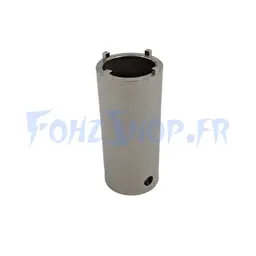
- Find the headset nut at the top of the head tube. On several Dualtron models, it is turned with a four-pin socket: this is our steering column tool for the Achilleus, City, Storm, Thunder and Victor.
- Loosen whatever locks the nut, a locknut or a locking screw depending on the model.
- Tighten the nut by a small amount, then repeat the test with the brake on. Keep going until the play disappears, as Park Tool advises[6].
- Lift the front wheel and turn the handlebars. They should turn freely, with no tight spot.
- Lock the nut again, then do both tests one last time.
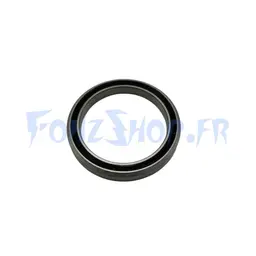
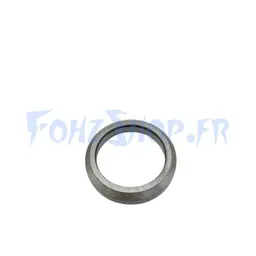
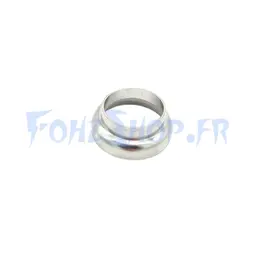
We sell genuine column bearings for Dualtron and Rovoron, bearing races and headset kits, for example for the Dualtron Dolphin or the Kukirin M4 Max. Choose the product page that names your exact model: not every Dualtron uses the same column bearing.
Handlebars and stem tube: which screws to tighten, and to what torque?
At the top of the column, play usually comes from the screws. The Minimotors maintenance table gives these torque settings[1]:
| Screw | Torque recommended by Minimotors |
|---|---|
| Handlebar and stem mount | 6 to 8 N·m |
| Throttle | 4 to 4.5 N·m |
| Brake levers | 8.5 ± 0.5 N·m |
| Top of the stem tube | 2.4 N·m |
| Folding mechanism | 15 ± 1 N·m |
These screws work loose with vibration. Teverun points this out about ABS: the brake clamping and releasing several times a second makes the motor and frame vibrate, and this repeated vibration often loosens fasteners and bolts[5].
On handlebars fitted with a bicycle stem, play can also come from how that stem is clamped on its tube. Our FōhzShop stem adapter for Dualtron, Rovoron and Odyssr takes a standard 28.6 mm (1 1/8 inch) stem. Tighten it to the torque given by its manufacturer, and repeat the knee test after the first ride.
What to tighten, what to replace
An adjustment takes up play. It does not repair a damaged part. Teverun says to replace parts that are deformed, cracked by compression or rusty, and gives a service life for the steering parts[5].
| Part | Can be adjusted or tightened | Replace when |
|---|---|---|
| Folding, stem and handlebar screws | Yes, to the torque in the manual | The thread is damaged, or the screw still works loose after correct tightening |
| QR lever and clamp collar | Yes, with the lever's adjusting screw | The lever closes with no effort even after adjustment, the collar is cracked or oval |
| Folding latch and hinge | No | The play remains with the collar properly tightened, the pivot pin moves in its housing |
| Headset bearings | Yes, with the headset nut | The handlebars still have notches or tight spots once the nut is loosened |
| Stem and handlebars | No | Crack, bend or rust. On the Teverun Fighter Mini and Blade Mini, after 3 years or 20,000 km at the latest for the stem, 2 years or 20,000 km for the handlebars[5] |
Riding with play in the steering: what are the risks?
Play does not settle down on its own. In a headset that is too loose, the balls hit their races with every impact on the front wheel, which wears the races and can deform the balls[6]. The more they wear, the more the play grows.
Less precise steering
Park Tool notes that a headset with play may handle poorly. On a scooter with small wheels, you feel it mostly under braking and in corners.
Screws that work loose
Play adds knocks to the vibration, which already loosens fasteners.
Parts that get damaged
A collar that moves rubs on the hinge with every impact. What could have been adjusted becomes a part to replace.
Breakage
Minimotors says to stop using the scooter immediately at the slightest abnormality and have it inspected.
Preventive stem maintenance: what to check and when?
Minimotors gives a maintenance table by interval. For the stem and steering, it comes down to this[1] [2]:
| When | What |
|---|---|
| Every 3 months | Tighten the handlebar and stem screws to 6 to 8 N·m |
| Every 6 months or 500 km | Also tighten the throttle, brake lever, stem top and folding screws. Test the steering by turning left and right |
| After 1 year or 3,000 km | The same checks |
- Before every ride, look at the folding lever: closed, flat against the column, no play. Teverun says to check the lever for play before using the scooter[5].
- Do not lift the folded scooter by the stem. Teverun explains that the load then concentrates on the folding part and can damage the folding system. Hold the deck[5].
- After a fall or a heavy impact on the front wheel, repeat the full test before setting off again.
- Buying second-hand? This test is one of the checks to do before you pay, see our article on buying used.
Sources
- Minimotors, Maintenance table, pp. 11 to 13, checked on 17 November 2026, EY2 (Important information)
- Minimotors, Rovoron S7 manual, pp. 20 to 22, checked on 17 November 2026, S7 Product Manual
- Minimotors, Dualtron Victor manual, assembly, p. 9, checked on 17 November 2026, Dualtron Victor Product Manual
- Minimotors, Dualtron Thunder 3 manual, assembly, p. 8, checked on 17 November 2026, Dualtron Thunder 3 Product Manual
- Teverun, Manual for the Fighter Mini, Blade Mini and Blade GT II, pp. 3, 7, 11 and 12, checked on 17 November 2026, Manuel d'utilisation Teverun Mini
- Park Tool, Repair guide, checked on 17 November 2026, How to Adjust a Threadless Headset
About the author

Benjamin Gayaud
Managing director of FōhzShop
He runs FōhzShop and develops EyeX, the app for Dualtron and Rovoron scooters. He personally tests the electric scooters the shop sells.
Read next
Maintenance9 min read
Electric scooter tyre pressure: the chart by wheel size and by model
The tyre pressure for every scooter in our catalogue, taken from the manufacturer's manual, in psi and bar, sorted by wheel size. Plus the effect of weight and cold, how to read the sidewall and a routine for checking.
Maintenance10 min read
Electric scooter punctures: repair, prevention, tubeless or inner tube
How to tell which tyre you have, plug a tubeless tyre, change an inner tube without damaging the motor wheel, what preventive sealant is really worth, and when the tyre must be replaced rather than repaired.
Maintenance9 min read
Electric scooters in winter: riding in the cold and storing the battery
Range that melts away, no charging below 0 °C, tyres that lose pressure, salt that attacks the bolts: what winter changes for an electric scooter, and how to store it for several weeks without damaging the battery.