Electric scooter power: watts, volts, amps and motors explained
Rated or maximum watts, battery volts, controller amps, torque and hills, single or dual motor, brushless hub motor: the guide to reading a scooter's power figures without getting it wrong.

Benjamin Gayaud
9 min read
Buying guide
Maximum power: volts × controller amps.
The key points
An electric scooter spec sheet often shows two very different power figures. For the Sonic Alien, Dualtron gives 2 × 2,500 W rated and 2 × 5,600 W maximum[1]. The first can be held over time, the second for a few seconds. To read them, you need to understand three things: the battery voltage, the current the controller lets through and the number of motors.
2 × 2,500 W
rated power of the Dualtron Sonic Alien
1,470 W
Nami Stellar: 58.8 V × 25 A, fully charged battery
2 × 5,600 W
maximum power of the same scooter
76%
maximum gradient stated for the Dualtron Storm Limited
- Rated power can be held continuously, maximum power for a few seconds.
- Electrical power = battery volts × controller amps.
- Torque follows the current: amps get you off the line and up hills, volts let you spin fast.
- A second motor doubles the thrust and the traction, for a little more weight.
- A restricted scooter does not go faster because it is powerful. It holds its speed better on hills.
Rated power or maximum power: what is the difference?
Rated power is what the motor delivers continuously without going beyond its design temperature. It is the right figure for a long climb or a heavy rider. Maximum power, or peak power, is what it gives for a short time, when pulling away or accelerating again.
Brushless motor manufacturers describe the same thing in terms of torque. In continuous operation, the motor can be loaded up to its rated torque. When starting and during acceleration, it can deliver more, up to its peak torque, but only for a short period[6].
Why is power calculated as volts × amps?
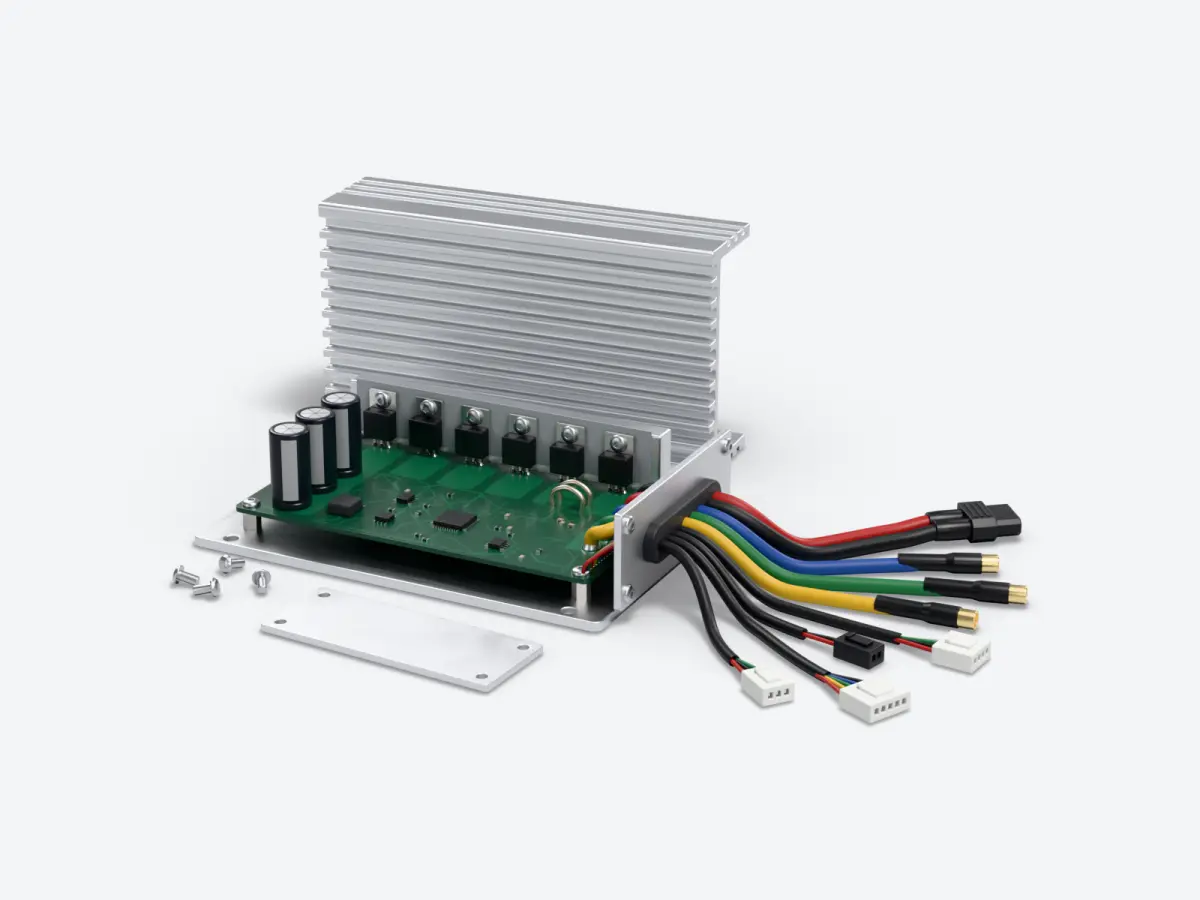
The volt is defined as one watt per ampere[7]. In other words, electrical power, in watts, is voltage multiplied by current. On a scooter, the voltage comes from the battery and the current is capped by the controller, the electronic unit that powers each motor. More volts or more amps means more watts. What the controller does and how it fails is covered in our article on the controller.
The calculation on two real models
- Nami Stellar: a 25 A controller and a 52 V battery, which reaches 58.8 V when full. 58.8 × 25 = 1,470 W, the maximum power on its product page.
- Dualtron Sonic Alien: two 50 A controllers, which go up to 70 A in turbo according to its product page. With a full battery, its original charger puts out 83 V[1]. 83 × 70 × 2 = 11,620 W, in the same range as the 2 × 5,600 W in the manual, or 11,200 W[1].
This calculation has a very practical consequence. Maximum power assumes a full battery. At 20% charge, a 72 V battery is down to 64.8 V according to our voltage table. The same Sonic Alien then only has 64.8 × 70 × 2 to work with, around 9,070 W. That is why a scooter feels less lively when the battery is low.
Our power calculator asks for the nominal voltage, the fully charged voltage, the number of controllers and the amperage of a single controller. With two 40 A controllers, you enter 40, not 80. It gives two power figures, one at nominal voltage, the other with a full battery.
Common voltages
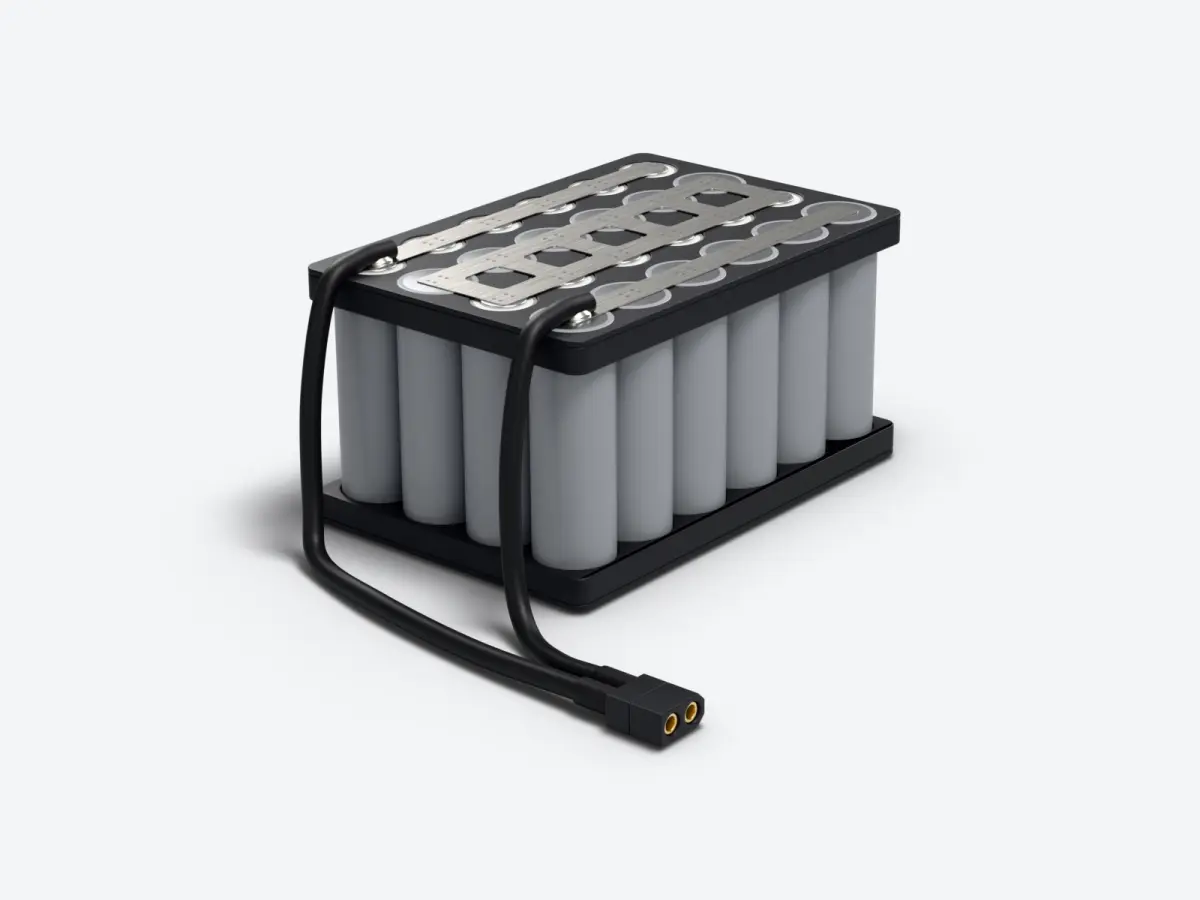
A battery's voltage depends on the number of cells connected in series. The figure shown is the nominal voltage, that of a half-charged battery. When full, it is higher, and it drops as the battery empties.
| Nominal voltage | Cells in series | Full battery | Empty battery | Examples from our range |
|---|---|---|---|---|
| 36 V | 10 | 42 V | 30 V | small urban scooters |
| 48 V | 13 | 54.6 V | 39 V | Langfeite Roadster Dual |
| 52 V | 14 | 58.8 V | 42 V | Nami Stellar, Dualtron Oriens |
| 60 V | 16 | 67.2 V | 48 V | Dualtron Forever Limited, Victor Limited |
| 72 V | 20 | 84 V | 60 V | Dualtron Sonic Alien, Thunder 3 |
| 84 V | 23 | 96.6 V | 70.6 V | Dualtron X Limited, Storm Limited, Rovoron S7 |
Torque, amps and hills: what gets a scooter up a climb?
Watts tell you how much work the motor does per second. Torque, in newton-metres, tells you how hard it turns the wheel. In a brushless motor, torque varies linearly with current. Voltage, on the other hand, sets the maximum rotation speed, because the motor's back EMF rises with its speed until it meets the supply voltage[6]. The thing to remember: amps give you a strong start and climbing ability, volts let you spin fast.
The power needed to climb a hill
A 10% gradient rises 10 metres for every 100 metres travelled horizontally. To estimate the power it takes, you multiply the force to overcome by the speed. Here is the order of magnitude for 100 kg in total, rider and scooter included, counting gravity only. Tyre rolling resistance, air drag and motor losses come on top.
| Gradient | At 15 km/h | At 25 km/h |
|---|---|---|
| 10% | about 410 W | about 680 W |
| 20% | about 800 W | about 1,340 W |
| 30% | about 1,170 W | about 1,960 W |
Manuals give a maximum gradient: around 70%, or 35°, for the Dualtron Sonic Alien[1] and the X Limited[2], around 76%, or 37°, for the Dualtron Storm Limited[3] and the Rovoron S7[4]. These gradients can be climbed over a short distance. On a long climb, rated power is what counts, because the motor can only give its peak torque briefly[6].
Single or dual motor: which should you choose?
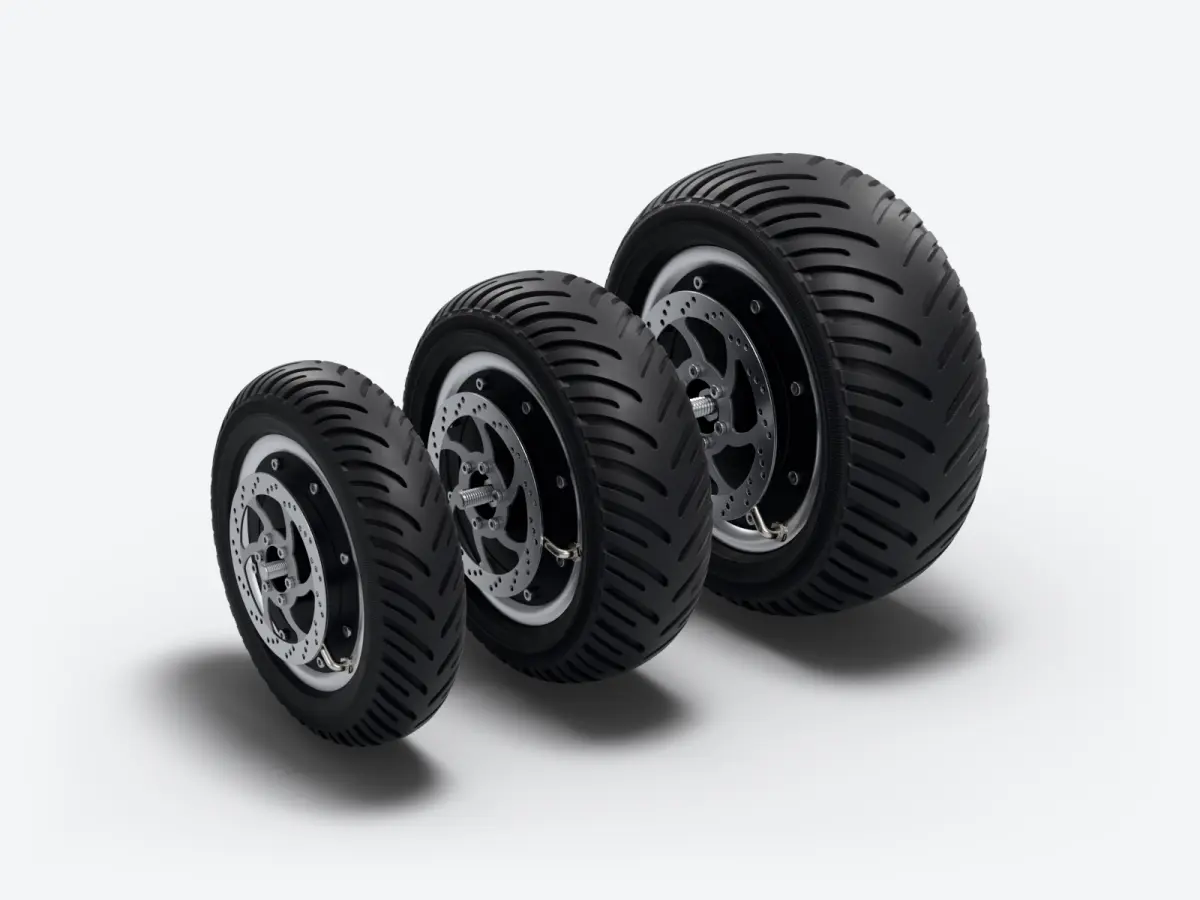
A single-motor scooter has one hub motor. A dual-motor scooter has one in each wheel, each with its own controller. The Nami Stellar and the Nami Super Stellar show the difference clearly.
| FōhzShop product page | Nami Stellar | Nami Super Stellar |
|---|---|---|
| Motors | 1 × 1,000 W | 2 × 1,000 W |
| Controllers | 1 × 25 A | 2 × 25 A |
| Maximum power | 1,470 W | 2,940 W |
| Battery | 52 V, 786 Wh | 52 V, 1,277 Wh |
Traction and hills
Weight and consumption
A second motor adds weight and draws more current when both push together. Many models let you ride on just one. The Teverun manual for the Fighter Mini and Blade Mini, for example, has a long press on the M button to switch between one motor and two[5]. To see what this changes for your mileage, read our article on range.
How does a brushless hub motor work?
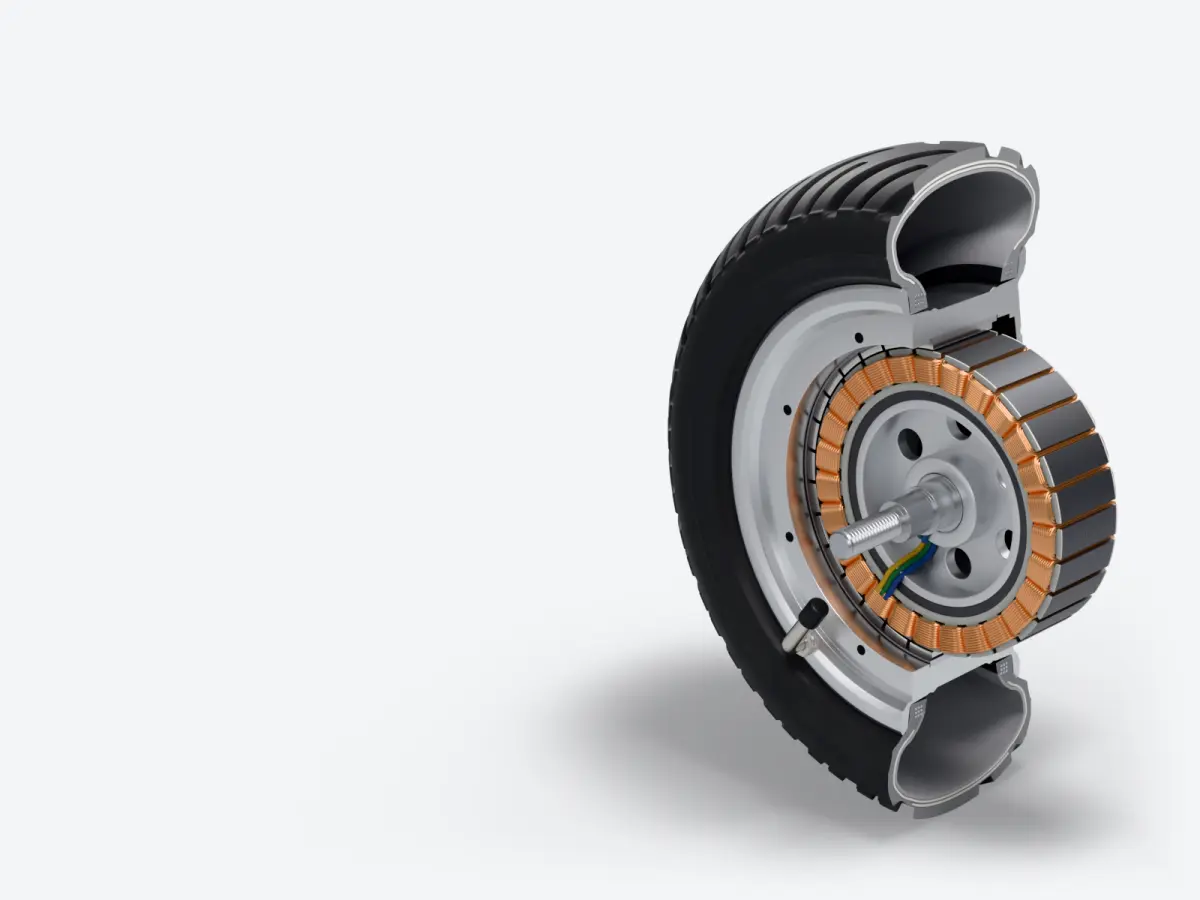
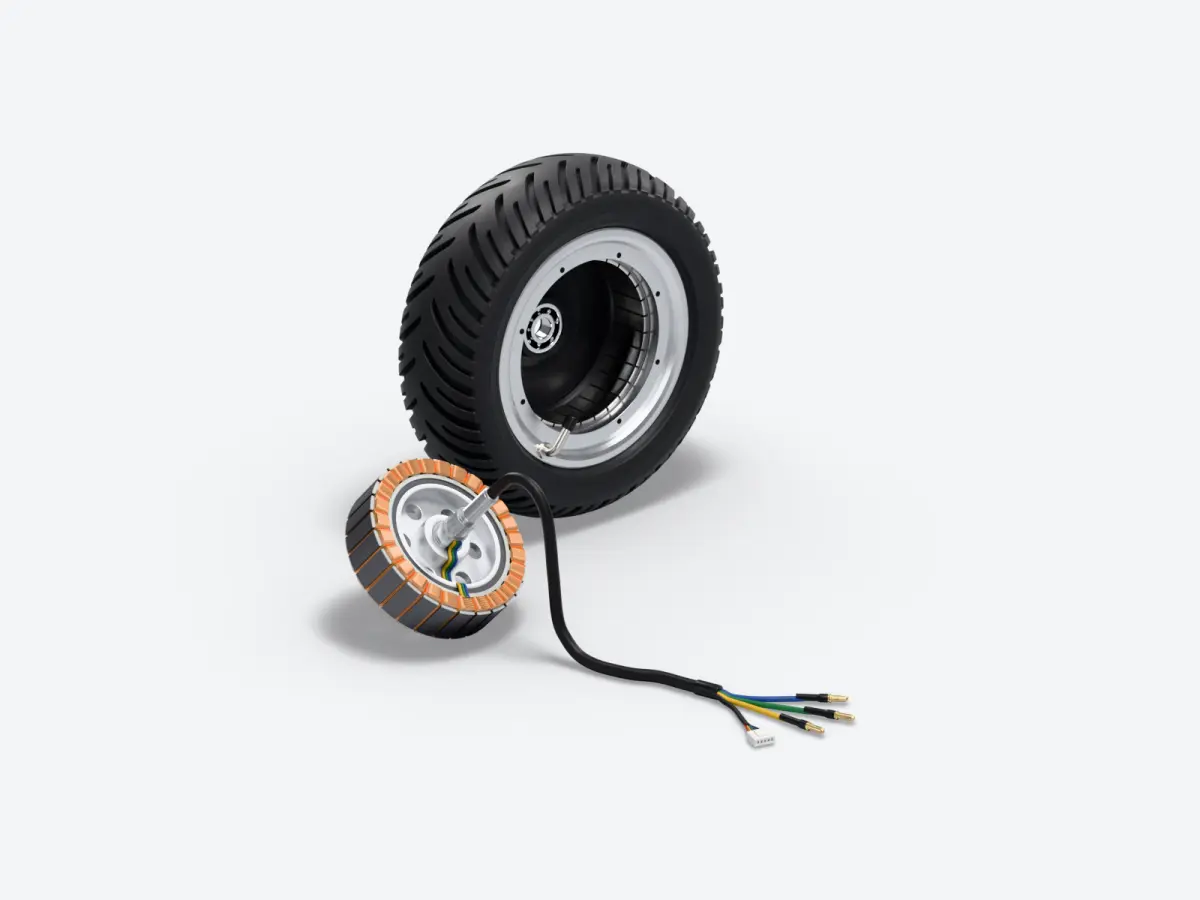
On most scooters, the motor is a hub motor, housed in the wheel hub, with no chain or belt. Dualtron manuals describe it as a “BLDC Hub Motor”[1], a brushless direct-current hub motor.
Why brushless
A brushless motor has no brushes: its commutation is electronic. Hall effect sensors placed in the stator give the position of the rotor, and the controller powers the windings in the right order. The rotor carries permanent magnets[6]. The result is less maintenance, a longer life and good efficiency, since there is no voltage drop across brushes. The windings are on the stator, which gets rid of heat better[6].
In a hub motor, the layout is the reverse of a conventional motor. The wound stator is fixed to the axle, which does not turn. It is the outer shell, with its ring of magnets, that turns around it, and the rim with it.
What this means for you
- A hub motor needs little maintenance, but its phase and sensor cables come out through the axle. A cable pinched or torn when removing a wheel is one of the faults we often see in the workshop.
- If a Hall sensor fails, the controller no longer knows where the rotor is. The motor judders, or will not start at all.
- The motor gets hot after a hard ride. Teverun asks you not to touch the motor or the brake straight after riding[5].
Does a more powerful scooter go faster on the road?
No. On public roads, what the law allows is set out on the regulations page for your country. Our scooters are delivered restricted. The manufacturers' top speeds, 110 km/h for the Sonic Alien, measured on a professional test site[1], apply only on private land.
How do you read the power on a spec sheet before buying?
- Find the rated power and the maximum power, and check how each one is worked out: the motor's continuous power, or voltage × amps.
- Note the battery voltage and the controller amperage, then redo the calculation with our power calculator.
- Look at the stated maximum gradient, bearing in mind that it applies to a short climb.
- Choose single or dual motor according to your terrain, your weight and the state of the roads, not according to the biggest number.
- Think about the weight of the scooter if you have to carry it up stairs.
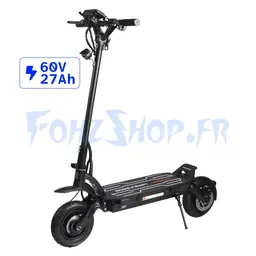
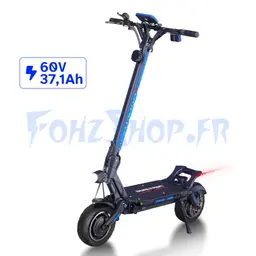
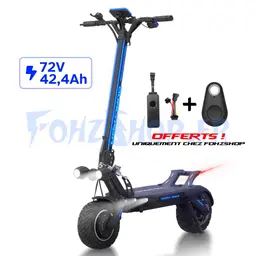
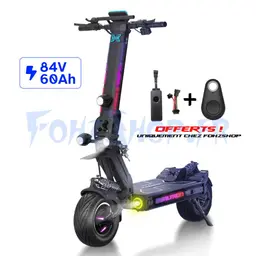
Here are four scooters from our range, from the tamest to the most powerful, from 60 V with two 22 A controllers up to 84 V with two 70 A controllers. All of them are delivered restricted.
Sources
- Minimotors, Product manual, specification pages, checked on 17 November 2026, Dualtron Sonic Alien, product manual
- Minimotors, Product manual, specification pages, checked on 17 November 2026, Dualtron X Limited, product manual
- Minimotors, Product manual, specification page, checked on 17 November 2026, Dualtron Storm Limited, product manual
- Minimotors, Product manual, specifications and riding instructions, checked on 17 November 2026, Rovoron S7, product manual
- Teverun, User manual in French, display and safety instructions, checked on 17 November 2026, Teverun Fighter Mini, Blade Mini, manuel d'utilisation
- Microchip Technology, Application note AN885 (DS00885A), checked on 17 November 2026, Brushless DC (BLDC) Motor Fundamentals
- Bureau international des poids et mesures, SI Brochure, 9th edition, version 4.01 of June 2026, table of derived units, checked on 17 November 2026, Le Système international d'unités (SI)
About the author

Benjamin Gayaud
Managing director of FōhzShop
He runs FōhzShop and develops EyeX, the app for Dualtron and Rovoron scooters. He personally tests the electric scooters the shop sells.
Read next
Buying guide10 min read
Electric scooter range: how to calculate it and make it go further
The range on a spec sheet is measured with 75 kg on board, at 25 °C and at a steady speed. Here is how to calculate yours from the battery's watt-hours and your own consumption, and what really makes it go further.
Buying guide10 min read
Which Dualtron should you choose in 2026? The range explained by use
Forever Limited, Spider Max, City, Victor, Achilleus, Ultra One, Thunder 3, Sonic Alien, Storm Limited or X Limited: the Dualtron range sorted by use, with Minimotors' figures and a comparison table.
Buying guide11 min read
Buying a used electric scooter: what to check before you buy
Battery, charging port, folding mechanism, steering, brakes, tyres, bearings and deck: the workshop checklist for inspecting a second-hand electric scooter without tools, with the part involved and how serious each fault is.