Electric scooter range: how to calculate it and make it go further
The range on a spec sheet is measured with 75 kg on board, at 25 °C and at a steady speed. Here is how to calculate yours from the battery's watt-hours and your own consumption, and what really makes it go further.

Benjamin Gayaud
10 min read
Buying guide
Your real range? The battery's Wh divided by your Wh/km.
The essentials
An electric scooter's range comes down to two figures: the battery's energy in watt-hours, and what the scooter uses for every kilometre. The figure on the spec sheet is measured in favourable conditions. At Minimotors, that means a full battery, 75 kg on board, 25 °C and a steady average speed on a paved road[1]. Your weight, your speed, the terrain, the cold and your stops make the difference, and most of them can be put into figures.
Wh = V × Ah
a battery's energy, as IATA calculates it
18 to 36 Wh/km
consumption figures taken from the manuals cited here
170 / 140 km
Dualtron X Limited at a 25 then 50 km/h average
over 15%
drop in performance after 300 cycles, according to Minimotors
- Compare the batteries' watt-hours rather than the advertised kilometres: voltage × amp-hours.
- The advertised range assumes 75 kg, 25 °C, a full, new battery and a steady speed.
- Speed costs a lot: air resistance is multiplied by four when your speed doubles.
- Cold, under-inflated tyres, repeated restarts and a worn battery all reduce range.
- Measure your consumption in Wh/km once, and you will be able to work out your range for any journey.
Why is real range lower than the advertised range?
A spec-sheet range is not a lie. It is a measurement taken in precise conditions, which manuals often print in small type under the specifications table.
| Scooter | Advertised range | Conditions stated in the manual |
|---|---|---|
| Dualtron X Limited | about 170 km, described as theoretical[1] | full battery, 75 kg, 25 °C, 25 km/h average on a paved road[1] |
| Dualtron X Limited | about 140 km, described as typical[1] | same conditions, but a 50 km/h average[1] |
| Dualtron Sonic Alien | 125 km[2] | 75 kg, between 20 and 30 km/h[2] |
| InMotion RS | about 120 to 160 km[5] | full battery, 75 kg, 25 °C, flat, hard road surface, between 20 and 40 km/h[5] |
Minimotors lists speed, the number of starts and stops and the ambient temperature among the factors that make range vary[1]. InMotion adds tyre pressure, road conditions and riding habits, such as sudden acceleration[5]. Everything that separates your journey from the manufacturer's test is paid for in kilometres.
Your journey compared with the test conditions
- Weight. The test is done with 75 kg. With a heavier rider or a loaded bag, the scooter uses more energy on every climb and every time it picks up speed again.
- Temperature. The test is done at 25 °C. In winter, the Rovoron R7 manual warns that the battery temporarily loses performance, and that both range and power drop[3].
- Speed. A steady 25 km/h average has nothing in common with a town journey, with its traffic lights and constant restarts.
- Battery age. The test starts with a new battery. Minimotors states that discharge performance drops by more than 15% after 300 charges and discharges[3].
A 50 km/h average, as in Minimotors' typical test, is only possible where the law allows it. On public roads, the permitted speed is the one set by the regulations in your country.
How much energy does your scooter's battery hold?
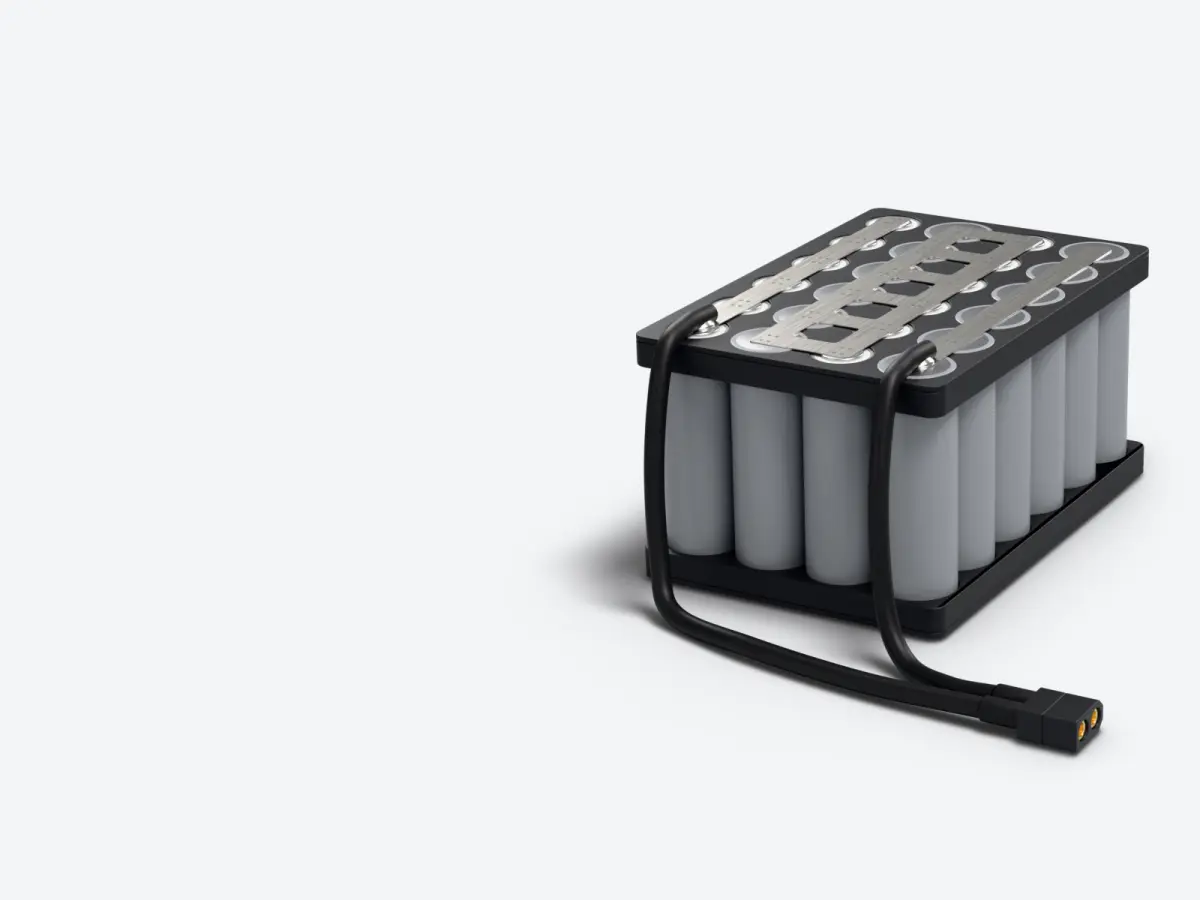
A battery's energy is counted in watt-hours (Wh). You get it by multiplying its capacity in amp-hours by its nominal voltage: Wh = Ah × V. This is the calculation that IATA, the International Air Transport Association, applies to all lithium-ion batteries[6]. Both figures appear on your scooter's spec sheet, often written together, as in ‘60 V 28.6 Ah’.
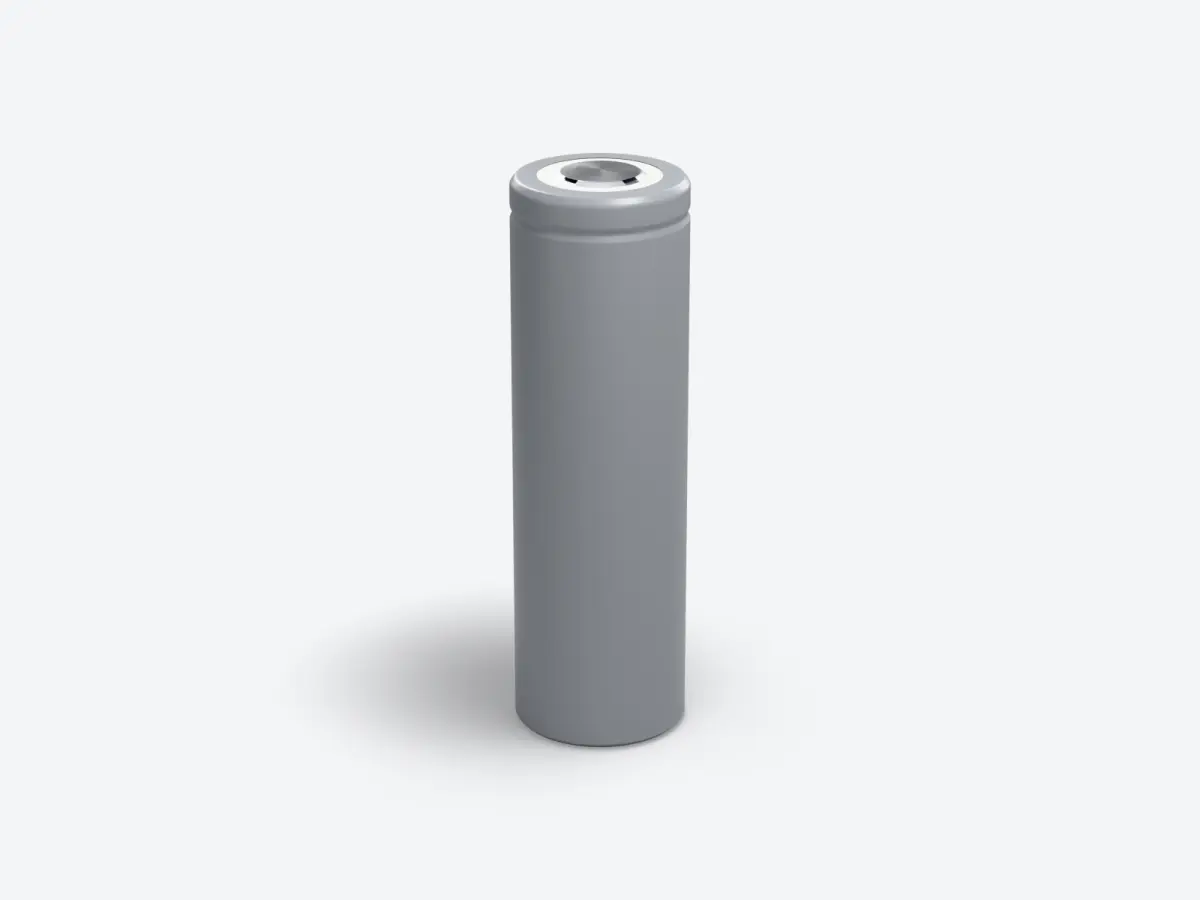
The nominal voltage comes from the cells. A lithium-ion cell such as the Molicel P42A has a nominal voltage of 3.6 V, rises to 4.2 V at the end of charging and must not drop below 2.5 V[7]. A 72 V battery therefore lines up 20 of them in series (20 × 3.6 = 72). To read your battery's real charge level from its voltage, see our voltage table.
This is the figure to compare between two scooters, far more than the advertised kilometres, which are not measured the same way from one brand to the next. For how the battery works, the BMS and everyday charging, see our article on the electric scooter battery.
How much does an electric scooter use per kilometre?
Consumption is counted in watt-hours per kilometre (Wh/km). Divide the battery's energy by the advertised range, and you get the consumption the manufacturer measured in its test conditions.
| Scooter | Calculation | Consumption | Test speed |
|---|---|---|---|
| InMotion RS | 2,880 Wh ÷ 160 to 120 km | 18 to 24 Wh/km | 20 to 40 km/h |
| Dualtron Sonic Alien | 2,880 Wh ÷ 125 km | about 23 Wh/km | 20 to 30 km/h |
| Dualtron X Limited | 5,040 Wh ÷ 170 km | about 30 Wh/km | 25 km/h average |
| Dualtron X Limited | 5,040 Wh ÷ 140 km | 36 Wh/km | 50 km/h average |
Treat these figures as a minimum. They assume a 75 kg rider, 25 °C and steady riding. Your real consumption will be higher as soon as you move away from these conditions, and that is the figure you need to know to calculate your range.
Why speed costs so much
For an object such as a cyclist or a car, the drag force from the air is proportional to the square of the speed[8]. Doubling your speed therefore multiplies that force by four. And the energy used over a journey is the force multiplied by the distance travelled[9]. The air's share of your Wh/km therefore follows the square of your speed.
- From 25 to 30 km/h, air drag is multiplied by 1.44 (1.2 squared).
- From 25 to 40 km/h, it is multiplied by 2.56.
- From 25 to 50 km/h, it is multiplied by 4.
The same formula involves the area you present to the air[8]. A tall rider standing bolt upright, with a backpack or a flapping jacket, catches more wind. On the X Limited's spec sheet, going from a 25 to a 50 km/h average raises consumption from 30 to 36 Wh/km. On the road, the air's share grows the faster you ride: only your own measurement, at your usual speed, tells you how much you use.
Weight, hills, cold, tyres: what reduces range?
After speed, six factors make range vary. For hills and starts, a simple calculation gives the minimum energy involved, before even counting the losses in the motor and the controller.
Hills
Climbing means lifting the weight: energy = mass × 9.8 × height gained. For 100 kg, rider and scooter included, 100 m of climbing costs at least 98,000 joules, or about 27 Wh, since one watt is one joule per second. That is almost a kilometre on the flat at the X Limited's 30 Wh/km.
Cold
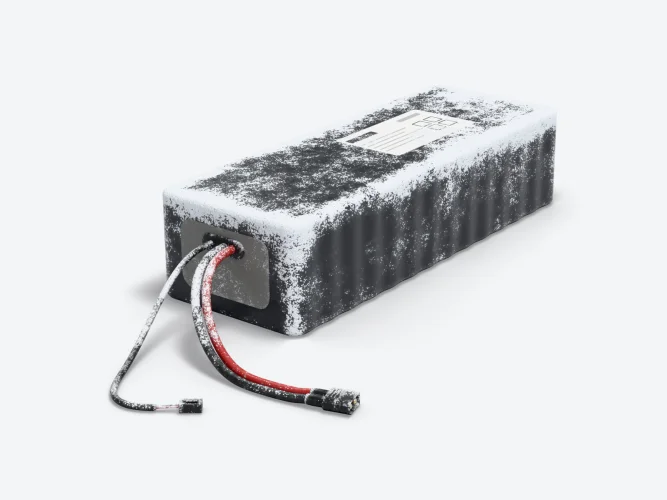
InMotion writes that the lower the temperature, the shorter the range, with the best performance reached at around 25 °C. At Minimotors, the loss is temporary and also affects power.
Starts
Getting 100 kg up to 25 km/h takes at least ½ × mass × speed², or about 2,400 joules or 0.67 Wh. Fifty stops and restarts on a town journey come to at least 33 Wh, more than a kilometre on the flat.
Tyres
Within the normal pressure range, a higher pressure gives more range and a lower pressure more comfort on rough roads, according to InMotion. An under-inflated tyre costs you kilometres.
Weight
It counts on every climb and every restart, and in rolling resistance too. For tyres, EU regulations express rolling resistance in newtons per kilonewton of load: the more a tyre carries, the more it resists.
Battery age
After 300 charges and discharges, Minimotors states that discharge performance drops by more than 15%. A range of 60 km when new then falls below 51 km.
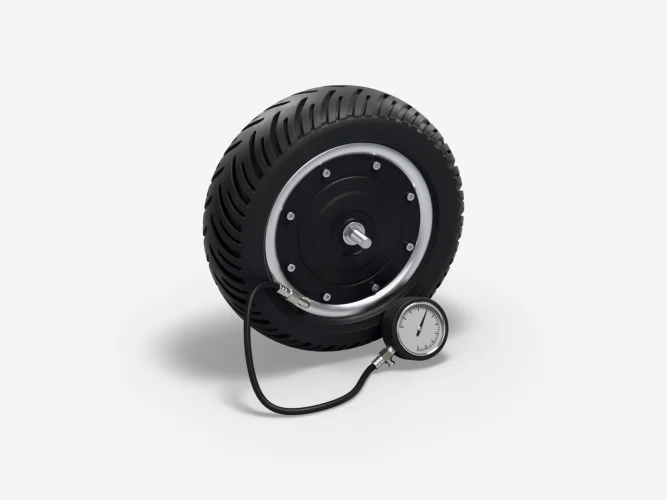
To find the right pressure for your tyres and know when to change them, see our article on electric scooter tyres.
How do you calculate your scooter's range?
You need your battery's energy and your consumption. The method takes four steps.
- Calculate the energy of the battery: nominal voltage × capacity, in Wh. Both figures are in your scooter's manual.
- Choose your reserve. Riding down to 0% makes no sense. Keep 20%, for example. On the EY2 display, the option that protects against the BMS cutting out, disabled by default, also switches the scooter to ECO mode below 20%[4].
- Take your consumption in Wh/km, measured on your own journeys as explained below. Failing that, start from the manufacturer's figure, bearing in mind that it is a minimum.
- Do the division: energy × share used ÷ consumption = range in kilometres.
Example with the X Limited and its figure at a 50 km/h average: 5,040 Wh × 0.8 ÷ 36 Wh/km = 112 km. If your own measurement gives 45 Wh/km, that comes down to about 90 km (5,040 × 0.8 ÷ 45).
Measuring your real consumption
The most reliable way is to measure the energy you put back into the battery, with an energy meter: this small unit plugs in between the wall socket and the charger and shows the Wh going through it.
- Charge the battery to 100%, then note the reading on the scooter's odometer.
- Do your usual journeys, over a distance long enough to use at least half the battery.
- Note the kilometres covered, then recharge to 100% through the energy meter.
- Divide the Wh shown by the kilometres covered: that is your consumption in Wh/km.
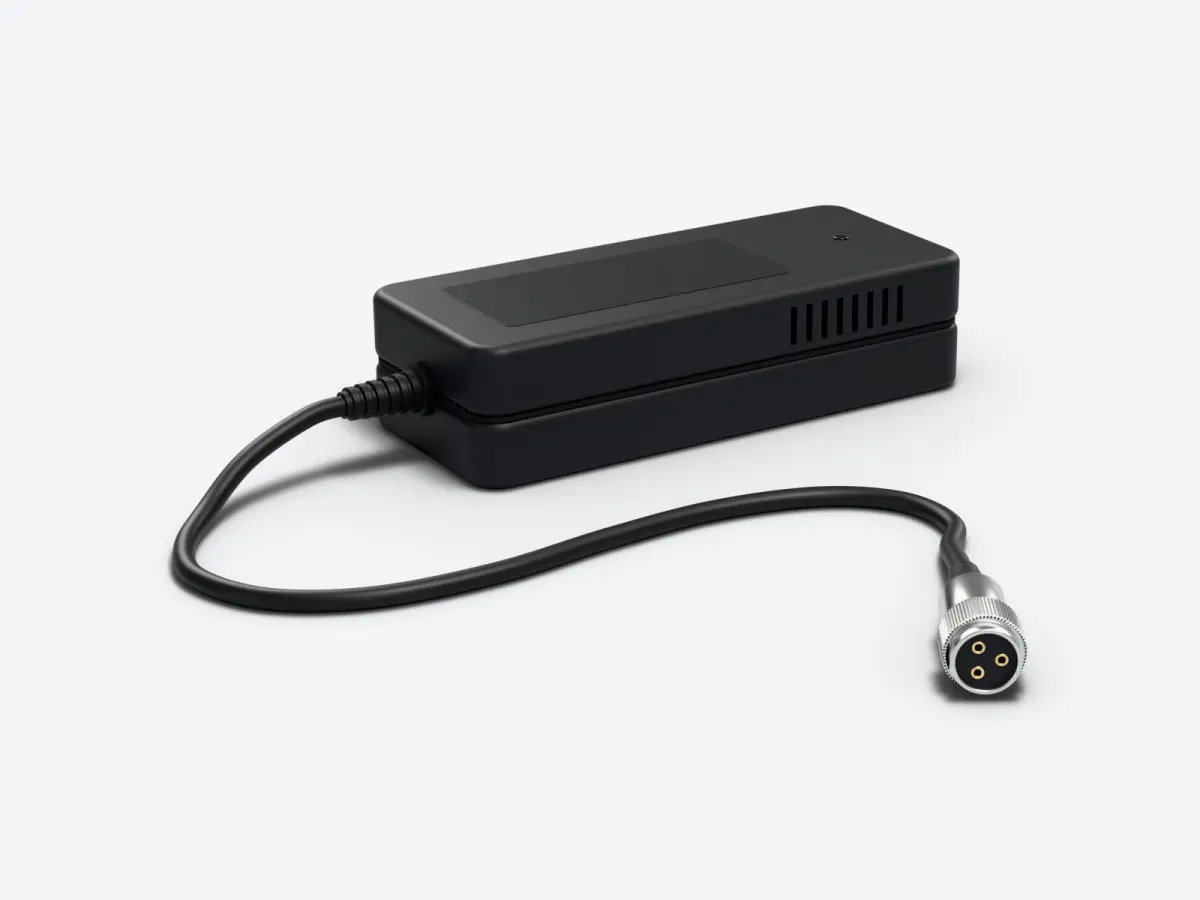
The meter also counts the energy the charger loses as heat, since it sits before it. Your figure will be slightly higher than the consumption of the scooter alone, which gives you a margin. If you ride a Dualtron or a Rovoron, the EyeX app also shows the charge level, remaining range and consumption live[14].
How do you make your electric scooter's range go further?
These habits really do affect consumption, each for a reason that can be put into figures or that the manufacturer writes in its manual.
- Ride a little slower. Air resistance grows with the square of speed[8]: a few km/h less shows up in your range.
- Accelerate gently and anticipate stops. Every restart costs energy, and Minimotors counts starts and stops among the factors affecting range[1].
- Switch to economy mode. On the EY2 display, ‘Max Save’ mode limits torque to about 50% of the maximum, and ‘Normal Save’ to about 75%[4].
- Inflate to the pressure in the manual. Within the normal range, a higher pressure gives more range[5].
- Lighten the load. A heavy bag weighs on every climb and every restart.
- Keep the scooter somewhere mild in winter. Cold temporarily reduces range and power[3]. A battery that has spent the night outside starts at a disadvantage.
Before you buy: how do you compare the range of two scooters?
- Compare the Wh: voltage × amp-hours. This is the amount of energy on board, measured the same way everywhere.
- Read the test conditions under the specifications table: weight, temperature, average speed.
- Work out the advertised Wh/km and compare it with the way you ride. In town, with hills or in winter, allow for more.
- Keep a margin on your longest journey, the same as in your calculation, for example 20%.
- Think about charging time: the bigger the battery, the longer it takes to fill. Our article on the electric scooter charger explains the calculation.
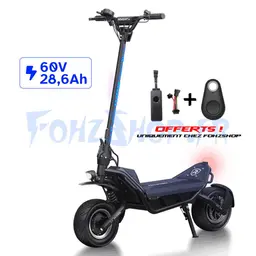
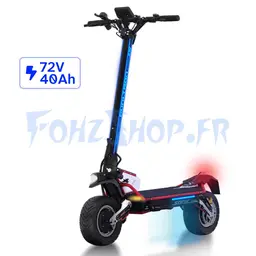
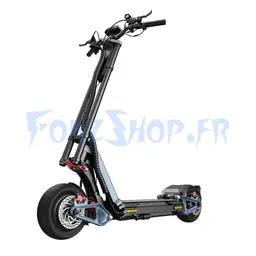
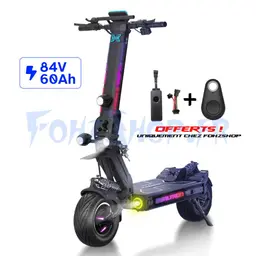
Here are the scooters from our catalogue mentioned in this article, from the Rovoron R7 and its 1,716 Wh to the Dualtron X Limited and its 5,040 Wh.
Sources
- Minimotors (Dualtron), English-language manual, specifications pp. 5 and 6, checked 17 November 2026, Dualtron X Limited, Product Manual
- Minimotors (Dualtron), English-language manual, specifications pp. 6 and 7, checked 17 November 2026, Dualtron Sonic Alien, Product Manual V2
- Minimotors (Rovoron), English-language manual, specifications p. 5 and battery precautions p. 18, checked 17 November 2026, Rovoron R7, Product Manual
- Minimotors (Dualtron), EY2 display manual, pp. 4 and 5, checked 17 November 2026, EY2, Important information
- InMotion, English-language manual, pp. 10, 17 and 25, checked 17 November 2026, InMotion RS, User Manual
- IATA, Edition revised for the 2026 regulations, p. 1, checked 17 November 2026, Passengers Travelling with Lithium Batteries, Guidance Document
- Molicel (E-One Moli Energy), Product data sheet, cell specifications, checked 17 November 2026, Product Data Sheet, model INR-21700-P42A
- OpenStax, Rice University, University Physics Volume 1, section 6.4, checked 17 November 2026, Drag Force and Terminal Speed
- OpenStax, Rice University, University Physics Volume 1, section 7.1, checked 17 November 2026, Work
- OpenStax, Rice University, University Physics Volume 1, section 7.2, checked 17 November 2026, Kinetic Energy
- OpenStax, Rice University, University Physics Volume 1, section 7.4, checked 17 November 2026, Power
- OpenStax, Rice University, University Physics Volume 1, section 8.1, checked 17 November 2026, Potential Energy of a System
- Union européenne, EUR-Lex, Annex I, Part A, checked 17 November 2026, Règlement (UE) 2020/740 sur l'étiquetage des pneumatiques en relation avec l'efficacité en carburant et d'autres paramètres
- Apple App Store, App listing, ‘En direct’ (live) section, checked 17 November 2026, EyeX Dualtron & Rovoron
About the author

Benjamin Gayaud
Managing director of FōhzShop
He runs FōhzShop and develops EyeX, the app for Dualtron and Rovoron scooters. He personally tests the electric scooters the shop sells.
Read next
Buying guide10 min read
Which Dualtron should you choose in 2026? The range explained by use
Forever Limited, Spider Max, City, Victor, Achilleus, Ultra One, Thunder 3, Sonic Alien, Storm Limited or X Limited: the Dualtron range sorted by use, with Minimotors' figures and a comparison table.
Buying guide9 min read
Electric scooter power: watts, volts, amps and motors explained
Rated or maximum watts, battery volts, controller amps, torque and hills, single or dual motor, brushless hub motor: the guide to reading a scooter's power figures without getting it wrong.
Buying guide11 min read
Buying a used electric scooter: what to check before you buy
Battery, charging port, folding mechanism, steering, brakes, tyres, bearings and deck: the workshop checklist for inspecting a second-hand electric scooter without tools, with the part involved and how serious each fault is.