Electric scooter in the rain: IP rating, riding and care
IPX5, IP55, IP56 or IP67: what your scooter's IP rating really says, what the manuals make of it, how to ride in the rain and what to do when you get home.

Benjamin Gayaud
11 min read
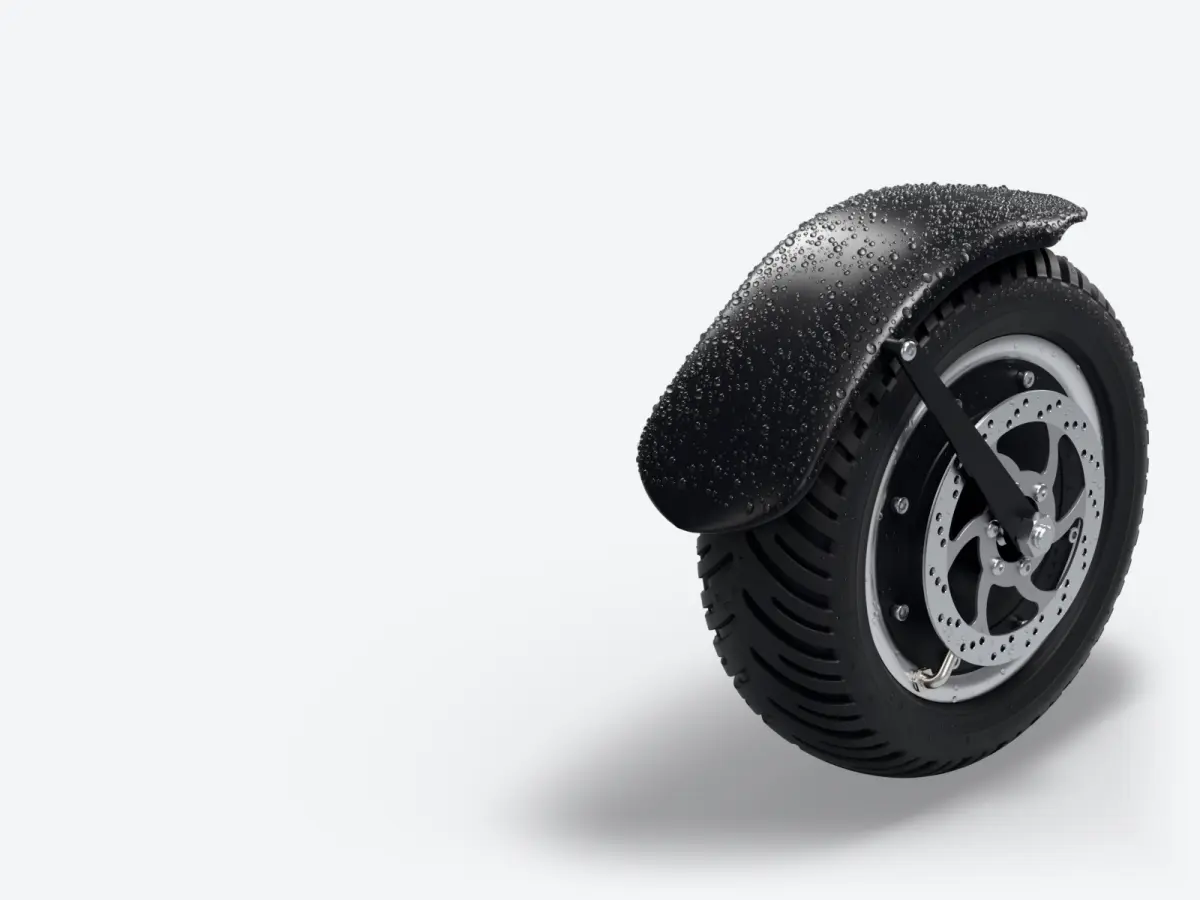
Maintenance
In the rain, braking distance can double.
The essentials
An electric scooter can take a little water, rarely a lot. Its IP rating tells you which tests it passed in the laboratory, for a few minutes. It does not say that you can ride through a downpour, cross a deep puddle or hose it down. Several manufacturers that state a rating actually advise against riding in the rain in their manual. What really protects your scooter is the way you ride and what you do when you get home.
IP56
the rating of the InMotion RS, whose manual nonetheless forbids riding in the rain
1 bar
for the IPX6 test jet, against 110 bar for a small pressure washer
× 2
braking distance can double on a wet road, according to Prévention Routière
30 min
of steady rain before the road is washed clean, according to a guide distributed by France's road safety agency
- The IP rating has two digits. The first is about dust, the second about water. An X means that point is not stated.
- Even with a rating, your model's manual comes first. Several advise against riding in the rain, or forbid it.
- No common rating covers submerging the whole scooter or washing it at high pressure.
- In the rain, avoid road paint, metal covers, rails, leaves and puddles, and double your distances.
- When you get home, wipe it down, let it dry, and only charge it once everything is dry.
What does a scooter's IP rating mean?
The IP code comes from the international standard IEC 60529, published in France as NF EN 60529[1]. It rates how well an enclosure, here the frame and the housings, keeps out solid objects and liquids. It is written with two digits, the first for solids and dust, the second for water[2]. The digit 0 means no protection[4]. For water, the scale goes up to 9, a level added for high-pressure, high-temperature water jets[1].
When one of the two points has no stated value, the digit is replaced by the letter X[4]. IPX5 therefore means ‘nothing stated for dust, level 5 for water’. It is not a lack of protection, it is missing information.
| Digit | What the test simulates | What it means for you |
|---|---|---|
| Water, level 4 (IPX4) | Splashing from all directions, 10 litres per minute for 5 minutes[2]. | Rain and light spray. |
| Water, level 5 (IPX5) | A water jet of 12.5 litres per minute through a 6.3 mm nozzle placed 2.5 to 3 metres away, for at least 3 minutes[3]. | Steady rain and spray from the wheels. |
| Water, level 6 (IPX6) | A powerful jet of 100 litres per minute through a 12.5 mm nozzle, for at least 3 minutes[2]. | Heavy downpour and spray thrown up by cars. |
| Water, level 7 (IPX7) | Immersion down to 1 metre for 30 minutes[2]. | Mostly stated for a display or a battery, not for the whole scooter. |
| Dust, level 5 (IP5X) | Dust protected. A little may get in, but not enough to interfere with operation[2]. | A little dust can get in. |
| Dust, level 6 (IP6X) | Dust tight[2]. | No dust gets in. |
Reading IP54, IP55, IP56 or IP67
- IP54 protects against dust and splashing.
- IP55 adds low-pressure water jets.
- IP56 goes up to powerful jets.
- IP67 is dust tight and withstands immersion down to 1 metre, but says nothing about jets.
- IPX4, IPX5 or IPX6 say nothing about dust, only about water.
Which ratings do scooter manufacturers state?
Ratings vary a lot from one model to another. Here is what the manufacturers of a few models in our catalogue state, and what their manuals say. Check carefully whether the rating applies to the whole scooter or to a single part.
| Model | Stated rating | What the manufacturer says |
|---|---|---|
| InMotion RS | IP56[5] | Do not ride in snow or rain, or on wet, muddy or icy roads, for any reason[5]. |
| Kaabo Wolf King GTR Max | IPX5, and IPX7 for the display and the throttle[6] | Battery in an aluminium casing with internal sealing, for better water resistance[6]. |
| Teverun Fighter Mini and Blade Mini | IP67 for the display[7] | Some water resistance, but Teverun advises against riding in rain, snow or hail[7]. |
| Dualtron, manual for models with the EY2 display | No rating given[8] | Product not waterproof. Do not ride in snow or rain, or on wet, muddy or icy roads[8]. |
The InMotion RS is a telling case. Its IP56 rating covers powerful jets, and yet its manual forbids riding in the rain[5]. InMotion explains why. On a wet road, the tyres grip less and the braking distance gets longer. And water getting in can damage the scooter's functions, or even set a damp battery on fire[5]. The rating describes a test lasting a few minutes in a laboratory. The manual says what the manufacturer accepts in real life, and that is what counts.
A manual with no rating does not mean the scooter fears the first drop, only that you have no figure to judge by. In that case, follow its instructions. You will find the manuals for the models we sell on our Documents page.
What the IP rating does not cover
The IP rating is useful, but it is often misunderstood. Three common situations go beyond what it promises.
Immersion and deep puddles
None of levels 4 to 6 involves immersion. Level 7 does, down to 1 metre for 30 minutes[2], but on a scooter it often applies to a single part, such as the display and throttle of the Kaabo Wolf King GTR Max[6]. The hub motor, the controller and the connectors remain exposed. Ride round any puddle whose bottom you cannot see: the motor is in the wheel, right at water level.
High-pressure jets
The IPX6 test, the toughest of the common jet tests, is done from 2.5 to 3 metres away[3] at a pressure of 100 kN/m², or 1 bar[2]. A small consumer pressure washer goes up to 110 bar[10], and you hold it much closer. Water then gets in where rain never goes. The IPX9 level exists for high-pressure, high-temperature jets[1], but none of the manufacturers mentioned above states it. InMotion actually forbids pressure washers and even garden hoses[5]. Minimotors recommends a soft, damp cloth to clean the frame[8].
Water that stays and seals that age
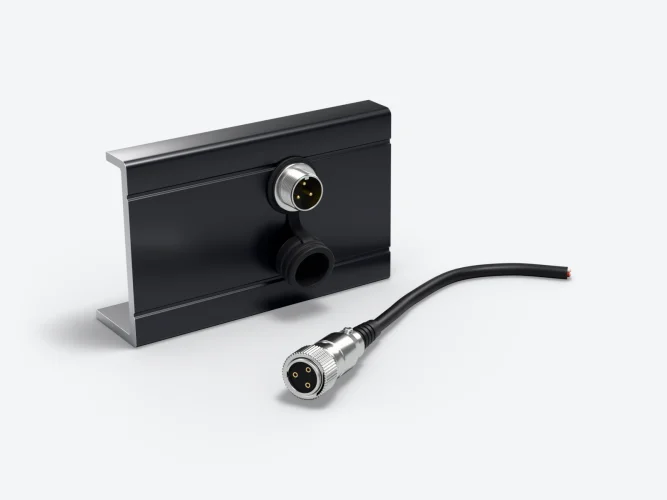
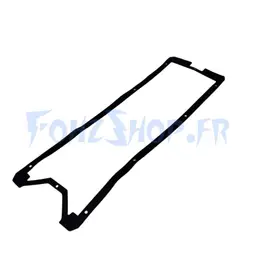
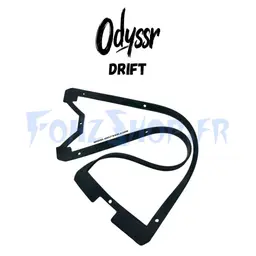
During the test, the water runs over and then drains away. In real life, it can sit inside the deck, around the battery or under the covers, especially if the scooter is kept outside. In our experience, seals age too. A squashed deck seal, a missing screw or a cracked cover, and the original rating is not worth much any more.
How do you ride in the rain without falling?
In the rain, the road grips much less. In France, a press kit from the road safety agency states that on a wet road, the grip coefficient is on average halved[11]. A guide from Prévention Routière, a French road safety association, adds that braking distance can be doubled on a wet road[12]. In our experience, a scooter, with its small wheels, is even more sensitive to this than a bike.
The traps of a wet road surface
The motorcycling guide ‘À l'aise avec ma moto’, distributed by France's road safety agency, asks riders to avoid anything on a wet road that is not tarmac. It lists road markings, paving stones, white lines, manhole covers, cast-iron roadworks plates, rails, dead leaves and mud[13]. It points out that no tyre grips on thick wet paint[13]. On a scooter, this advice applies just as much.
Road paint
White lines and pedestrian crossings have almost no grip left. Ride beside them, or straight across, without braking.
Dead leaves
They are slippery and hide holes and drain covers. Ride round them, especially in corners.
Covers and rails
Manhole covers, roadworks plates, tram rails. Keep the wheel straight, without braking or accelerating.
Puddles
You can see neither what is underneath nor how deep they are. At the slightest doubt, go round.
Be especially wary of light rain and the start of a shower. The same guide explains that it is not heavy rain that is most dangerous, but light showers, drizzle and the first half hour of rain. That is when hydrocarbons rise up out of the tarmac and form a very slippery film[13]. It takes about half an hour of steady rain for the road to be washed clean[13]. If you see rainbow-coloured sheens or white foam in the water, it is fuel or oil: give it a wide berth[13].
Braking and keeping your distance
- Double, or even triple, your distance from the vehicle in front, as this guide advises[13].
- Brake earlier, more gently, and preferably in a straight line.
- With disc brakes, a light squeeze of the lever for a few seconds dries the discs and saves you having to brake hard on a slippery surface[13]. Pads in good condition count double: see our article on brakes.
- Slow down before bends and keep the scooter as upright as possible[13].
- Keep your tyres properly inflated and not too worn, so that their grooves clear the water as well as possible[13]. The right pressures are in our article on tyres.
How do you stay visible in the rain?
In the rain, lights quickly get dirty from spray. The guide distributed by the road safety agency advises stopping regularly to clean them, and a simple cloth is enough[13]. It also reminds you to check the rear light, too often neglected[13]. That is the light that protects you from cars coming up behind you.
With the poor visibility of winter mornings and evenings, the same guide recommends a fluorescent orange or yellow vest, or a high-visibility rain jacket with wide retroreflective strips[13]. Switch your lights on, even in broad daylight. The equipment required by law, vest, lights or helmet, is detailed country by country on our regulations in your country page.
What should you do when you get in from the rain?
- Bring the scooter under cover and switch it off.
- Wipe it with a soft cloth, especially the deck, the handlebar, the display and the charging port.
- Let it dry in a dry room, at room temperature, not against a radiator. Minimotors says not to store or charge the battery in a hot room[8].
- Only charge it once everything is dry, charging port included. If it has come in from the cold, Minimotors advises waiting one to two hours before charging, to avoid condensation inside[8].
- On your next ride, test your brakes at low speed before setting off properly.
Moisture indicator labels
Some manufacturers stick small labels inside the scooter that change colour on contact with water. Minimotors places them in seven spots on the Dualtron Sonic Alien, including the headlight board, the controller housing, the BMS and the four corners of the battery compartment. According to the manual, a label that has changed colour indicates a fault caused by water getting in[9].
Bearings and connectors
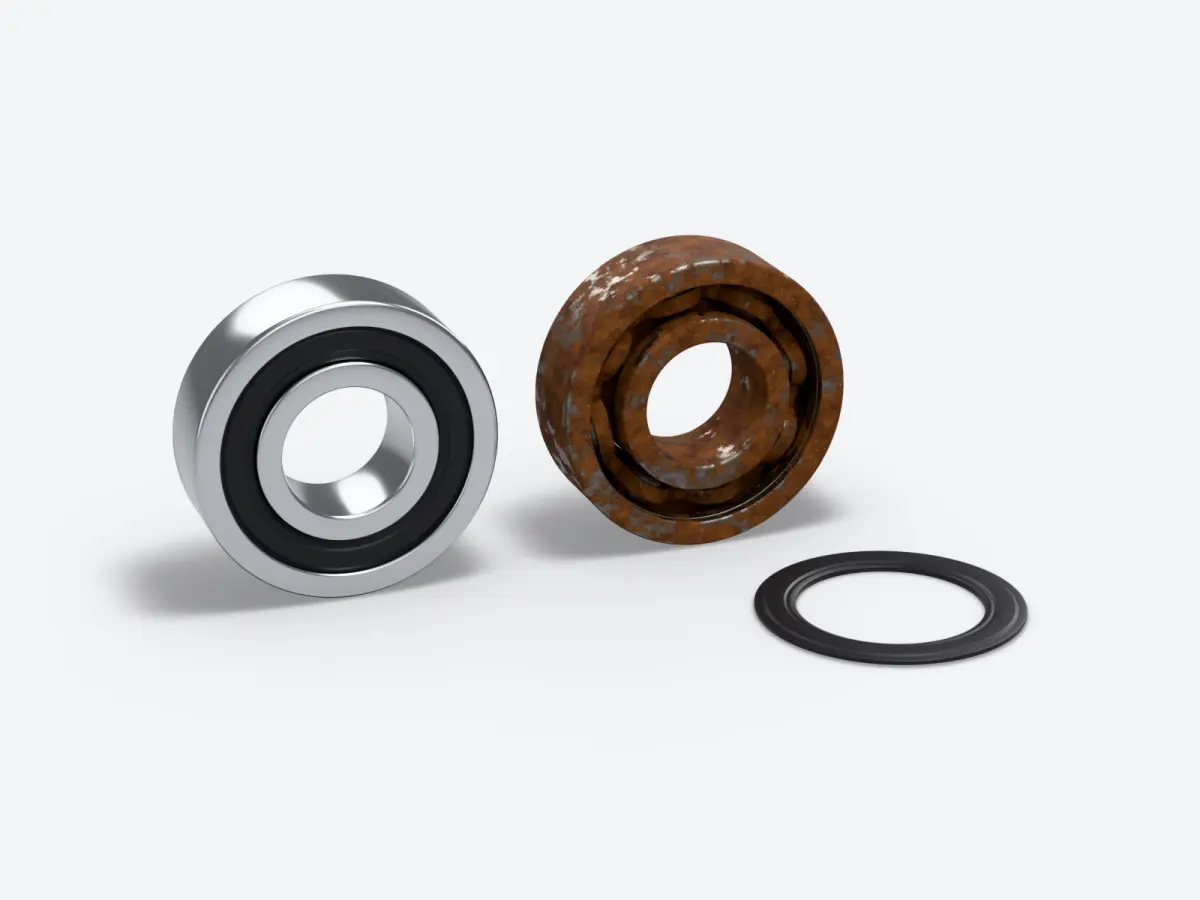
Water eventually reaches the wheel and steering bearings. SKF, a bearing manufacturer, explains that ineffective seals let moisture and water in, and that rust appears when the water exceeds the lubricant's ability to protect the steel[14]. It also notes that water can get in during cleaning[14]. A bearing that squeaks, grinds or develops play after a wet season needs replacing.
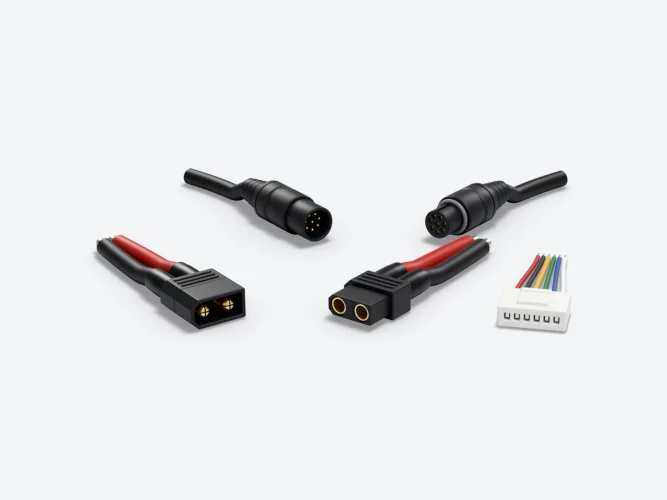
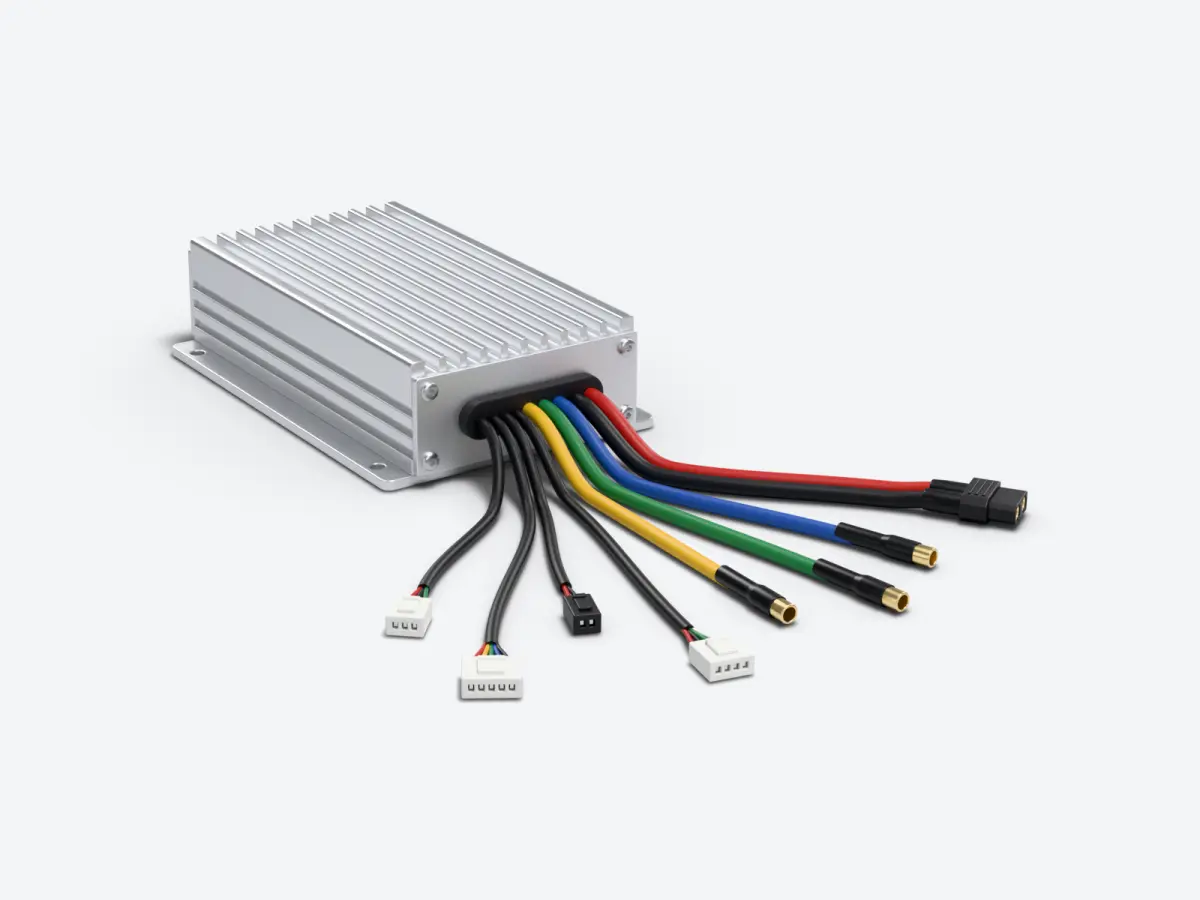
Keep an eye on the electrical connectors too: a corroded plug causes cut-outs, error codes or a charge that will not start. If one of these symptoms appears after a downpour, do not open the battery, the controller or the motor yourself: Minimotors advises against it[8]. Have the scooter checked by an authorised repairer instead.
Where should you store your scooter in damp weather?
InMotion asks you to park the scooter indoors when it rains or snows, to prevent water getting in, to store it in a cool, dry place, and not to leave it outside for long[5]. Minimotors wants the battery kept away from snow, rain and direct sunlight, in a dry place, between 10 and 20 °C[8].
- Avoid the balcony, the yard or a garage that lets water in. Do not rely on a simple tarpaulin: the damp stays underneath.
- A damp cellar is not a good place either. Choose a dry, temperate room.
- A scooter kept in the damp pays for it in its bearings. When stationary, the water contained in the lubricant sinks to the bottom of the bearing and builds up there[14].
- Check the screws, covers and deck seals from time to time. That is where water gets in first.
For a break of several weeks, the cold and getting ready for winter, everything is in our article on the scooter in winter. The right charge level for storage is explained in our article on the battery.
Your checklist for the rainy season
- Look up your model's IP rating and read what its manual says about rain.
- Before setting off, check the tyre pressure, the brakes and the lights.
- On the road, avoid paint, metal covers, rails, leaves and puddles, and double your distances.
- As soon as visibility drops, wear a vest or jacket with retroreflective strips, and switch your lights on.
- When you get home, wipe the scooter, let it dry, then charge it.
- Never use a pressure washer or a garden hose: a damp cloth is enough.
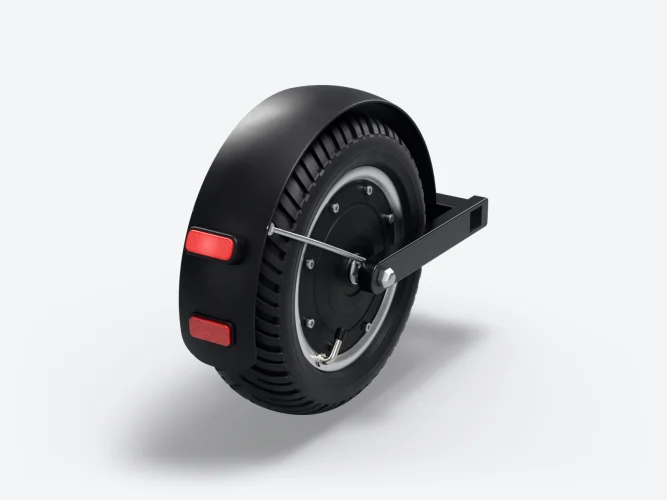
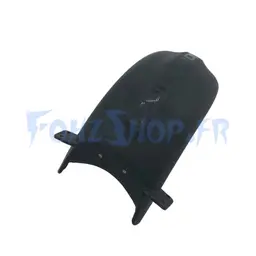
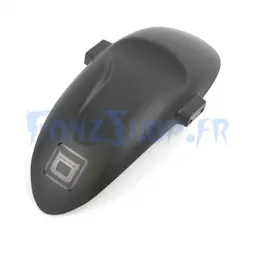
- Replace a damaged deck seal and fit a mudguard if one is missing or broken.
You will find seals, mudguards and bearings in our spare parts. If a fault appears after a downpour, see our warranty and after-sales page.

Sources
- AFNOR Éditions, Standard published in October 2013, checked 17 November 2026, NF EN 60529/A2, Degrés de protection procurés par les enveloppes (Code IP)
- D.L.S. Electronic Systems, Test laboratory, page updated on 20 May 2026, checked 17 November 2026, IEC 60529 and EN 60529 Testing
- D.L.S. Electronic Systems, Test laboratory, page published on 25 July 2024, checked 17 November 2026, IPX5 and IPX6 : Water Jets and Powerful Water Jets Certification Testing
- Schurter, Technical guide, checked 17 November 2026, The relevance of the IK and IP values
- InMotion, User manual, checked 17 November 2026, InMotion RS User Manual
- Kaabo, Product page, checked 17 November 2026, Wolf King GTR Max
- Teverun, French-language manual for the Fighter Mini, Blade Mini and Blade GT II, March 2024, checked 17 November 2026, Teverun Mini, manuel d'utilisation
- Minimotors, Important information for Dualtron models with the EY2 display, 2023, checked 17 November 2026, EY2 Important Information
- Minimotors, User manual, checked 17 November 2026, Dualtron Sonic Alien Product Manual
- Kärcher, Product page, technical specifications, checked 17 November 2026, Nettoyeur haute pression K 2 Start
- Sécurité routière (France), Press kit, 23 June 2003, Vitesse et distances de sécurité
- Prévention Routière et Attitude Prévention (France), 2017 guide, hosted by the French road safety agency, Questions de conduite, comment réduire les risques au volant ?
- Sécurité routière (France), Book by Fabien Lecoutre, May 2025, sheets ‘Rouler par temps de pluie’ and ‘Les raccords et marquages’, À l'aise avec ma moto
- SKF, Guide, chapter ‘Corrosion due à l'humidité’, Analyse des détériorations et des défaillances de roulements
About the author

Benjamin Gayaud
Managing director of FōhzShop
He runs FōhzShop and develops EyeX, the app for Dualtron and Rovoron scooters. He personally tests the electric scooters the shop sells.
Read next
Maintenance9 min read
Electric scooter tyre pressure: the chart by wheel size and by model
The tyre pressure for every scooter in our catalogue, taken from the manufacturer's manual, in psi and bar, sorted by wheel size. Plus the effect of weight and cold, how to read the sidewall and a routine for checking.
Maintenance10 min read
Electric scooter punctures: repair, prevention, tubeless or inner tube
How to tell which tyre you have, plug a tubeless tyre, change an inner tube without damaging the motor wheel, what preventive sealant is really worth, and when the tyre must be replaced rather than repaired.
Maintenance10 min read
Stem wobble or steering play on an electric scooter: causes and fixes
Handlebars that clunk under braking or a stem that moves: the play comes from one of five places. Here is the test to do with the scooter standing still, what can be tightened, what needs replacing, and the torque settings given in the manuals.