Electric scooter suspension: types, adjustment and maintenance
Spring, rubber cartridge or hydraulic shock absorber: how your scooter's suspension works, how to set it up for your weight and when to replace the parts.

Benjamin Gayaud
13 min read
Maintenance
Suspension set up right? A quarter of the travel under your weight.
The essentials
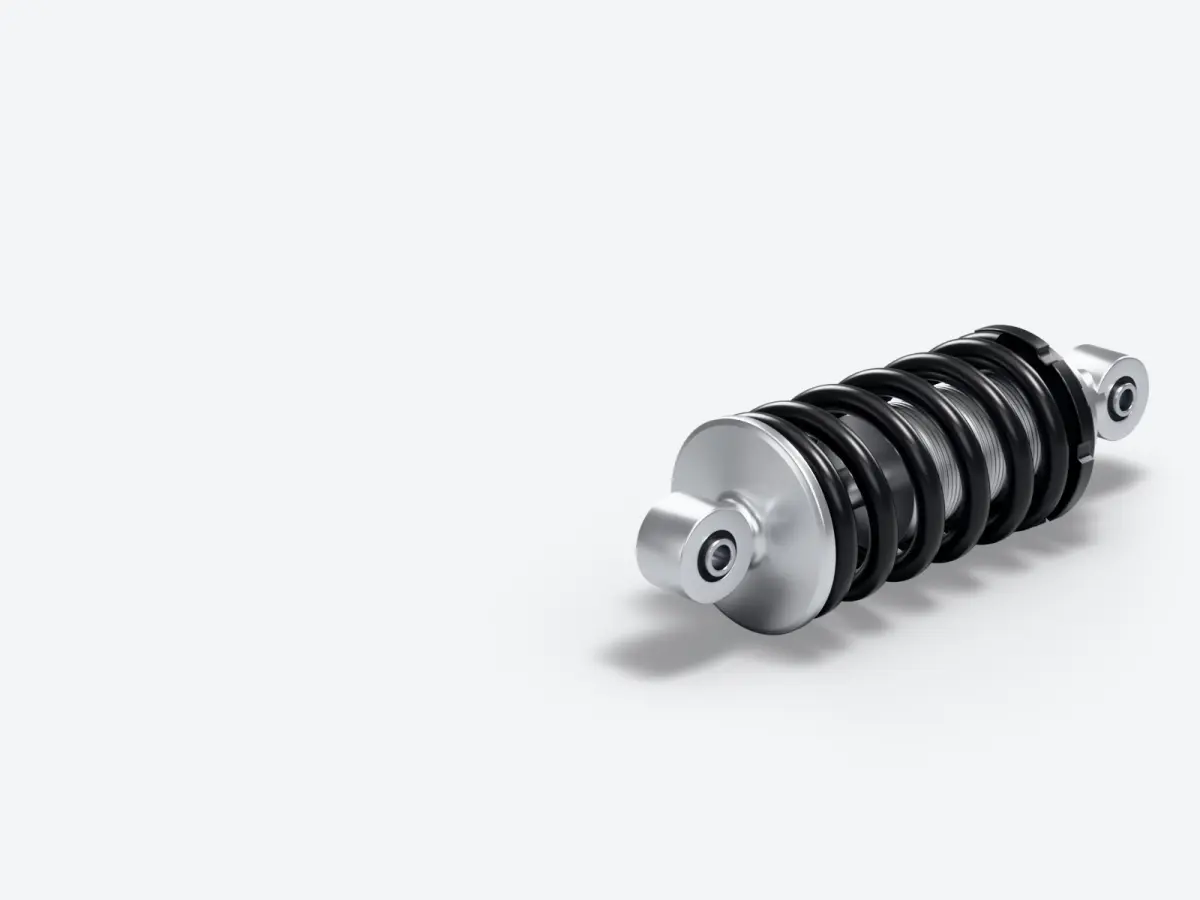
The suspension links the wheels to your scooter's frame. It soaks up potholes and bumps, keeps the tyres in contact with the ground and stops every impact from travelling up into the frame, the bolts and your legs. On scooters, there are three main families: the spring alone, the rubber cartridge and the hydraulic shock absorber. Each is adjusted in its own way, but the starting point is always the same: your weight. And almost everything can be checked with a few spanners.
25%
sag under the rider's weight, the starting point recommended by Fox
18 clicks
of damping on the rear shock of the Kaabo Wolf King GTR Max
5
cartridge hardnesses provided by Minimotors for the Dualtron City
3,000 km
or one year: check and grease the Dualtron cartridges, according to Minimotors
- Three families: spring, rubber cartridge, hydraulic. What you can adjust depends on the family.
- Setting up starts from your weight. Aim for sag of about a quarter of the travel when you are standing on the scooter.
- Both sides of the same wheel are always set up identically.
- Check often for play at the swingarm pivots and check that their bolts are tight.
- A cartridge wears out without breaking. If the suspension becomes harder or less supple, it is time to check it.
What does an electric scooter's suspension do?
Its first job is comfort. A team of researchers analysed real acceleration measurements taken on an electric scooter. On average, 87.54% of the vibrations recorded on paving stones and 95.47% on asphalt fell within the zones considered undesirable for health[14]. The authors conclude that future scooters will need to damp better what passes from the road to the rider[14].
Its second job is road holding. A wheel that bounces cannot brake and no longer steers. Fox, a maker of mountain bike suspension, sums it up in its tuning tips. Suspension that is too stiff feels harsh and gives poor grip in corners, and rebound that is too fast makes the front spring back and lose grip in bumpy corners[10].
Its third job, one people think about less, is limiting wear. An impact that is not properly absorbed is passed on to the frame, the bearings, the folding mechanism and the bolts. Tired suspension therefore ends up causing play elsewhere, in the swingarms, the steering or the wheel mountings.
Spring, rubber or hydraulic: which suspension do you have?
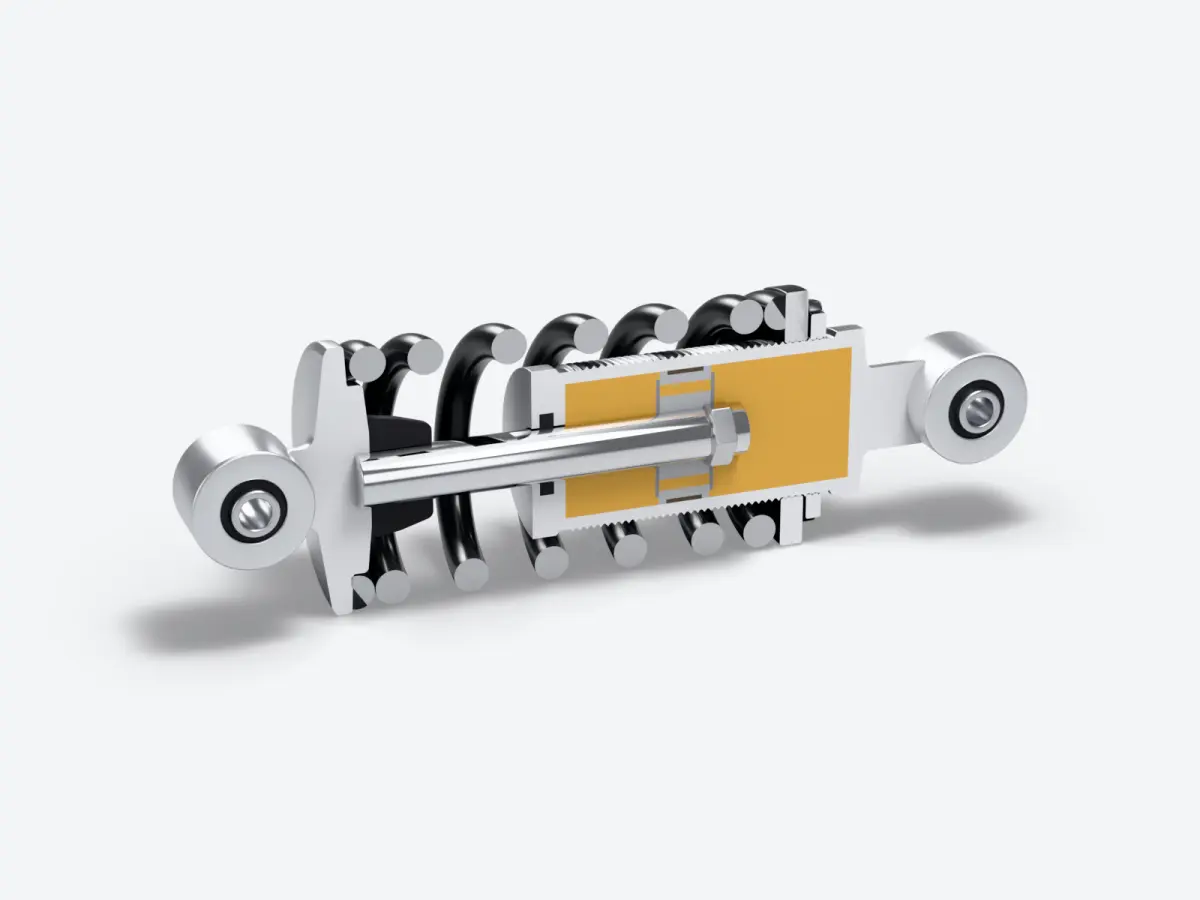
A suspension is a part that compresses and extends between the wheel and the frame. What changes from one model to another is what that part is made of and how its movement is slowed down.
| Type | How it works | Examples | What you can adjust |
|---|---|---|---|
| Spring alone | A metal spring compresses then extends. Nothing slows its return, so it can bounce. | Teverun Blade Mini Ultra, advertised with spring suspension[7]. | Often nothing, sometimes the preload. |
| Rubber | A rubber cartridge is squeezed between the swingarm and the frame, then returns to its shape. | Dualtron Thunder 3, adjustable cartridges front and rear[1]. Dualtron City, replaceable cartridge at the rear[2]. | The hardness, by changing the cartridge[2]. On the Thunder 3, also the thickness of the shim[1]. |
| Hydraulic | A spring carries the weight, an oil damper slows its movements. | Dualtron X Limited[3], Kaabo Wolf King GTR Max[5], Teverun 7260R[6]. | Damping in clicks[5], often the spring preload. |
| Air | Pressurised air acts as the spring. | Mainly on mountain bikes. | The air pressure, with a pump, in small steps[8]. |
Kaabo describes the rear of the Wolf King GTR Max as an adjustable oil shock absorber with a spring, which each rider sets up to suit their riding style and the terrain[5]. Minimotors even gives the spring rate of the Dualtron X Limited: 950 lb per inch[3]. In other words, it takes about 17 kg to compress it by one millimetre. The spring alone is simpler and lighter, but nothing controls its rebound.
Swingarm or telescopic fork
The material does not tell the whole story: you also need to look at the layout. On a telescopic fork, two tubes slide inside each other and the wheel moves up and down in a straight line. On a swingarm, the wheel axle is fixed to the end of an arm that pivots on the frame, and the spring, cartridge or shock absorber works between this arm and the frame. This is the set-up on most Dualtron models. Some models combine things differently. The Kaabo Wolf King GTR Max, for example, has an adjustable motorcycle-style double-arm shock absorber at the front[5].
How do Dualtron suspension cartridges work?
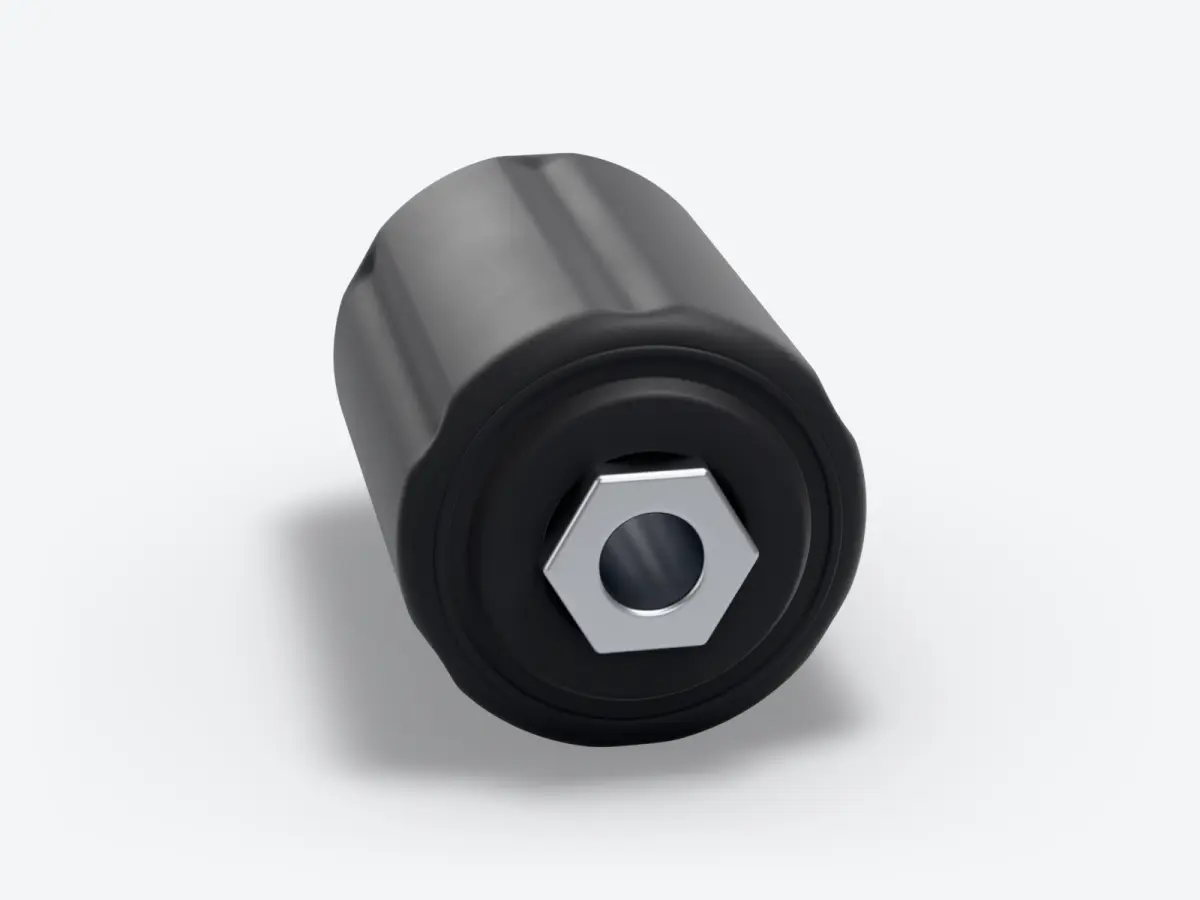
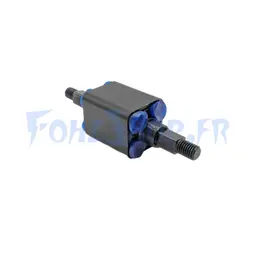
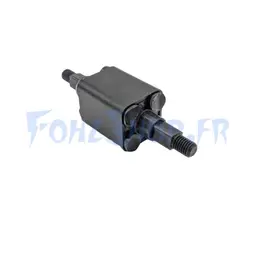
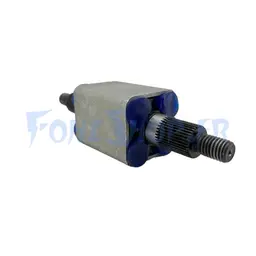
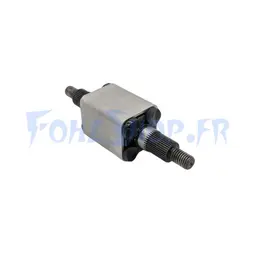
Minimotors, the maker of Dualtron scooters, has developed its own rubber suspension. On the Dualtron Thunder 3, the manual describes it as an adjustable cartridge front and rear, under patent, and states that you change the damping by changing the thickness of the shim[1]. On the Dualtron City, the rear cartridge is replaceable and comes in five hardnesses, from the softest, fitted as standard, to the hardest[2].
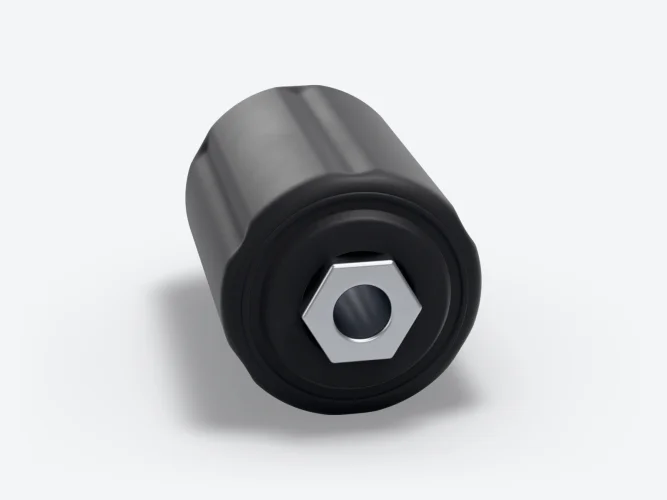
The principle is simple. The cartridge is a block of rubber held between the swingarm and the frame. The harder it is, the less it compresses under your weight, and the firmer the scooter feels. The softer it is, the more it soaks up small bumps, but the more likely it is to bottom out on big ones.
Changing a cartridge, step by step
- Note the original set-up: colour and name of the cartridges, shims, position of the bolts. A photo is enough.
- Switch the scooter off and prop it up so that the wheel concerned is off the ground.
- Loosen the swingarm bolts and take out the cartridge. Do not lever against the swingarm.
- Fit the new cartridge, and the same one on the other side of the wheel.
- Refit the bolts with removable threadlocker and the right spanner, without forcing.
- Ride a few hundred metres somewhere quiet, then check the tightness again.
How do you set up the suspension for your weight?
The set-up depends first of all on your weight. A study published in 2024 measured the vibrations transmitted to fourteen riders on a cycle path with speed bumps. Among the riders' characteristics, mass was the one with the greatest influence on the system[15]. Also respect your model's maximum load: 120 kg for the Dualtron Thunder 3[1], 150 kg for the Dualtron X Limited[3]. The weight that counts is yours with your gear on, backpack included.
Measuring sag under your weight
In mountain biking, people talk about ‘sag’: how far the suspension compresses when the rider is simply standing on it, fully kitted, in a normal riding position. Fox recommends 25% of the travel as a starting point. You can go a little higher for more comfort or a little lower for more firmness[8]. Its method works on any shock with a visible shaft: an O-ring or a plastic zip tie pushed against the shaft seal, then you get on without bouncing, stay in position for at least 30 seconds, and get off gently before measuring[8].
- Measure the length of visible shaft, with the zip tie pushed against the seal.
- Get on with your gear, holding on to a wall, without bouncing, and stay in position for half a minute.
- Get off gently, then measure how far the zip tie has slid.
- Divide by the shaft length. At around a quarter, you are in the right zone.
On cartridge suspension, there is no shaft to measure. Do a simple test instead. Measure a fixed dimension, such as the height of the deck or the gap between the tyre and the mudguard, unloaded and then with you on board. If the suspension compresses almost completely, it is too soft for you. If it barely moves, it is too hard.
Preload, clicks and cartridges
- Preload is set with a threaded ring that compresses the spring more or less. It changes the starting height, not the spring rate. Fox asks for at least one turn after the ring makes contact with the spring, and no more than two full turns. Below or above that, it is the spring that does not suit your weight and needs changing[9].
- Hydraulic damping is adjusted in clicks. Kaabo states 18 levels on the rear shock of the Wolf King GTR Max[5], Teverun 15 levels on the suspension of the 7260R[6]. Change one or two clicks at a time and always test on the same route.
- Cartridges are chosen according to weight and terrain. The heavier you are, or the smoother the road, the harder the cartridge can be. For a light rider or broken-up tracks, a softer cartridge works better.
- Air is adjusted with a pump. Fox recommends adding or releasing air in 5 psi steps, or 0.35 bar, and measuring again each time[8].
| What you feel | Probable cause | What to do |
|---|---|---|
| It feels harsh over small bumps and the suspension barely moves | Spring or cartridge too stiff, or too much compression damping[10] | Softer cartridge, less preload or pressure, one click less |
| The suspension bottoms out and feels soft throughout | Spring too soft or not enough compression damping[10] | Harder cartridge, more pressure, one click more |
| It sinks a lot as soon as you get on, without bottoming out | Preload or initial spring rate too low[10] | Add preload or pressure |
| The front springs back after a bump and floats in corners | Not enough rebound damping[10] | Increase rebound damping, if it is adjustable |
| The first bump goes well, the next ones feel harsher and harsher | Too much rebound damping, the suspension does not have time to return[10] | Reduce rebound damping |
How do you look after your scooter's suspension?
Looking after suspension is mostly a matter of looking and feeling. Minimotors asks you to check before every ride that no part has any play or damage, wheels, brakes and bolts included[4]. In its maintenance table, it also says to check that the rear wheel does not seize or become shaky[4]. For its replaceable-cartridge suspension, the check comes after one year or 3,000 km: if the suspension is no longer smooth or becomes much harder when riding, you lubricate its internal parts[4].
Play and bushings
The swingarms pivot on axles that turn in bushings, often made of brass or plastic. Over time, they wear and play appears. For its forks, Fox recommends checking the bushings once a year. You hold the bottom of the fork, push it backwards and then pull it towards you, and if the movement is excessive, it needs servicing[11]. Fox points out that a little play is normal on a telescopic fork, because bushings need some clearance to work properly[11].
On a scooter with swingarms, lift the wheel, hold it with both hands and push it from left to right. If you feel a knock or a shift at the pivot, the bushing is worn or the swingarm bolt is loose. Either way, do not ride like that.
Cleaning and greasing
Fox recommends cleaning suspension with soapy water, rinsing with a very gentle spray and wiping it dry with a dry cloth. No solvent, no degreaser, and never a pressure washer[12]. Dirt that dries on a tube damages the seal, then gets into the shock absorber. Fox also asks for more frequent servicing when you often ride in wet and muddy conditions[12]. If that is you, also read our article on riding a scooter in the rain.
On Dualtron cartridges, Minimotors talks about lubricating the internal parts of the suspension[4], in other words whatever slides and whatever pivots. In our experience, when refitting a swingarm, a film of grease on the pivot axle and in the metal bushings limits squeaks and corrosion. Use a grease that does not attack rubber and wipe off any excess. Grease has no business near brake discs and pads.
The swingarm bolts
These are the most heavily loaded bolts on the scooter. Tightening harder is not the answer. Fox points out that an over-tightened bolt can damage the material around it[13]. Use the right spanner and removable threadlocker, follow the torque in the manual when it is given, and check the tightness after the first few rides following any disassembly.
When should you replace a cartridge, a spring or a shock absorber?
There is no fixed mileage for suspension. The sign Minimotors gives is suspension that is no longer smooth or becomes much harder when riding[4]. In our experience, rubber hardens and settles over the years. A cartridge can therefore be worn out without being broken. It is the condition of the part and the way the scooter behaves that decide.
Worn-out spring
Broken, rusty, or it compresses much more than at first even though the preload has not changed.
Tired cartridge
Squashed, split or crushed. The scooter sits lower than before and bottoms out on bumps it used to soak up easily.
Play at the pivot
A knock or a sideways movement when you shake the wheel: worn bushing or loose swingarm bolt.
Leaking shock absorber
A trace of oil on the body or the shaft, and a wheel that bounces after every bump without being held back.
After a fall or a hard impact, look closely at the swingarms and the fork. Fox asks you to inspect its forks for damage, deformation or cracks, and to watch out for flaking paint, which can be a sign of a damaged structure[13]. A bent swingarm cannot be straightened: replace it.
- Replace cartridges in pairs, on both sides of the same wheel, to keep identical settings.
- A leaking hydraulic shock absorber gets serviced or replaced. Riding on it only makes the leak worse.
- If the scooter is recent, see our warranty and after-sales page before taking anything apart.
Which mistakes should you avoid with suspension?
Before changing a part, check that the problem does not come from one of these mistakes. Suspension that seems tired is sometimes just badly adjusted or badly reassembled.
- Choosing a cartridge by its colour, without reading the full name and the compatible models.
- Fitting two different hardnesses on the same wheel, or changing only one side.
- Screwing the preload all the way in to make up for a spring that is too soft. Beyond two turns, Fox advises changing the spring[9].
- Tightening the swingarm bolts ‘as hard as possible’. An over-tightened bolt damages the material around it[13].
- Washing the suspension with a pressure washer[12].
- Stiffening the suspension to make up for badly inflated tyres. Check the pressure first, as explained in our article on tyres.
- Looking in the suspension for play that comes from the steering. Stem play has its own causes, covered in our article on steering play.
Your suspension maintenance routine
- Note your model's type of suspension and its original settings, cartridges, shims, clicks or preload, before touching anything.
- Before setting off, press hard on the handlebar and then on the back of the deck. The suspension should compress and return without any noise.
- Every time you check the tyres, lift each wheel and feel for play at the swingarm pivots.
- Check the tightness of the swingarm bolts. When refitting, use threadlocker and the right spanner, without forcing.
- Clean the suspension with soapy water, never with a pressure washer.
- Once a year, or every 3,000 km, give the bushings, axles, cartridges or shock absorbers a full check.
- After a fall, inspect the swingarms and the fork before riding off again.
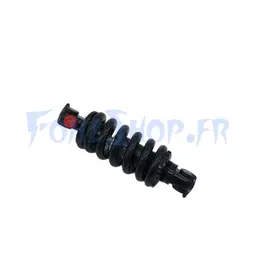
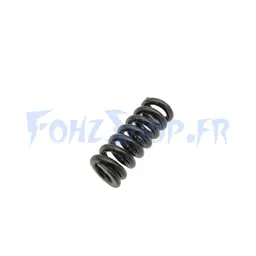
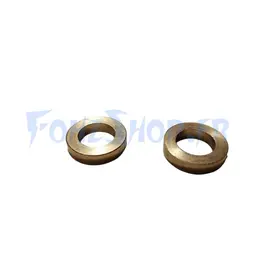
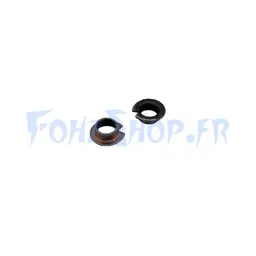
You will find our parts in the suspension, shock absorbers, cartridges, springs, bushings and swingarms categories. Always check the list of compatible models in the part's name.
Sources
- Minimotors, User manual, 2023, checked 17 November 2026, Dualtron Thunder 3 Product Manual
- Minimotors, User manual, 2023, checked 17 November 2026, Dualtron City Product Manual
- Minimotors, User manual, 2022, checked 17 November 2026, Dualtron X Limited Product Manual
- Minimotors, Important information for models with the EY2 display, safety and maintenance table, checked 17 November 2026, EY2 Important Information
- Kaabo, Product page, checked 17 November 2026, Wolf King GTR Max
- Teverun, Product page, checked 17 November 2026, Fighter Supreme 7260R
- Teverun, Product page, checked 17 November 2026, Blade Mini Ultra
- Fox Factory, Online owner's manual, 2011, checked 17 November 2026, Measuring & Setting Sag
- Fox Factory, Online owner's manual, 2011, checked 17 November 2026, VAN R, Setting Sag
- Fox Factory, Online owner's manual, 2011, checked 17 November 2026, Suspension Tuning Tips
- Fox Factory, Online owner's manual, 2011, checked 17 November 2026, Bushing Technology & Inspection
- Fox Factory, Online owner's manual, 2011, checked 17 November 2026, Service Intervals
- Fox Factory, Online owner's manual, 2011, checked 17 November 2026, Structural Inspection
- Machines (MDPI), vol. 11, no. 7, article 761, 21 July 2023, Analysis of E-Scooter Vibrations from Health Perspective: A Case Study
- Experimental Techniques (Springer), vol. 48, no. 5, 2024, published online on 24 January 2024, Statistical Analysis of the Vibrations Transmitted From an Electric Kick Scooter to Riders
About the author

Benjamin Gayaud
Managing director of FōhzShop
He runs FōhzShop and develops EyeX, the app for Dualtron and Rovoron scooters. He personally tests the electric scooters the shop sells.
Read next
Maintenance9 min read
Electric scooter tyre pressure: the chart by wheel size and by model
The tyre pressure for every scooter in our catalogue, taken from the manufacturer's manual, in psi and bar, sorted by wheel size. Plus the effect of weight and cold, how to read the sidewall and a routine for checking.
Maintenance10 min read
Electric scooter punctures: repair, prevention, tubeless or inner tube
How to tell which tyre you have, plug a tubeless tyre, change an inner tube without damaging the motor wheel, what preventive sealant is really worth, and when the tyre must be replaced rather than repaired.
Maintenance10 min read
Stem wobble or steering play on an electric scooter: causes and fixes
Handlebars that clunk under braking or a stem that moves: the play comes from one of five places. Here is the test to do with the scooter standing still, what can be tightened, what needs replacing, and the torque settings given in the manuals.