Electric scooters in winter: riding in the cold and storing the battery
Range that melts away, no charging below 0 °C, tyres that lose pressure, salt that attacks the bolts: what winter changes for an electric scooter, and how to store it for several weeks without damaging the battery.

Benjamin Gayaud
9 min read
Maintenance
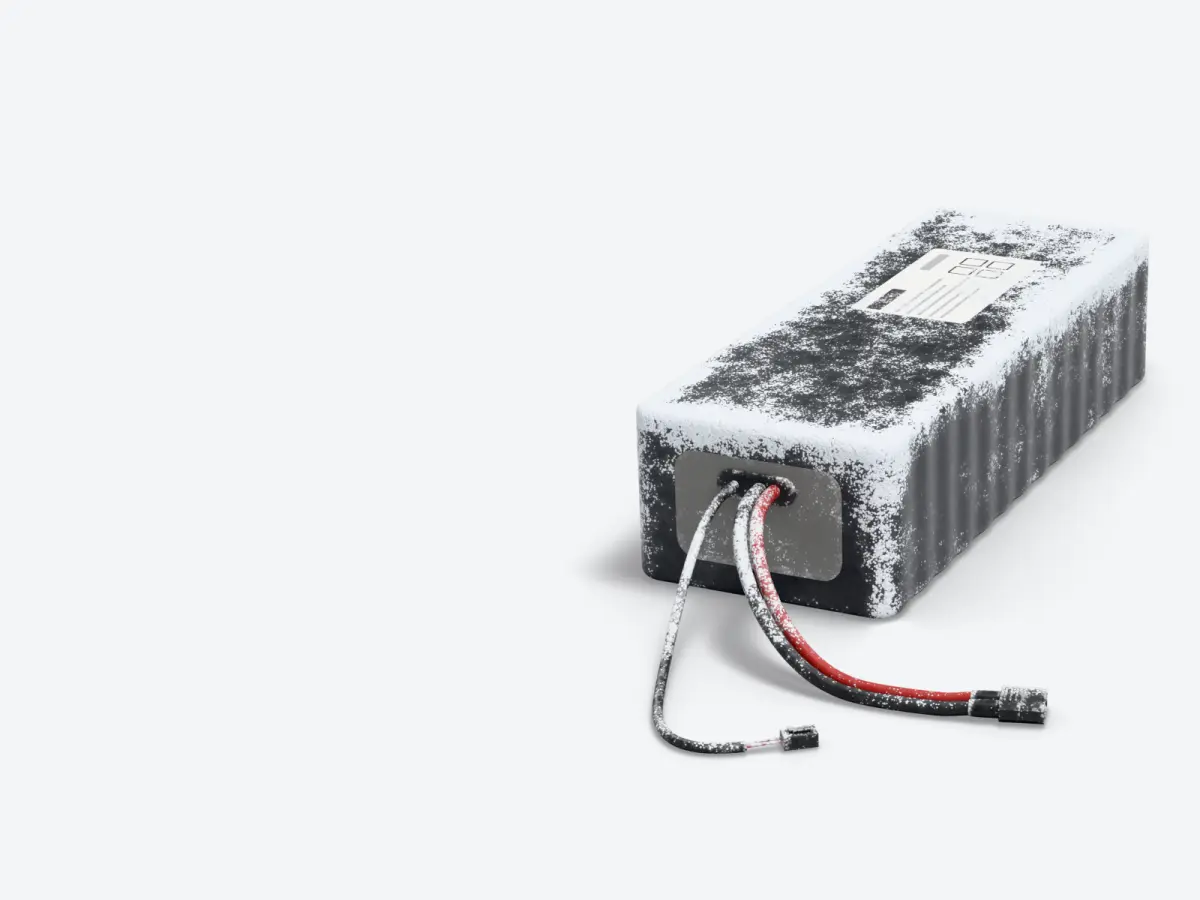
Cold battery? Wait 1 to 2 hours before charging it.
The essentials
Within the operating range in its manual, a lithium battery used in the cold simply gives less range and power until it warms up. Charging it in the cold, on the other hand, wears it out. Below 0 °C, do not plug it in: that is the limit in the Minimotors and Teverun manuals cited here and in the cell data sheet we read. For riding, the operating range of the Dualtron Thunder 3 and Rovoron S7 stops at -5 °C. For a break of several weeks, these manufacturers ask for a dry room at a moderate temperature, a battery neither empty nor full, and regular charging.
-5 °C
minimum operating temperature of the Dualtron Thunder 3 and Rovoron S7
1 to 2 h
of waiting before charging a scooter that has come in from the cold
0 °C
minimum for charging, according to Minimotors and Teverun
60 days
between two charges during long-term storage, according to Minimotors
- Bring the scooter indoors at night. It then sets off with a battery at room temperature rather than an ice-cold one.
- Never charge a cold battery. When you come in from the cold, wait 1 to 2 hours before plugging in.
- Check the tyre pressure more often: it drops with the temperature.
- Do not ride when the road may be icy. After a ride on salted roads, a damp cloth and a good dry.
- For a break of more than 3 months: 70 to 80% charge, a dry room between 10 and 20 °C, a charge every 60 days.
Why does the battery lose range in the cold?
Minimotors says so in its manuals: in winter, when temperatures are low, the lithium battery's performance may drop temporarily, and both range and power are reduced[1]. Teverun says the same for its Fighter Mini and Blade Mini[4]. The key word is ‘temporarily’: the drop lasts as long as the battery is cold.
A cell manufacturer shows it in curves. Molicel's data sheet for its 21700 P42A cell plots its discharge from -40 to 60 °C. The colder it is, the lower the cell voltage starts and the sooner it reaches its cut-off voltage[5]. On the scooter, this shows up as a gauge that drops faster and reduced power, especially when the battery is getting low.
| Document | Use | Charging | Storage |
|---|---|---|---|
| Dualtron Thunder 3 | -5 to 45 °C | 0 to 40 °C | -20 to 50 °C |
| Rovoron S7 | -5 to 45 °C | 0 to 40 °C on the spec sheet, 0 to 45 °C in the battery instructions | -20 to 50 °C, ideally 10 to 20 °C |
| Dualtron Sonic | -20 to 60 °C | 0 to 40 °C | -20 to 60 °C |
| Teverun Fighter Mini and Blade Mini | Discharge from -10 to 60 °C | 0 to 45 °C | 10 to 20 °C |
| Molicel P42A cell | Discharge from -40 to 60 °C[5] | 0 to 45 °C[5] | 25 °C ± 5 °C recommended[6] |
The habit that helps most is simple: the scooter sleeps indoors and sets off with a battery at room temperature. For the charging and storage rules for the rest of the year, see our article on the battery.
Can you charge a scooter battery in cold weather?
Not below 0 °C. The manuals for the Rovoron S7 and the Teverun Fighter Mini and Blade Mini give a charging range of 0 to 45 °C, and warn that charging outside this range may cause a malfunction, fire or explosion[1] [4]. The spec sheets for the S7 and the Thunder 3 even state 0 to 40 °C[1] [2]. The Molicel P42A cell charges between 0 and 45 °C, while it discharges down to -40 °C[5].
The reason is chemical. A study published in 2020 in the journal Electrochemistry put commercial 18650 lithium-ion cells through charge and discharge cycles at 0 °C. After these cold charges, the researchers found signs of lithium metal plating during charging, and an internal resistance that rose over the cycles[7]. That really is wear.
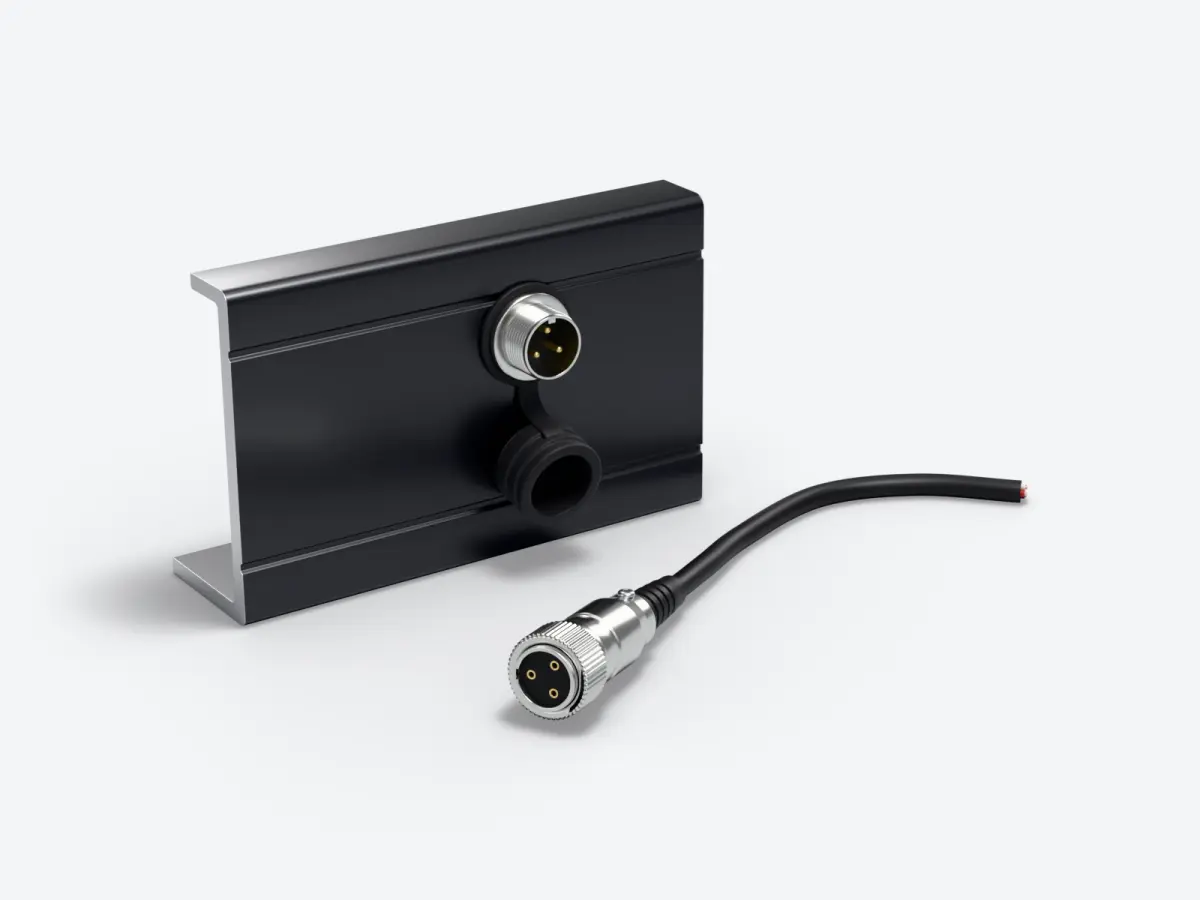
The second trap is water. Minimotors and Teverun say to wait 1 to 2 hours before charging a scooter that moves from the cold into the warm, to prevent condensation forming inside because of the temperature difference[1] [4].
- Bring the scooter into a heated room and switch it off.
- Wipe off water, snow and mud, especially around the charging port.
- Wait at least 1 to 2 hours. The longer it stayed outside, the longer you wait.
- Open the charging port cap, check that it is dry, then plug in the original charger.
- Close the cap after charging. Minimotors says to keep it closed when riding and in storage[1].
Tyres and grip: what changes in the cold
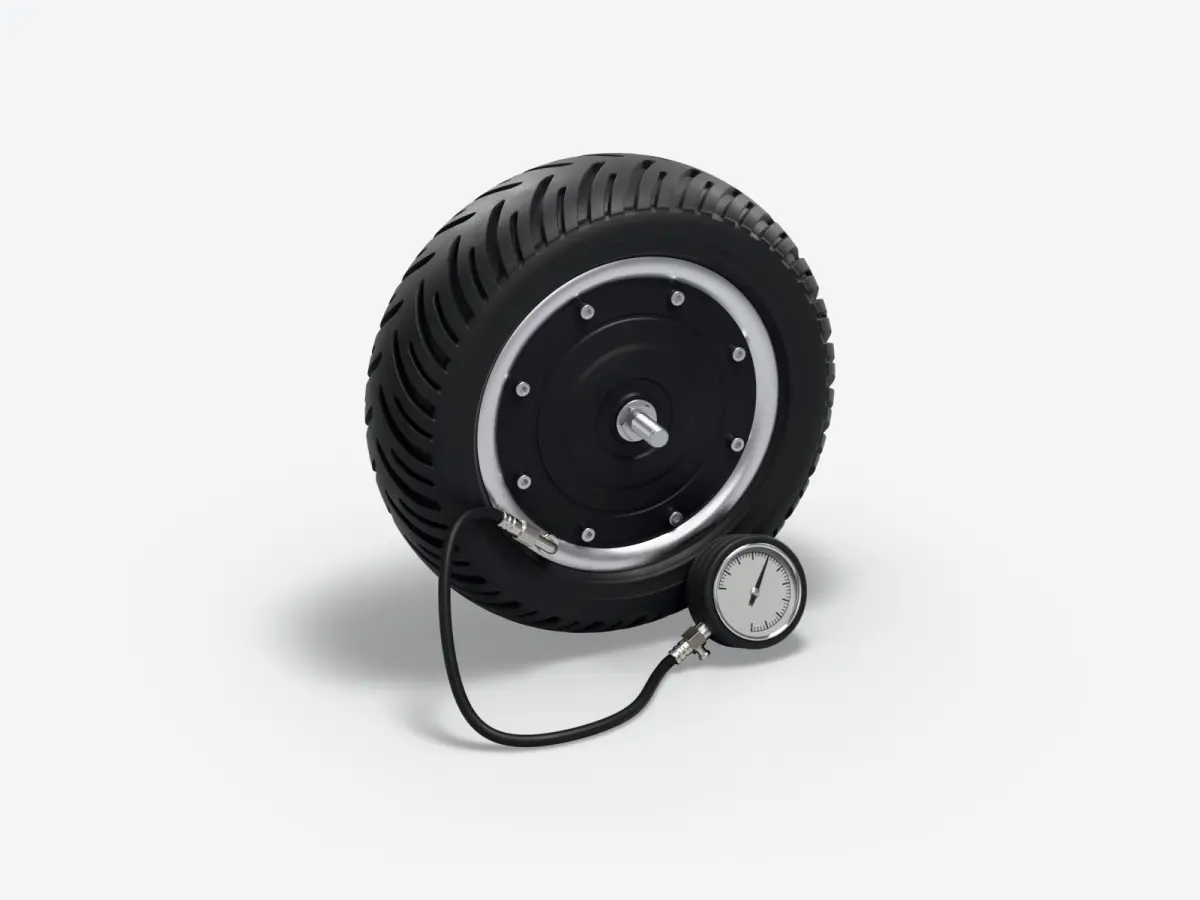
The air in tyres contracts in the cold. Continental, the tyre manufacturer, generally counts a drop of 0.07 to 0.14 bar for every 10 °C fall in temperature, and advises checking the pressure every two weeks in winter[8]. A tyre inflated at 20 °C in the hallway therefore loses 0.14 to 0.28 bar once outside at 0 °C.
On a scooter, that is a lot. The manual for the Teverun Fighter Mini and Blade Mini calls for 3.1 to 3.44 bar[4], a range of only 0.34 bar. A tyre inflated to the middle of this range, at 20 °C in the hallway, can drop below 3.1 bar outside at 0 °C. So inflate indoors towards the top of the range in your manual, and check it outside from time to time. The rest, wear, tyre types and punctures, is in our article on tyres.
The real danger: ice you cannot see
Riding in the cold on a dry road is no particular problem. Ice is. A leaflet from DIR Centre-Est, a French state road authority, describes the traps:
Bridges and sheltered areas
Damp, sheltered areas, bridges and viaducts are very prone to hoar frost.
Invisible patch
A patch of ice as it forms is barely more matt than a thin puddle of water, especially at night.
Road colder than the air
Under a clear sky, the road can be colder than the air. On a damp road, the risk of ice starts from an air temperature of +4 °C.
Rain on frozen ground
In 5 minutes, a smooth pavement turns into an ice rink.
The manufacturers are clear. Minimotors says not to ride on snow or ice, or in rain or mud, and points out that water getting in can damage the battery[1]. Teverun advises against rain, snow and hail[4]. When the road may be icy, the scooter stays at home. For wet weather, our article on rain and IP ratings covers riding and care in detail.
Road salt: how do you protect your scooter from corrosion?
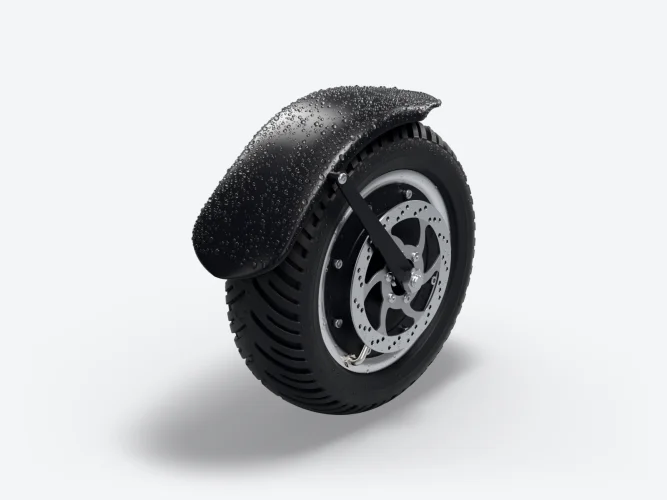
As soon as it freezes, the roads are salted. On France's national road network alone, the state uses 400,000 to 800,000 tonnes of salt every winter. Salt on its own works down to -7 or -8 °C, brine down to -12 °C[10]. This salt ends up as salty water, which the wheels throw onto the deck, the bolts, the connectors and the bearings. A full mudguard stops a good part of it.
Bosch, which makes e-bike motors and batteries, gives the simplest rule: after a ride, remove the salt left by spray or snow, and let everything dry thoroughly[11]. It also reminds riders to think about corrosion after a ride by the sea[11]. A scooter is no different.
Cleaning after a ride on salted roads
- Switch the scooter off and check that the charging port cap is closed.
- Wipe the deck, stem, arms and calipers with a soft, damp cloth, as the Minimotors maintenance table recommends[1]. Rinse the cloth often in clean water.
- Concentrate on what rusts: screw heads, wheel axles, brake discs, folding hinge.
- Dry with a dry cloth, then leave to dry indoors, away from a radiator.
- No pressure washer: it forces salty water into the bearings and connectors.
Storing your scooter for several weeks: charge, temperature and checks
For a winter break, the Minimotors and Teverun manuals give the same instructions. The battery stays away from snow, rain and sun, somewhere dry at room temperature, between 10 and 20 °C. No car boot and no hot room. Beyond 3 months, store it charged to between 70 and 80%, never 100%[1] [4]. Minimotors also advises a charge every 60 days during long-term storage[1].
Molicel, the cell manufacturer, agrees: its safety data sheet recommends keeping cells at room temperature, 25 °C ± 5 °C, and warns that heat shortens their life[6].
| Item | What the manuals ask | What you do |
|---|---|---|
| Place | Dry, away from snow, rain and sun, no car boot or hot room[1] [4] | A room in the house. Not the balcony, nor the garage if it freezes |
| Temperature | 10 to 20 °C[1] [4] | Away from a radiator and from a window in full sun |
| Charge level | 70 to 80% beyond 3 months, never 100%[1] [4] | Stop charging at the right level by watching the display |
| Recharging | Once every 60 days[1] | Note the date and check the level once a month |
| Charging port | Cap closed in storage[1] | Close it after every charge |
For a shorter break, apply the same rules, they ask nothing more of you. Other sources give lower storage levels: our battery article compares them. For a Dualtron, a Rovoron or a Teverun, follow the manufacturer's manual. Also inflate the tyres before putting the scooter away and check them at each recharge. In our experience, a tyre left flat for weeks keeps marks on its sidewall.
Getting back on the road in spring: what should you check?
Before the first ride, go over the scooter in this order. Most of the points come from the Minimotors maintenance table[1].
- Battery. Look at the casing and the charging port: no swelling, no smell, no sign of moisture. Then do a full charge with the original charger, staying nearby.
- Tyres. Set the pressure given in the manual, tyres cold. Look at the sidewalls and the tread.
- Brakes. Squeeze the levers: they must feel firm. If the lever feels spongy and the disc makes an abnormal noise, Minimotors says to stop riding and replace the pads[1].
- Bolts and folding. Retighten the handlebar, stem and folding bolts to the torque in the manual, then test the stem for play with the front brake on, as explained in our article on steering play.
- Steering. With the front wheel lifted, the handlebar must turn without resistance or lag[1].
- Lights and display. Switch the scooter on: display, headlight, brake light when you brake, horn[1].
- A short first ride. Ride for a few minutes near home, then check the pressure and the bolts again.
If a fault shows up and the scooter is still under warranty, start with the warranties and after-sales page.
Winter checklist
- The scooter sleeps in a heated room.
- No riding when the road may be icy, nor on snow or black ice.
- Tyre pressure checked every two weeks, inflated towards the top of the range in the manual.
- No charging below 0 °C, and a 1 to 2 hour wait when coming in from the cold.
- Charging port cap closed, except while charging.
- After a salted road: damp cloth, dry cloth, never a pressure washer.
- Break of more than 3 months: 70 to 80% charge, 10 to 20 °C, a charge every 60 days.
- In spring: battery, tyres, brakes, bolts, steering and lights before the first ride.
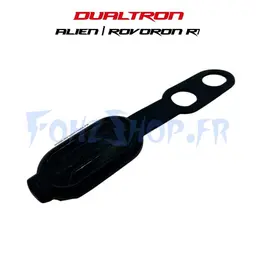
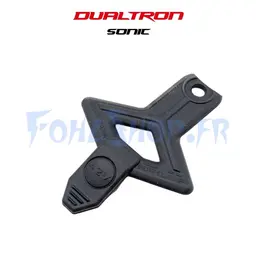
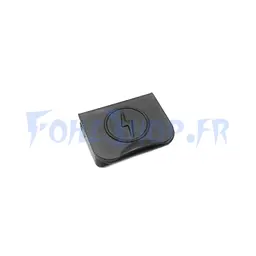
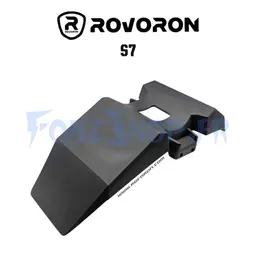
To get through the winter, we sell charging port caps and mudguards for many models.

Sources
- Minimotors, Rovoron S7 manual, pp. 5, 16, 18 to 23, checked 17 November 2026, S7 Product Manual
- Minimotors, Dualtron Thunder 3 manual, specifications, p. 5, checked 17 November 2026, Dualtron Thunder 3 Product Manual
- Minimotors, Dualtron Sonic manual, specifications, p. 5, checked 17 November 2026, Sonic Product Manual
- Teverun, Manual for the Fighter Mini, Blade Mini and Blade GT II, pp. 2 and 11, checked 17 November 2026, Manuel d'utilisation Teverun Mini
- Molicel (E-One Moli Energy), Product data sheet, version 1.7, checked 17 November 2026, Product Data Sheet, model INR-21700-P42A
- Molicel (E-One Moli Energy), Safety data sheet FSSF00058BJ, January 2025, section 7.2, checked 17 November 2026, Rechargeable Lithium-ion cells and multi-cell battery packs, Safety Data Sheet
- The Electrochemical Society of Japan, revue Electrochemistry, Vol. 88, no. 3, 2020, DOI 10.5796/electrochemistry.20-00027, checked 17 November 2026, Effect of the Charge Process on the Performance of Li-ion Cells during Charge-Discharge Cycling at 0°C
- Continental, Tyre advice, checked 17 November 2026, Pression des pneus en hiver
- DIR Centre-Est (ministère de la Transition écologique, France), Leaflet dated February 2019, checked 17 November 2026, Circuler en hiver
- Ministère de la Transition écologique (France), Press kit of 20 November 2025, checked 17 November 2026, Dispositif 2025 de viabilité hivernale sur le réseau routier national
- Bosch eBike Systems, Care advice, checked 17 November 2026, Care of eBikes
About the author

Benjamin Gayaud
Managing director of FōhzShop
He runs FōhzShop and develops EyeX, the app for Dualtron and Rovoron scooters. He personally tests the electric scooters the shop sells.
Read next
Maintenance9 min read
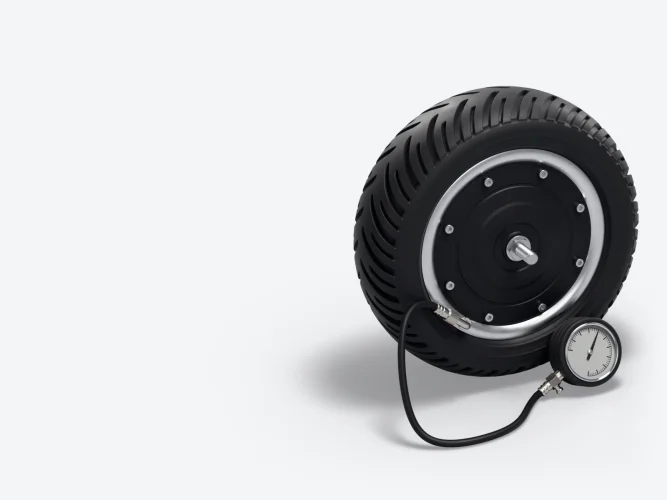
Electric scooter tyre pressure: the chart by wheel size and by model
The tyre pressure for every scooter in our catalogue, taken from the manufacturer's manual, in psi and bar, sorted by wheel size. Plus the effect of weight and cold, how to read the sidewall and a routine for checking.
Maintenance10 min read
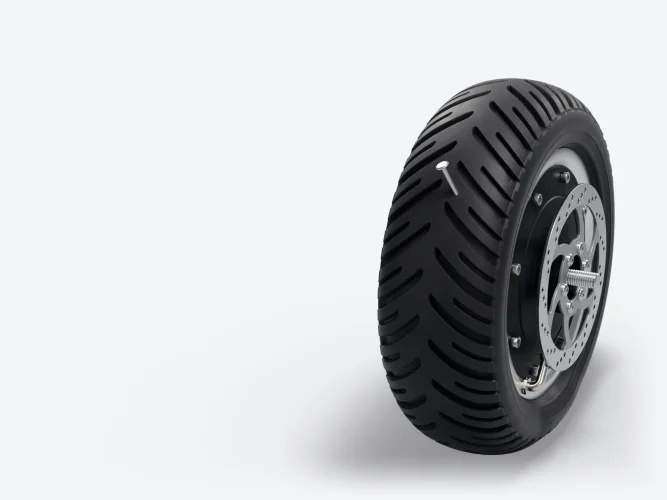
Electric scooter punctures: repair, prevention, tubeless or inner tube
How to tell which tyre you have, plug a tubeless tyre, change an inner tube without damaging the motor wheel, what preventive sealant is really worth, and when the tyre must be replaced rather than repaired.
Maintenance10 min read
Stem wobble or steering play on an electric scooter: causes and fixes
Handlebars that clunk under braking or a stem that moves: the play comes from one of five places. Here is the test to do with the scooter standing still, what can be tightened, what needs replacing, and the torque settings given in the manuals.